
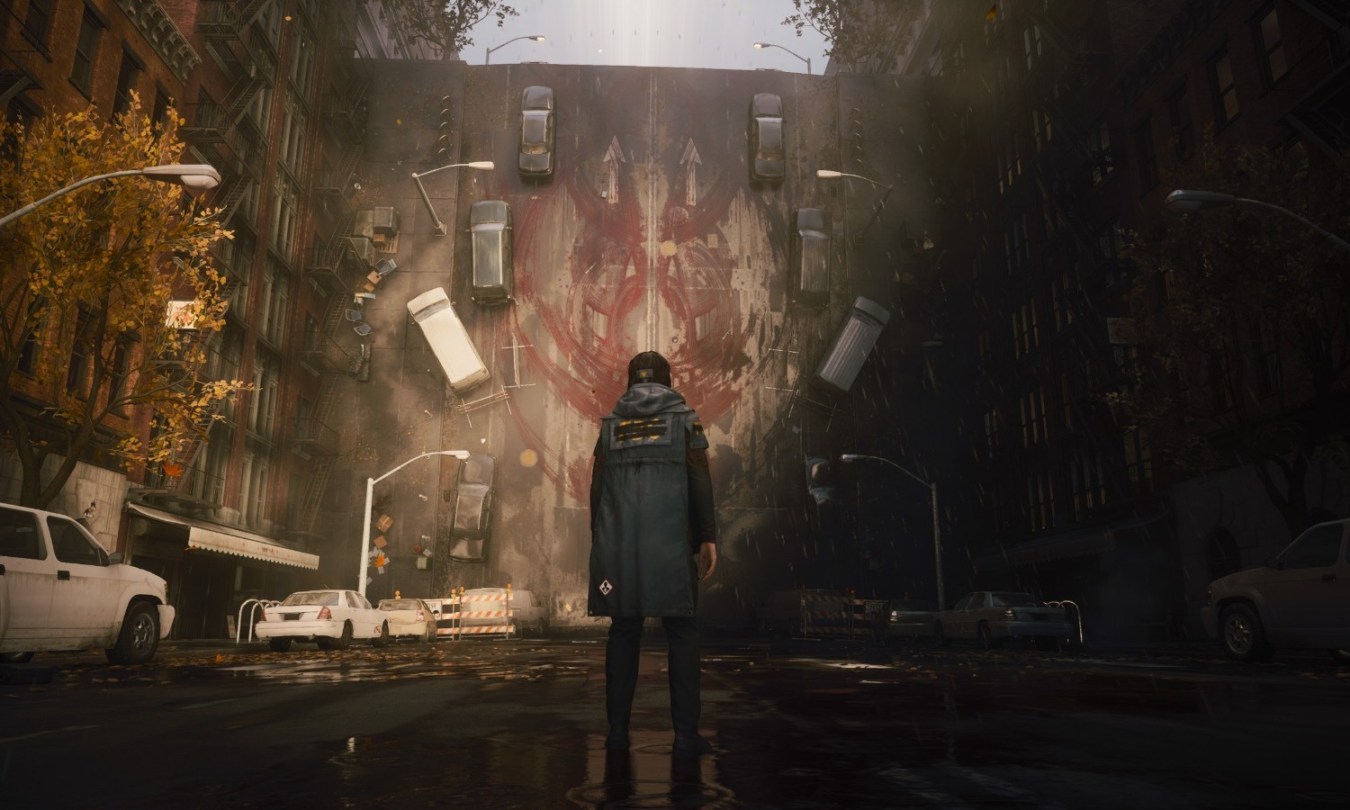

“Control Resonant is a gorgeous, daring step forward that leaves you eager to see where the Bureau goes next.”
- Gripping story
- Fluid, combo-driven melee combat
- No hand-holding
- Stunning art direction
- Challenging boss fights
- Meaningful side content and puzzles
- Fair price
- Demanding on PC hardware
- Ray tracing tanks performance
- Mixtapes can't be played freely
Remedy Entertainment’s announcement of a sequel to its critically acclaimed 2019 hit Control was not a big surprise. The first game, which was initially dismissed by many, including me, as a showcase for Nvidia’s ray tracing tech, turned out to be a wonderful and complex mess that attracted a niche but dedicated audience. However, the gameplay reveal of their new title felt like a risky pivot away from what garnered its fandom.
I was not about to make the same mistake twice. I kept my presumed notions about modern open-world games being grindy task simulators aside and gave it a fair shot. After finishing the story and unlocking every achievement, I can say Control Resonant is the most complete game Remedy has made. It knows exactly what it wants to be, skips the filler, and lets the player figure things out on their own. It is not flawless, but whether you are a longtime fan or new to the Federal Bureau of Control, there is plenty here for you.
Control Resonant system requirements
| Requirement | Minimum | Recommended |
|---|---|---|
| OS | Windows 10 / 11 (64-bit) | Windows 10 / 11 (64-bit) |
| Processor | Intel i5-8500 / AMD Ryzen 5 3500 | Intel Core i7-10700 / AMD Ryzen 7 3700X |
| Memory | 16GB RAM | 16GB RAM |
| Graphics | GeForce GTX 1070 / Radeon RX 5600 XT / Intel Arc A580 | GeForce RTX 3060 Ti / Radeon RX 6700 XT / Intel Arc B580 |
| Storage | 120GB available space | 120GB available space |
| Additional notes | SSD required | SSD required |
Do you need to play Control first?
Resonant is bringing a lot of new players into the Remedy universe, so this is the first question worth answering. The honest answer is that it depends.

The game is set seven years after the events of Control. Having played the original helped me feel at home early on, but it’s easy to catch up quickly either way. Archives scattered across the map fill in the history as you explore, and the story references past events often enough that the pieces fall into place fast.
Remedy knew Resonant would reach a bigger audience than ever, and it shaped the narrative so newcomers could enjoy it on its own terms. There is also an optional cinematic recap of the first game right at the start.
A story about holding on to humanity

At its core, Control Resonant is about the struggle to preserve and reclaim humanity amid paranatural threats and reality-bending chaos. The story leaves the cold, bureaucratic halls of the Federal Bureau of Control for the fractured streets of Manhattan. There, cosmic threats collide with very grounded human lives.
Dylan Faden anchors that theme.
His journey moves from a lifetime of isolation and containment toward a fragile, uncertain kind of freedom. Around him, ordinary citizens are forced to confront forces they cannot begin to understand. The narrative of the game is designed to draw players in from the get-go, and it definitely accomplished that with me. You feel the gravity of the situation by the weight of guilt Dylan carries regarding his past actions, along with an urgency to fix the chaos unfolding around him.
Abundance of variety in map design

Manhattan is split into seven zones that unlock as the story progresses. You level each one up by completing missions and side quests and by finding hidden power-ups and chests. Every zone level earns you a talent point to spend on abilities and perks.
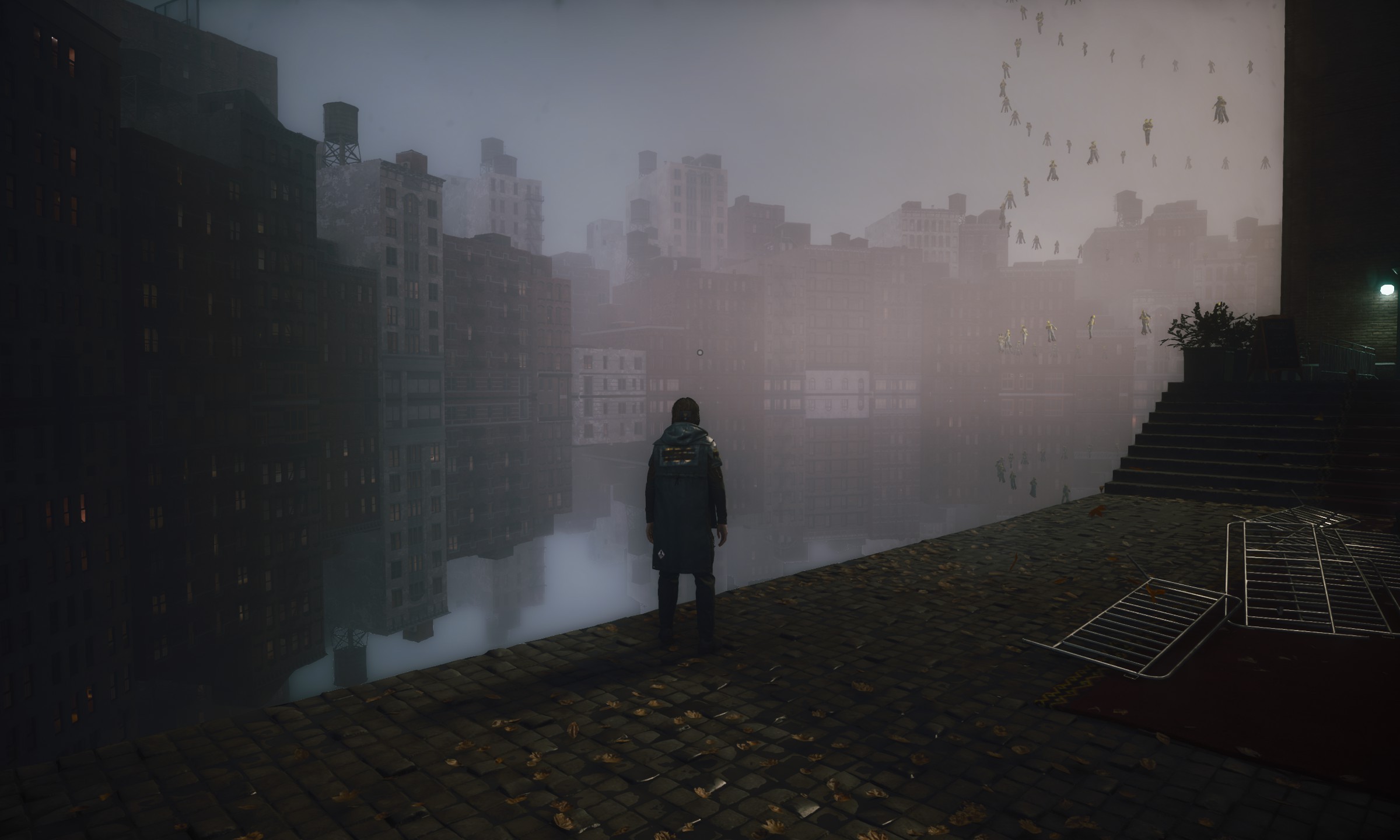
Each zone has such a distinct identity that you never need the map to know where you are. The Park is overrun by mold and mold-based enemies. The Evacuation Zone shakes with constant tremors as it sits under the control of the Hiss, which is the main enemy corrupting everything and everyone in its path. The West Incursion Zone is so heavily distorted that you need late-game traversal powers just to move through it.
For an open-world game, these differences double as quiet guidance. Wander into a zone too early, and you will struggle just to get around, a clear sign that you need to push the main story forward and unlock the right abilities first. The game never locks you out completely. It simply makes the going tough enough that you take the hint.

Combat is more in your face this time
You pick one of three light weapons, one of three heavy weapons, and one of six combo finishers. Each weapon deals different damage and builds Falter, the game’s stun meter, at a different rate. Crush summons a giant hammer that slams single enemies into the ground. Glaive, a scythe, sweeps through crowds but hits softer as a trade-off.
Defeating each region boss, or Resonant, unlocks a new combat ability, and many apply status effects. My favourite status effect combo pairs Astral, Mold, and Burn. Astral boosts how fast other effects build up. Mold damages enemies over time and builds up the Infected status, which makes enemies more vulnerable to fire damage. Then Burn finishes the job with massive damage. The combinations can be even more complex or simpler depending on your play style.

Early on, melee and dodging are enough. But with every Resonant you defeat, enemies spawn more often and hit harder, and the game starts demanding ability and status combos. Dylan’s agility makes it all feel personal. Rather than standing back and firing a gun, you dive straight into enemy faces, unleashing total annihilation. The controls remain ultra-responsive throughout.
Traversal gets better the deeper you go
In my opinion, traversal might be the most under-appreciated part of the whole experience. I started with a modest set of movement tools, enough to get around but not much more. As the story unfolded, new abilities changed how I interacted with the city itself, opening up routes and areas that once seemed impossible to reach. I won’t spoil the specifics, but each new addition made getting around more engaging, which matters a lot in a world this big.

These abilities come from Faults, which are pockets of broken reality, a self-contained platforming challenge set apart from the open world. Clearing each one rewards you with a new traversal ability and opens up more of the map. The faults also serve as a window into Dylan’s past and his relationship with his sister Jesse.
Boss fights are grander and more varied
Boss fights are where Resonant breaks most clearly from its predecessor. They are far more challenging, grander in scale, and much richer mechanically.
Each boss fights in its own way. Some use environmental hazards to finish you off; others have multiple phases, changing their attack patterns and abilities as they go. A few heal themselves once their health runs low, and some flood the arena with smaller puppet enemies under their control. You never quite know what is coming.
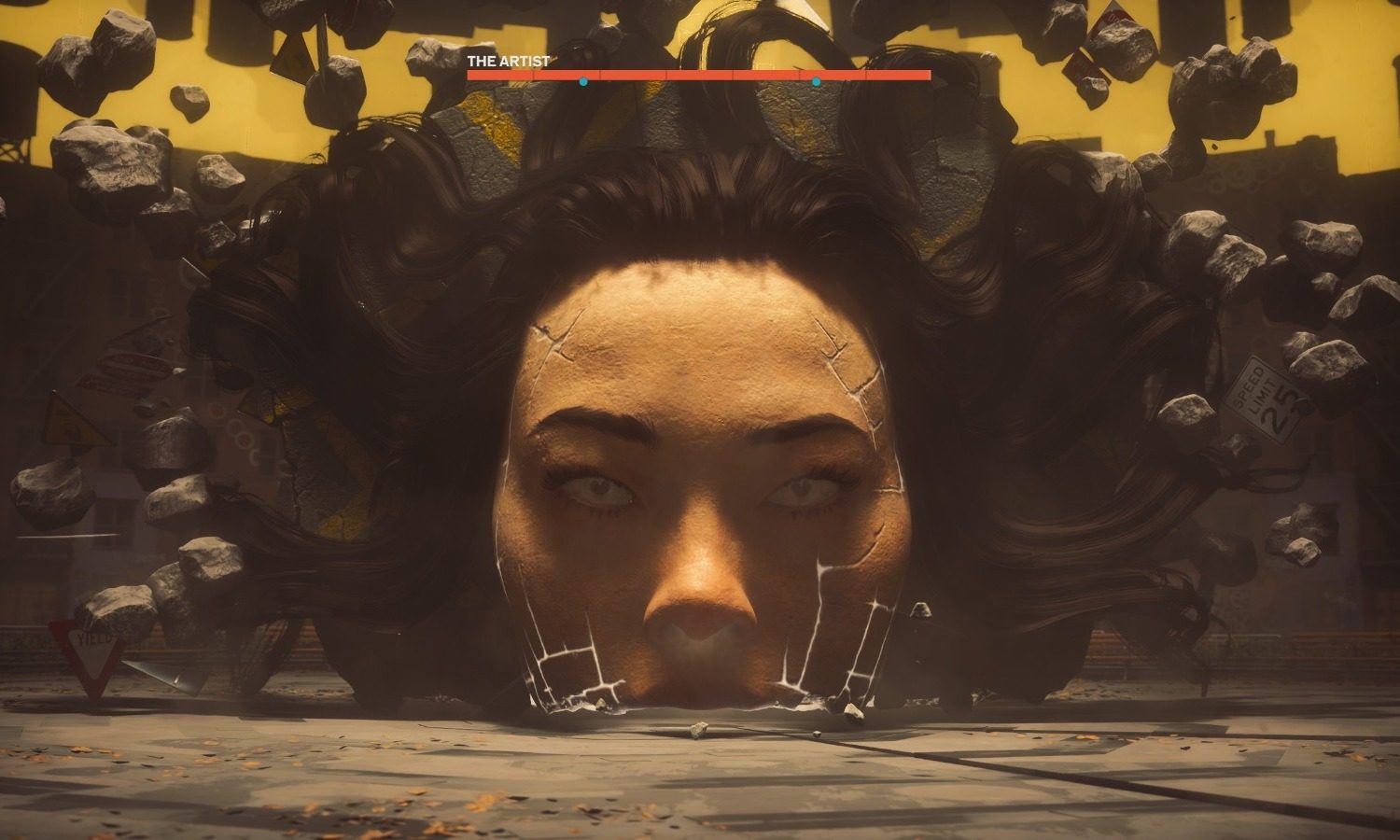
After a rather humbling first encounter, I made a habit of upgrading every ability, weapon, and talent before walking into a boss arena. Even then, some fights took me several attempts. It feels like Remedy’s take on Soulslike bosses, just with a gentler difficulty curve. To get through them, I had to break old melee-only habits and utilize my entire toolkit.
The art direction shines here too. I died more than once because I stopped to take a screenshot mid-fight. Worth it, mostly.
The game trusts you to figure things out
Control Resonant gives you all the independence you could want. The map is packed with hidden clues, puzzles, secret hideouts, and side missions, and none of them feel like chores tacked on to pad out the playtime. They feel like real discoveries. Many tie back into the main story and add to it, and some drop a clue or a fresh perspective that might only pay off later in the series.

The puzzles are intriguing and challenging, and sometimes frustrating enough to make you question your own intelligence. This is part of the appeal. The game never holds your hand. It assumes you can figure things out yourself, so two people playing the same game can end up going about it in completely different ways. It is a refreshing change from the current trend of big releases that seem nervous you might get lost for even a minute.
Where it stumbles
Optimisation needs work. I played on a Ryzen 7 9800X3D and an RTX 5070 Ti with a 2K monitor, at ultra settings. Without ray tracing, I held a steady 70 FPS, which is plenty for this game. With ray tracing maxed out, that dropped to around 40. Since this hardware sits well above the industry average, weaker systems will feel it more.

I also wished that the game would allow you to play the amazing mixtapes you collect while exploring at will. Right now, they only play during set sequences or in the menu. It feels like a missed chance to show off some great music featured in the game.
To Remedy’s credit, a sizable update has already been released. It improves performance on lower-end systems and adds a batch of quality-of-life fixes that make the game feel even more polished.
Is It Worth It?
These days, AAA success seems to demand massive budgets exceeding $250 to $300 million. Much of that money goes into casting the widest possible net, chasing features players don’t care about in the hope that something sticks. Control Resonant does the opposite. Remedy knew exactly what game it wanted to make, and that clarity stretched a much smaller budget a lot further.
I felt the benefit of this philosophy directly. The Standard Edition costs $59.99, and the $69.99 Deluxe Edition adds a digital artbook, the original soundtrack, an in-game artifact, a starter resource bundle, and some cosmetics. While more and more AAA studios are trying to normalize prices moving upwards to $80 from an already steep $70 on the back of games like GTA VI, Remedy has held the line at $60. It is a not-so-quiet reminder that when a studio builds with intent and direction, it can cut costs dramatically without compromising quality. I would buy it again without thinking twice. It delivers on nearly everything I hoped for, and goes beyond.
Digital Trends reviewed Control Resonant on PC using a copy purchased independently on Steam. Testing was conducted on a system with a ZOTAC GeForce RTX 5070 Ti 16GB, AMD Ryzen 7 9800X3D, and 32GB of DDR5-6000 RAM.
Control Resonant is available on PlayStation 5, Xbox Series X|S, and PC via Steam and the Epic Games Store.


