I’ve spent some time testing DLSS 5 in NBA 2K27, including an early preview at Gamescom, and there’s one thing I can say with confidence: this is not your usual “turn on DLSS and watch the FPS counter go brrr” situation. NVIDIA’s latest trick is less about making games run faster and more about making them look ridiculously good. And NBA 2K27 is a surprisingly perfect guinea pig.
Your GPU just hired a Hollywood VFX artist
DLSS 5’s 3D-Guided Neural Rendering is less about making NBA 2K27 render more frames and more about giving the frames it already has a serious visual makeover. The technology uses AI models running on the GPU’s Tensor Cores to interpret the game’s existing 3D information and refine everything from lighting and materials to skin, shadows, hair, and those tiny surface details that can make a character look either photorealistic or suspiciously like a plastic action figure.

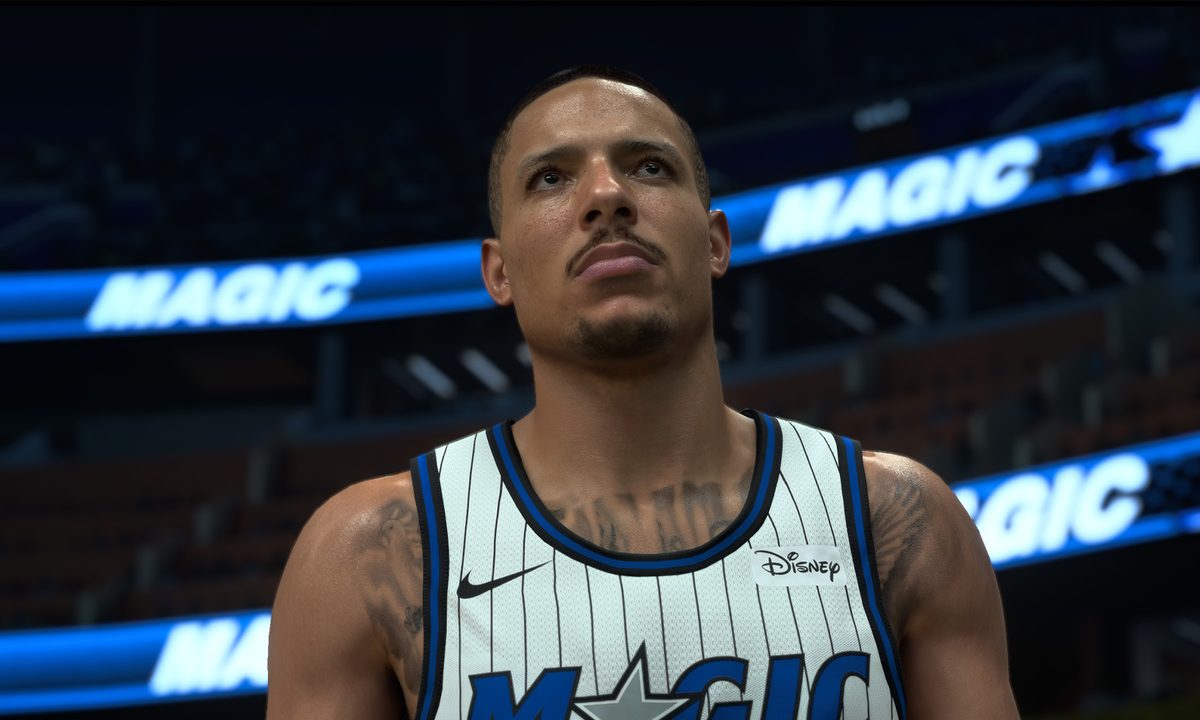
NVIDIA’s philosophy here is essentially “better input, better output,” and 2K27 happens to have some exceptionally good input to work with. Its player models are built from detailed 3D scans, so there’s a wealth of geometry and visual information for the neural renderer to work with. The payoff is immediately apparent in close-ups, with sharper facial structures, cleaner facial and body hair, more convincing skin detail, and much better depth and separation between the players and everything happening behind them.

The really clever part is that DLSS 5 isn’t just obsessing over the players. The entire basketball environment gets pulled into the neural-rendering makeover. Crowds pick up more convincing lighting and material detail, sideline cameramen look less like background props, and the court and arena lighting gain a little more depth and realism. Even smaller environmental details can benefit from the improved treatment of shadows, reflections, and materials. It’s particularly noticeable when the camera gets close enough to let you appreciate all that extra work, whether that’s during a replay, a free throw, or one of those dramatic cutscenes where 2K27 really wants you to believe you’re watching a TNT broadcast rather than playing a video game.
Your RTX is working overtime, though
There is, naturally, a bill for all this neural-rendering wizardry: DLSS 5 is expensive. NVIDIA itself warned that players could see a roughly 50–60% performance hit, and our testing backs up the basic idea: enabling Neural Rendering can slash the number of traditionally rendered frames the GPU produces.
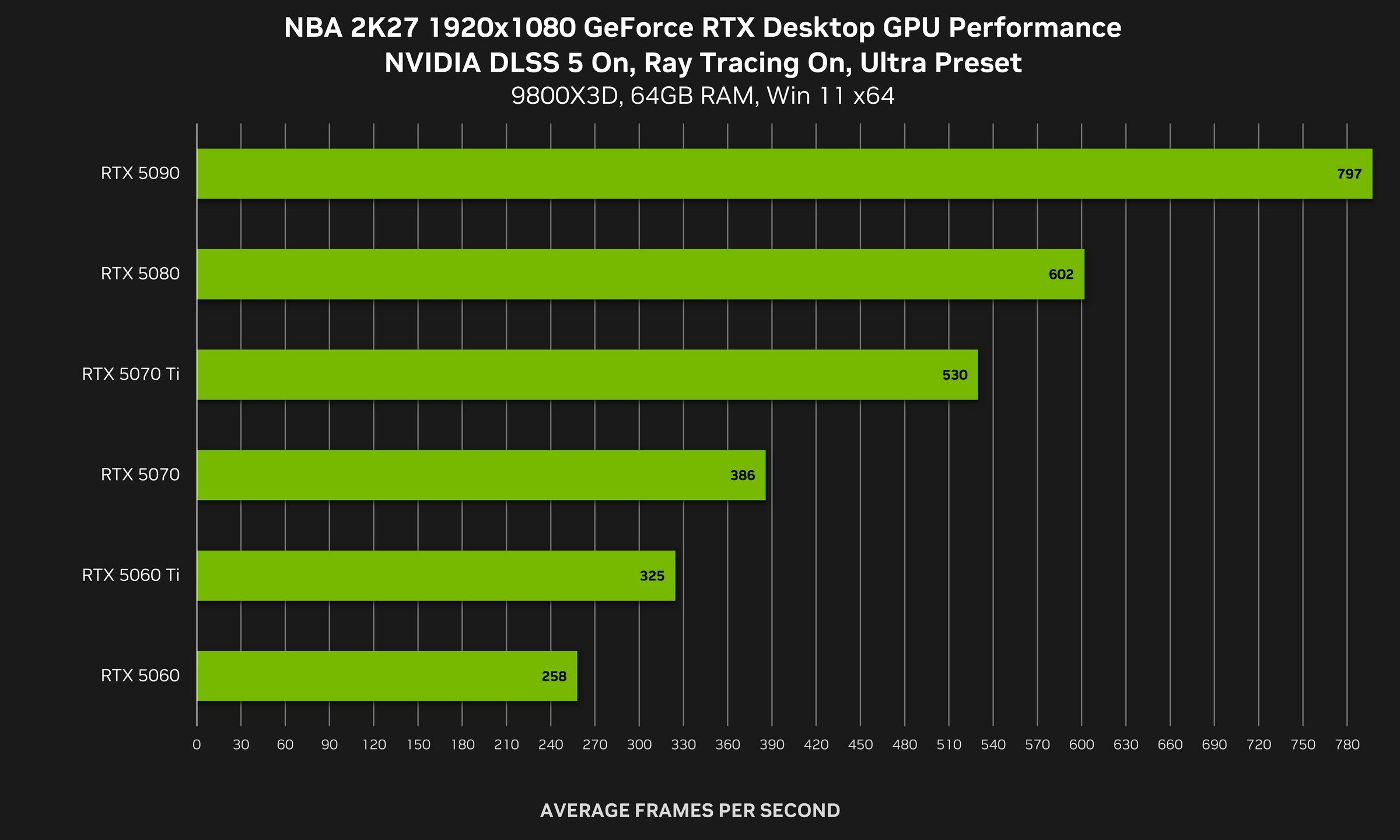
I saw the trade-off firsthand. My RTX 5070 Ti could deliver a solid 60 frames per second at 1440p with DLSS 5 enabled, which is a pretty compelling proposition when you consider that PC players can combine that visual fidelity with higher frame rates than consoles. But this isn’t free performance. DLSS 5 is doing a lot of work behind the scenes, and unlike conventional DLSS Super Resolution, simply lowering the game’s internal rendering resolution doesn’t eliminate much of the neural-rendering cost. The neural model still has to produce the final image at your display’s resolution.
That’s also why NVIDIA’s eye-watering FPS claims need a little asterisk. Numbers in the hundreds can involve Super Resolution and Multi Frame Generation, meaning some of those displayed frames are AI-generated rather than fully rendered by the GPU. It can look wonderfully smooth, but your actual rendered frame rate and input latency still matter.
It’s gorgeous. It’s also a little weird sometimes.
DLSS 5 isn’t flawless, either. Push the neural processing hard enough, and it occasionally starts getting a little… enthusiastic. Sweat can become comically glossy, while certain minor character models can look overprocessed or oddly exaggerated. And because the technology can make faces incredibly realistic, imperfections in animation or lip-sync can become even more noticeable.

The difference also depends heavily on where you’re looking. Close-up cutscenes, free throws, and replays are where DLSS 5 really gets to show off. From the normal wide broadcast camera during gameplay, the improvement is considerably harder to spot. That makes this feel less like a must-have competitive feature and more like a premium visual mode for people who want their basketball game to look as close to a TV broadcast as possible.

Interestingly, the benefits of DLSS 5 also carry over to GeForce NOW, meaning cloud gamers can enjoy the same Neural Rendering enhancements without needing the hardware sitting on their desk. On a local PC, the added latency is subtle enough that I barely noticed it during normal play. GeForce NOW is a slightly different story, though. With rendering, upscaling, frame generation, neural rendering, and network streaming all working together, there’s naturally a little more latency in the mix. It’s not a deal-breaker, but if you’re particularly sensitive to responsiveness, you’re likely to notice it more in the cloud than you would playing locally.
Pretty pixels are nice. Good optimization is nicer.
For me, ultimately, DLSS 5 gets most exciting when it is in the hands of developers. NVIDIA has confirmed that RTX 40-series support is on the way, and as more games adopt the technology, developers will have another powerful tool to fine-tune lighting, materials, characters, and overall visual fidelity in ways that simply weren’t practical before.

NBA 2K27 makes a pretty convincing case for what that future could look like. DLSS 5 can make an already-gorgeous game look even more lifelike, and that’s genuinely impressive. I just hope it remains a tool rather than becoming a shortcut for optimization. Because as cool as prettier pixels are, I’d still like my GPU to spend a little less time sweating over them.