Welcome once again to Jetsetter, Digital Trends’ one and only home for import gaming hotness and discussion of video game development taking place exclusively outside the United States. From all appearances, it seems like we’re living in an age of unprecedented growth and opportunity in the video game world. This week, Valve announced the grand future of Steam as it enters its second decade. There’s the new SteamOS, the new line of Steam Machine gaming PCs, and the company’s unusual new controller. Between these changes at the world’s premiere digital game distributor and the upcoming round of consoles, the future of big scale gaming seems bright indeed.
Strangely though, the end of 2013 looks a lot more like 1993 than it does the future, at least when it comes to games traveling over international boundaries. Even as independent developers find new ways to reach audiences around the world, the big Japanese publishers of old are regressing to their isolationist ways, locking a number of games purely into the domestic market. Jetsetter’s already highlighted Capcom’s disappointing decision to not only make classic franchise entries like Breath of Fire 6 exclusively for mobile devices, but also to keep them in Japan and Asia.
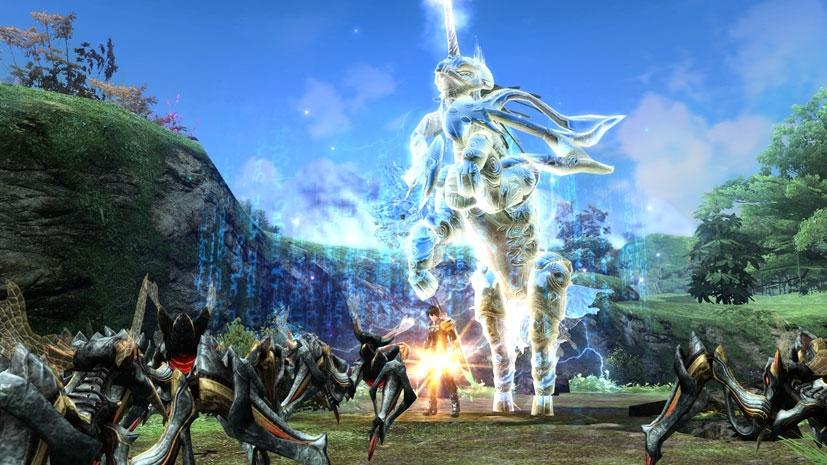
Sega is currently the worst offender in the realm of keeping its most promising titles locked outside the U.S., leaving only scraps for Japanese-fluent import gamers. In 2012, after Sega announced abysmal earnings and downsized a huge portion of its international publishing operations, the once great publisher announced a number of truly promising titles. Chief among them was Phantasy Star Online 2, a sequel to the groundbreaking Dreamcast MMO made for PC, iOS, Android, and even PlayStation Vita. While that game was initially announced for North America, Sega delayed its PC release in late 2012 and has refused to discuss the game outside of Asia-only updates since.
At least there was a possibility that Phantasy Star Online 2 would make the Pacific trip. Sega’s other games don’t seem to be up for discussion at all. Take the recently announced single-player RPG for PS Vita in the very same series, Phantasy Star Nova. One of the only truly interesting game announcements at Tokyo Game Show 2013, Phantasy Star Nova is the first solo play-centric Phantasy Star in years and years. Anyone raised on the Sega Genesis or any younger players who’ve discovered vintage RPGs through releases on PlayStation Network and Xbox Live would surely love a crack at a new story in the series.
No such luck though. “There are currently no plans to release Phantasy Star Nova in the western market,” Sega’s Kellie Parker said. Like Valkyria Chronicles 3 for PlayStation Portable, another Sega-made RPG is kept abroad.
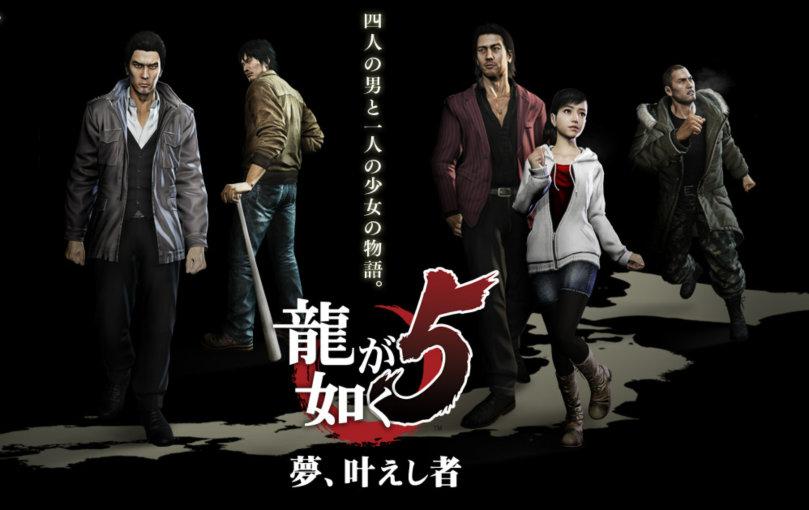
Yakuza 5 is another incredibly strong game destined to stay import-only due to Sega’s apparent shortsightedness. The PlayStation 3 exclusive was released last winter and represented a massive upgrade for the series, with five playable characters, new Japanese cities to explore, and a brand new graphical engine. It was a massive investment for Sega’s Yakuza Studio. It won’t recoup any of that investment from non-Japanese markets, though. Series creator Toshihiro Nagoshi confirmed that Western players will just have to be content never finishing Kazuma Kiryu’s story.
“We don’t have a plan for that at the moment,” Nagoshi told Edge, “The Yakuza Studio team is a fixed size, and we have to choose between forging ahead with the next game or localizing the one that just came out. This time the size of the game was so large, so rather than localizing that game we chose to focus our manpower on the new game. But we get asked about it a lot. We get lots of complaints!”
None of these choices are terribly surprising given Sega’s stance in 2012. The company stated very simply that it was going to devote its resources in the West to series’ like Total War, re-releasing classic games, and putting out quick cash mobile games like Puzzle Pirates. For fans of Sega’s Japanese-developed series’, like Phantasy Star and Yakuza, this business strategy is incredibly depressing.
The truth is that Sega is missing a significant opportunity as well. Publishers like XSEED have thrived in the U.S. by targeting the smaller Western audiences that are all too willing to spend money on games like Yakuza 5. If Sega would contract their localization out to a third party production company, or even license these titles to other publishers, they may stand to bolster there meager console and handheld earnings. Some cash beyond what the publisher pulls in from putting out Sonic the Hedgehog 2 for the 800th time can only be a good thing.
In the meantime though, Sega’s most promising games are purely in the realm of Jetsetter. A shame that in an era when distribution methods makes it easy to bring all types of games to all communities, Sega is insistent on the closed of policies of the past.