
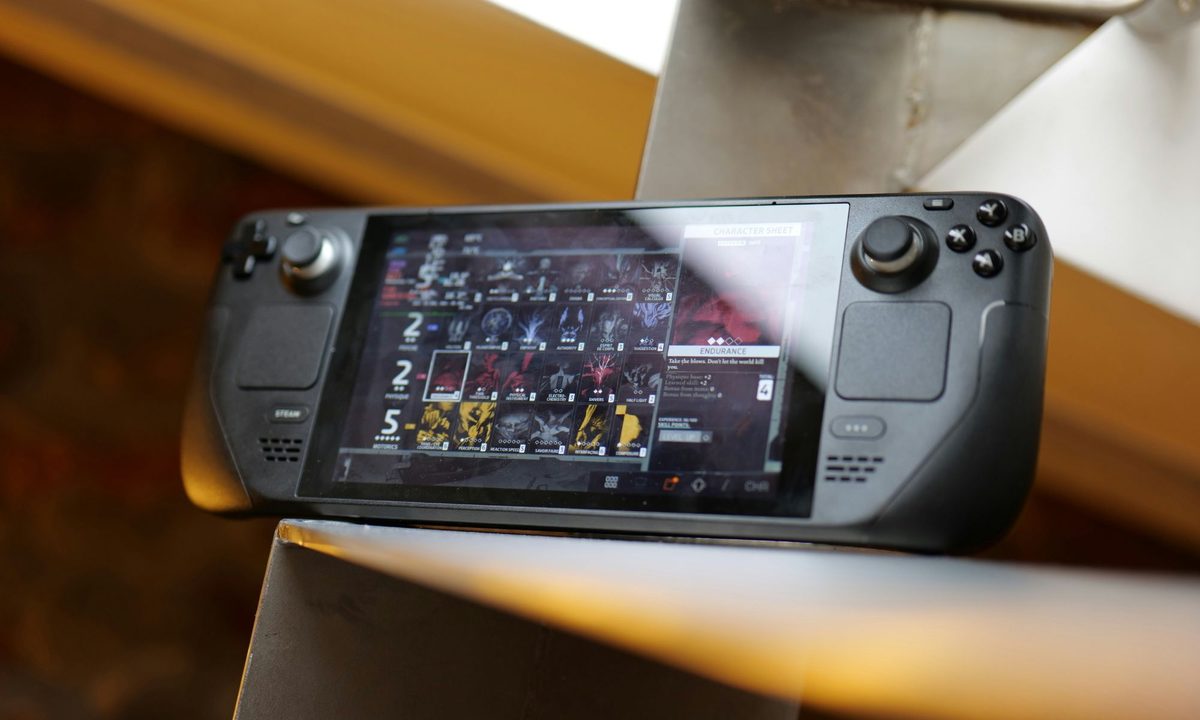
Valve isn’t letting the ongoing memory crisis derail its plans for the Steam Deck 2. Speaking to IGN, Valve developers Pierre-Loup Griffais and Jeff Leinbaugh said the company’s goals for its next-generation handheld remain unchanged, despite the soaring cost and availability of RAM.
Valve still wants a proper Steam Deck 2, not a slightly faster one
Asked whether the memory shortage had affected its plans, Griffais’ answer was refreshingly blunt: “Not really.” Valve is still waiting for the kind of performance and efficiency jump that would make Steam Deck 2 feel like a genuine generational upgrade rather than a slightly faster Deck.
“We’ve talked before about how we want to make sure there’s a very delineated performance improvement for something like a future Steam Deck, and I think we’re still looking at it in the same way. It’s just a matter of looking at the current conditions and seeing how and when we can deliver something like that. But from what we’re working on, as far as the user experience goes and what the product that we’re trying to build goes, it’s very similar goals.”
That distinction matters. Valve has previously said it isn’t interested in simply delivering 20%, 30%, or even 50% more performance if it comes with the same battery life and doesn’t feel like a meaningful generational leap. The company wants a much bigger improvement in performance-per-watt before it considers the next Deck ready.

The interesting part is that Valve’s stance feels different from what we heard around the Steam Machine. When that device launched at $1,049, Valve acknowledged that it was significantly more expensive than originally intended, with the memory crisis forcing its hand. The company had reportedly been targeting something closer to $750 before the market went sideways.
The Steam Deck 2 price might be the real boss fight
With Steam Deck 2, however, the message seems less like “we’re trying to beat the market on price” and more like “we’ll build the right product and see what the market costs.” That’s an important shift, especially after Valve raised the Steam Deck OLED’s price to $789 for 512GB and $949 for 1TB because of rising memory and storage costs.

That makes it increasingly difficult to imagine a cheap Steam Deck 2. Valve may be willing to wait for better silicon and memory conditions, but when the successor eventually arrives, it is almost certainly going to live in a more premium pricing environment. The real challenge won’t just be making a better handheld. It’ll be convincing people that whatever Valve charges still feels like a Steam Deck value proposition.


