Reader beware: You’ll find no The Wolf Among Us spoilers in the writing below, but there is one large-ish spoiler from episode three of The Walking Dead. You have been warned.
Pierre Shorette doesn’t hear voices in his head. For most of us, that would be a good thing. It is for him too, though you might not immediately think so. Shorette has the job of putting words in the mouths of characters we’ve never heard speak as lead writer on episode one of Telltale Games’ five-part Fables prequel, The Wolf Among Us.
“I think this process has taught me that I don’t [hear voices when I read]. What I do have is accents and phrasing and cadence,” Shorette tells Digital Trends. “But in terms of an actual voice, an actual pitch to a voice, I’ve learned that I don’t have it. It was really interesting, because any time I’ve read anything, I’ve assumed that I have this voice in my head that is very specific.”
It’s the job of the casting director, voice actors, and others to find the right physical voice to complement the words Shorette puts down in his script. Folks like Adam Harrington (Tales of Monkey Island‘s LeChuck), Gavin Hammon (The Walking Dead‘s Kenny), and Chuck Kourouklis (The Walking Dead‘s Hershel) voicing Bigby, Magic Mirror, and Bufkin, respectively, carry the story from the printed page to your preferred gaming machine. The key for Shorette is that he remains mindful of the difference between voice and Voice as he pieces the story together.
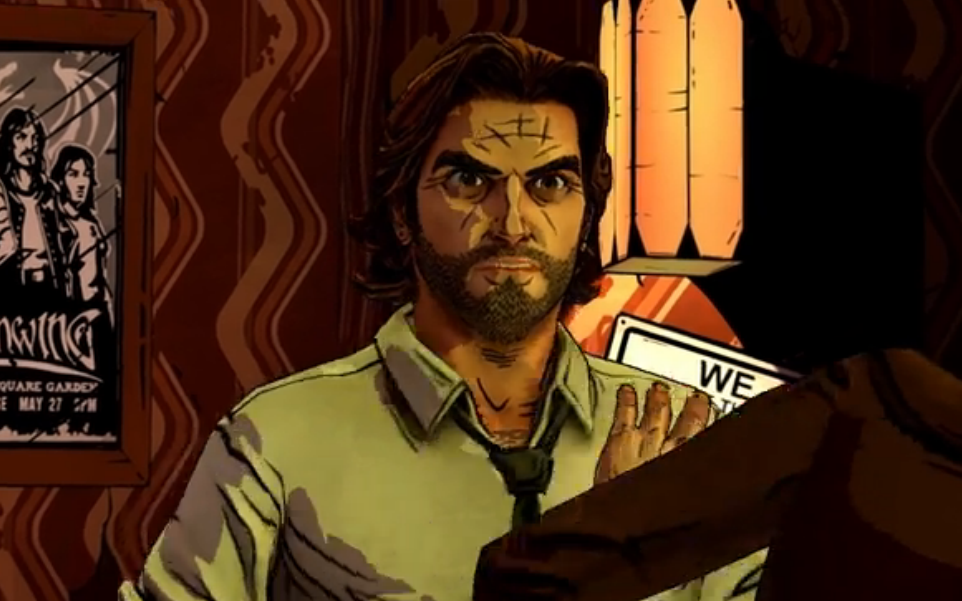
“From a writing standpoint, we talk about voice in different ways. There’s the literal voice, what you hear, what something sounds like. But then there’s the feeling of the character. There’s plenty of [that sort of] capital-v Voice in Fables. And that shines. But literal voice, I don’t [have] a literal voice. So it is definitely strange to see a literal voice dropped into images that you’re used to from the books. I’m really happy with where we got it.”
Shorette is a relative newcomer at Telltale, having joined the team just as episode four of The Walking Dead was coming together. “Episode three got released the day before I interviewed,” Shorette says. “I had just played it the night before and… I was stressed because I was going in for an interview, plus I wanted to make sure I played the game before I went in.
“[It] is definitely strange to see a literal voice dropped into images that you’re used to from the books. I’m really happy with where we got it.”
In moving from The Walking Dead to The Wolf Among Us, Shorette has found that there are more similarities connecting the characters of Lee Everett and Bigby Wolf than a casual observer might expect. Lee is basically an empty container when players first meet him, handcuffed in the back of a police car and on his way to prison. Bigby, on the other hand, comes with the baggage of Fables creator Bill Willingham’s 100+ comic books and assorted spin-offs.
“I think that even in the The Walking Dead, even though Lee did feel like more of a blank slate, if you think about it… he’s an African American man from Georgia, may have killed his wife’s lover, teaches history,” Shorette explains. “There is something there, it’s just not as rich of a background as most people are familiar with in Fables.”
“The amount of space you have with Bigby is still pretty large. He can be a really nice guy, he can be a raging asshole, he can be taking on more of the wolf side of his personality. There’s enough of a range there to where people can have their Bigby in the way that people had their Lee.”
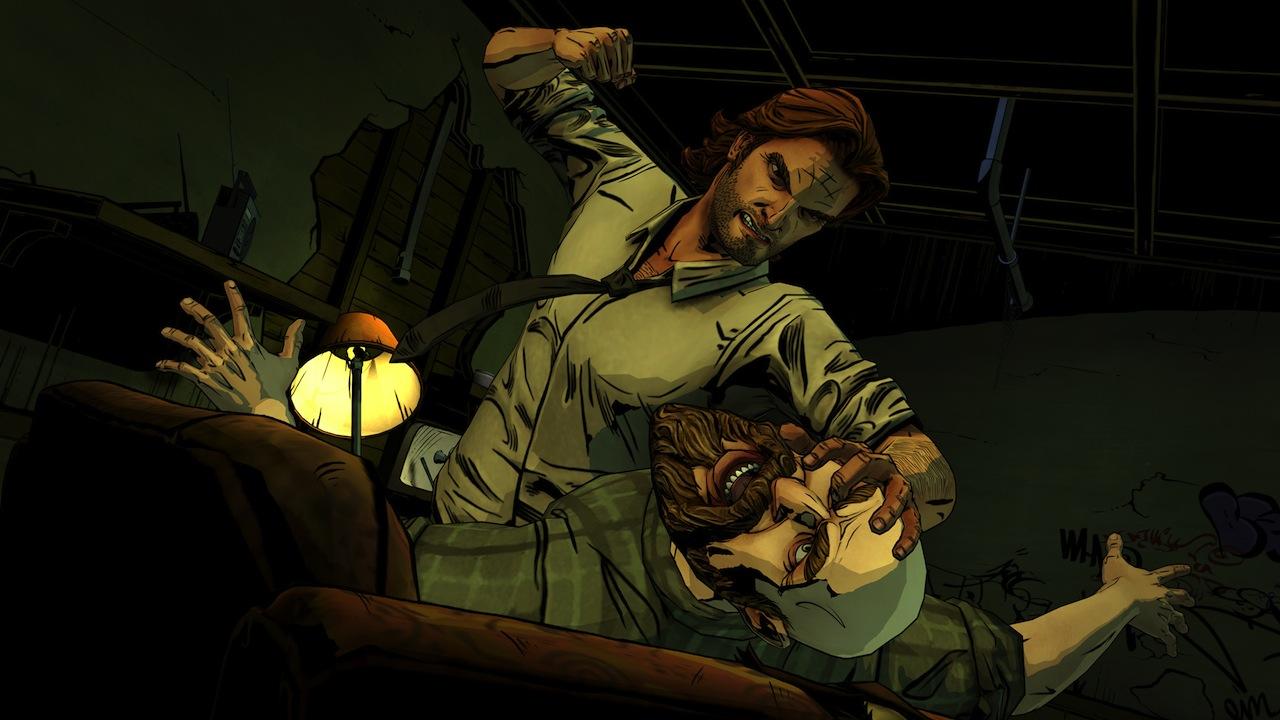
There’s an advantage, of course, in working with something that has established characters to lean on. The Walking Dead is an adaptation of a universe, but familiar faces from the comics are few in number. The Wolf Among Us isn’t just touching on characters we know, it’s writing back story for events and relationships that we’ve already been following along with as fans.
“We can touch on things that are set up in the comics and see maybe where things started or were burgeoning in relationships and how people are with one another, where they came from,” Shorette says. “So it’s totally an advantage in that way because it makes so that if we’re ever stuck on what Bigby would say in a certain situation or what the choices should be, there’s plenty of source material to go to.”
“Stuff like [Bigby’s] World War II era definitely leads up to this, so we took an extra-close look at stuff like that. It’s really directly linked with what we’re writing now.”
Shorette, who worked on The Walking Dead‘s fifth episode before The Wolf Among Us, faced some challenges in transitioning between the two universes. There’s a sense of desperation in both, but where the former’s zombie apocalypse creates a very active feeling of tension at all times, the latter’s “storybook characters trapped in the real world” angle focuses more on the general malaise of being stuck in exile. It’s a different set of sensibilities that you’re bringing to your storytelling.
“I think it took us awhile to reconcile with that, because I think… we’ve all sort of been trying to figure out what makes this good, what makes this work,” Shorette explains. To crack that problem, he and the rest of the team sat down and gave The Walking Dead a top-level look. Strip away the zombies, the apocalypse, everything else, and what are you left with? Relationships.
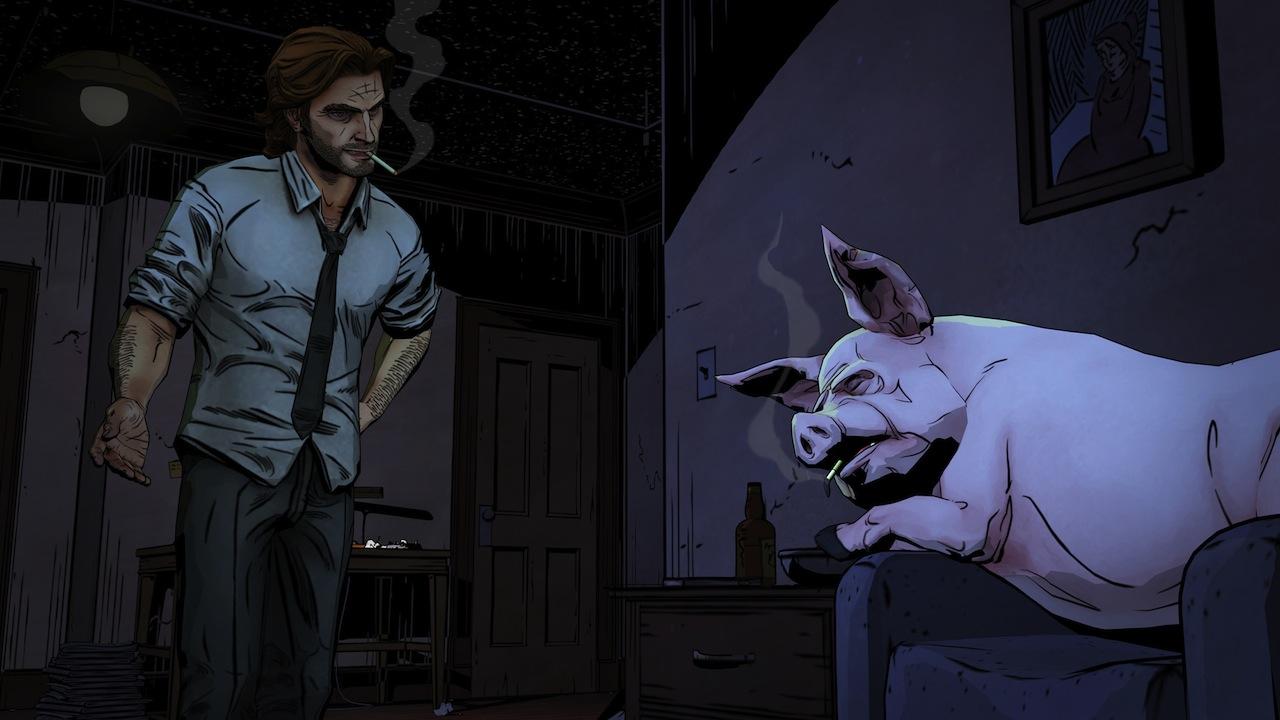
“One of the things we in the writing department… feel [is that] the most important thing to you in these games isn’t necessarily your own safety, it’s really the safety of those you care about. In The Walking Dead, you might die as Lee 30 times if you’re terrible at video games, but seeing his death… it’s less about him dying and it’s more about not being able to help Clementine, not being able to make sure that she’s okay,” Shorette says.
“I think that as long as we keep relationships strong, and as long as you care about the characters in this game – not only yourself, but Bigby and his relationships with those characters – I think we’ll land in a similar place of investment in the story.”
Editors' Recommendations
- 10 years ago, Injustice: Gods Among Us told the definitive ‘evil Superman’ story
- Among Us cameos in Glass Onion, but the timing is sus
- Among Us VR: release date, trailers, gameplay, and more
- Among Us VR, Ghostbusters, and more coming to Meta Quest 2
- Among Us players can horse around in a new April Fools’ mode