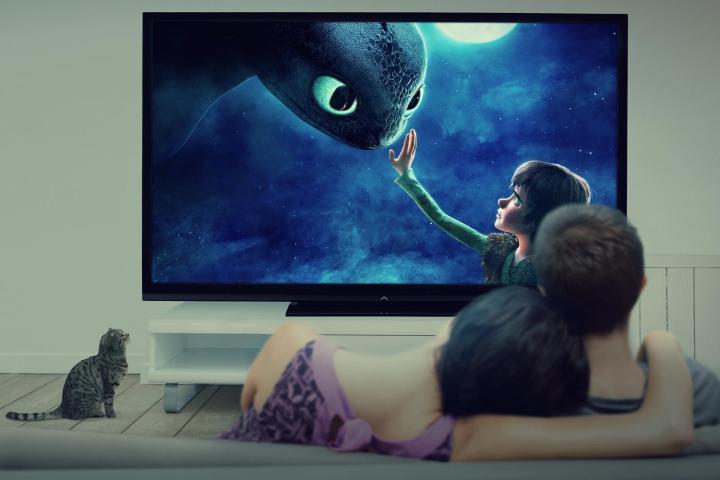
They say video killed the radio star. Will video downloading kill the movie industry? Not if industry insiders can help it.
In an attempt to confront the growing disconnect between modern technology and the sluggish release of movies from theaters to living rooms, the head of DreamWorks Animation, Jeffrey Katzenberg, has proposed an interesting solution. Instead of holding back new releases for months, he wants to cut that time to a few weeks – and charge viewers for the privilege of viewing the piping hot content on a sliding scale, dependent on screen size.
Reported by the BBC, Katzenberg unveiled his new vision of change for the current industry paradigm at a press conference last week. The new model proposed by the media mogul would see movies released for distribution to the public at large after just 17 days in the theater.
“On the 18th day, these movies will be available everywhere ubiquitously and you will pay for the size,” he said.
He laid out a pricing scale for the fresh cut releases based on massive screens and mobile devices, without much middle ground. Under the new model, those with theater-sized screens would pay $15 for a new release. Those with a 75-inch screen (not exactly a common scale for TVs which usually jump from 65-inches to 85-inches) would pay a mere $4, and smartphone viewers would pay $2.
While the move sounds a little radical, it’s also perhaps one of the most rational responses to rapidly evolving technology from a major media insider in years. Katzenberger seems to have seen the writing on the wall when it comes to the shifting media landscape – thanks to better hardware, video streaming and illegal downloading – and is looking to get out in front of the issue. The media industry as a whole is rife with tales of caution from those who didn’t adapt to the changing winds, such as the music industry’s attempt to stop the MP3, or even Sony’s recent profit snafu due in part to sluggish Blu-ray sales.
“Movies are not a growth business,” Katzenberg told audience members. He claimed his new model would “reinvent the enterprise of movies.”
That said, it’s unclear just how studios would regulate the new system. Some sort of security system would need to be put in place for the wide swath of available streaming services and devices, which could be a very tricky proposition. Still, if those hurdles were to be resolved, Katzenberg’s idea could be a great way to combat the proliferation of movie piracy and slowing sales. As has been proven time and again, when a product is offered to the public at a reasonable price, the vast majority choose to pay for it over stealing it.
What do you think of the new model? If you’re a movie pirate, would this new system stop you from heading to your torrent of choice for new releases? Would it stop you from going to the theater as often? Let us know in the comments below.