“Jays has really created a set of unique earphones in the q-Jays that feel almost hand-crafted for a specific set of user.”
- Very small size, comfortable fit
- Should fit most ears
- Plenty of accessories
- Good clarity
- Decent amount of cord feedback
- Fragile cord
- Poor bass
- Overly bright highs at times
- Expensive
Introduction
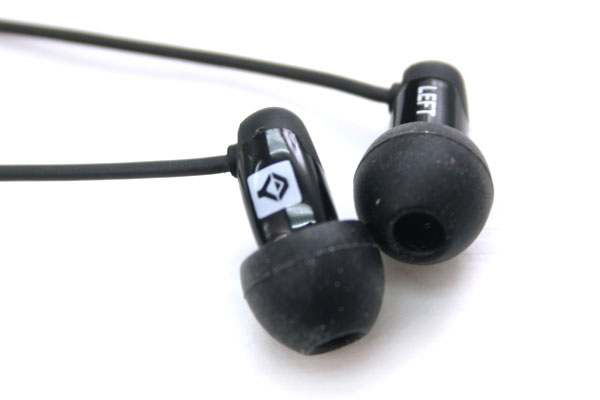
Our friends in Sweden have some new tricks up their sleeves with the q-Jays earphones which the company boasts as having the smallest dual micro armatures available. This means that each earphone features both a miniature sub and tweeter all in a single unit. In itself, this is quite a feat, but when you look at the physical size of these earphones, you will be doubly impressed. However, with a price tag just south of $200, you have to wonder if you are paying for the technology, or the sound.
 Features and Design
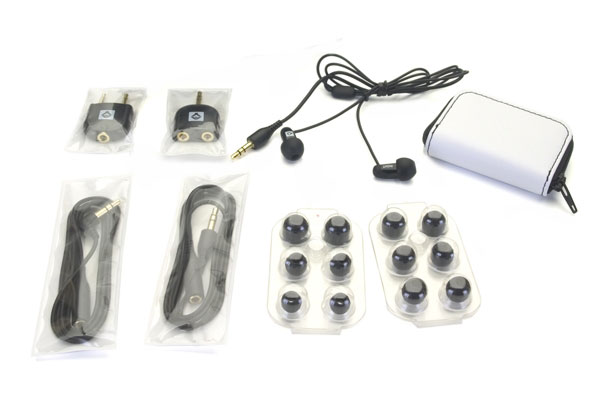
We are a firm believer that any relationship with a good set of earphones is personal affair. There are literally dozens of earphones to choose from, in all ranges of price, comfort, build and sound quality. Jays seems to get this and offers a full range of products that are sure to please even the toughest critics. This time we got our hands on the much hyped about q-Jays which are some of the smallest, and lightest earphones we have had a chance to test – and that is exactly what Jays is shooting for. From the lightweight cord, to the dual micro-armature design, these phones will hardly be a burden to carry or wear. Jays does a great job with the whole presentation and unboxing, providing a nice and thick product manual, more than six pairs of silicon earphone fittings, ear filters, an airline adapter, 1/8” jack adapter and even a cord extension (which is nice for Shuffle owners wanting to get rid of the excess cord length).
Testing and Use
A lot of earphones feature incredibly large drivers that seem to cause ear fatigue in prolonged use, regardless of the size of the silicon tip you opt to use. The q-Jays are quite the opposite. They fit nice-and-snug in the ear, providing a high level of sound isolation from the outside world.
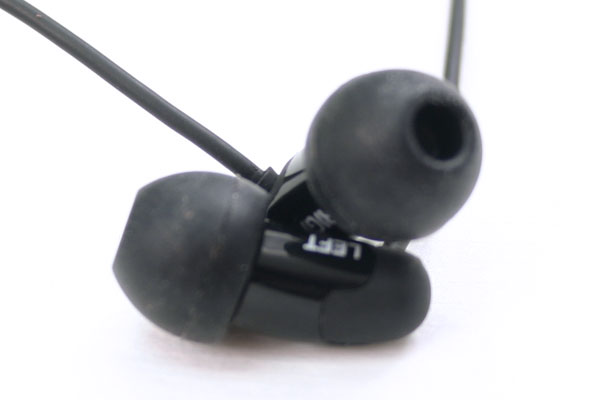 For their diminutive size, the q-Jays are rather impressive. Words from Bebel Gilberto’s Momento sounded true to form with perfectly produced vocals and clear warm acoustics. However bass was non-existent in If We Ever Meet Again by Timbaland’s Shock Value II and Katy Perry’s voice was almost ear shattering and felt brighter than it should have been.
Overall we found the highs to be extremely detailed and even overly bright at times while the mid-range could stand to be warmer.
Those with an affinity for instrumental music should be very pleased with the performance of the q-Jays, while electronic and hip hop fans will miss the lack of bass. We also found ourselves constantly adjusting the volume on our iPod depending on the song, or artist we were playing back – a sign that these are not the most efficient drivers out there.
Another shortcoming we should point out is cord feedback. The sensitivity of the cord is among the worst we have tested. The slightest bump of the cord will give noticeable feedback, so those planning on using these for workout sessions might want to pass.
Conclusion
Jays has really created a set of unique earphones in the q-Jays. They feel almost hand-crafted for a specific set of user, which is fine. But at a price tag close to $200 we feel that there are some better models to choose from for the non-discriminating ear. For the same ball-park price, we would recommend the Etymotic ER-4P’s, and if you really want a great bang-for-your-buck set of sound isolating earphones, take a look at the Sennheiser CX 400-II’s which have an MSRP of $99 and a street price closer to $70.
Highs:
- Very small size, comfortable fit
- Should fit most ears
- Plenty of accessories
- Good clarity
Lows:
- Decent amount of cord feedback
- Fragile cord
- Poor bass
- Overly bright highs at times
- Expensive
Editors' Recommendations
- LG sweetens the deal on its new CineBeam Q projector
- LG’s stylish CineBeam Q projector changes name, hits the U.S. in April
- Q Acoustics’ new M40 powered towers take aim at the compact sweet spot
- Best headphones for running for 2023: JLab, JBL, Shokz, and more
- How do bone conduction headphones work?