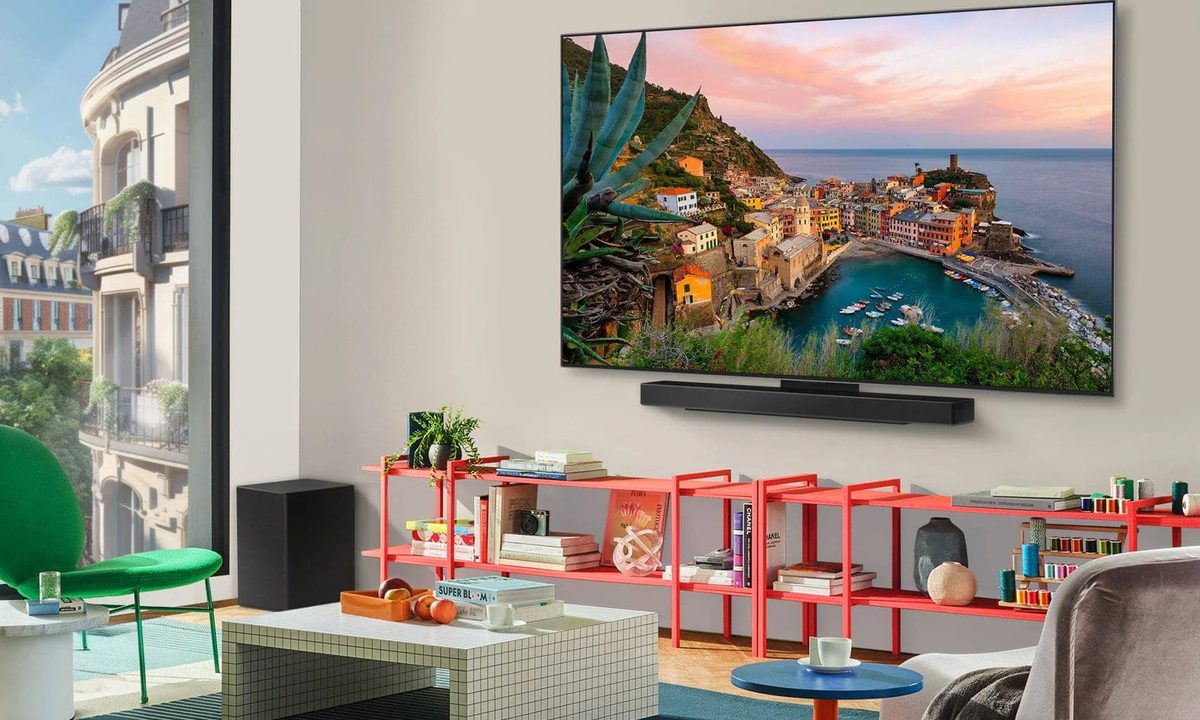
LG has issued a detailed statement addressing concerns about how its smart TVs process voice, viewing and device data, saying its televisions do not continuously record or transmit users’ conversations.
The statement, published on September 12, comes as connected televisions increasingly combine traditional viewing with voice assistants, content recommendations, advertising and smart-home features. LG says some recent media coverage may have created misconceptions about how these systems work and has outlined how its privacy controls operate.
LG explains when its TVs can process your voice.
According to LG, speech-to-text processing begins only after it detects a supported wake word or the user presses the microphone or AI button on the remote. Wake-word detection itself happens locally on the TV, and audio that does not contain the recognised wake word is not converted to text, stored, or transmitted.

On supported models with hands-free voice control enabled, the TV can monitor for the wake word while in standby. LG says that if no wake word is detected, the audio is processed locally and promptly deleted rather than being sent to its servers. Once activated, a voice-recognition session lasts no more than approximately 18 seconds.
There is an important distinction here: during an active voice session, nearby speech or sounds can sometimes appear in the resulting transcription. LG says those records are associated with the specific voice interaction and do not represent continuous recording or storage of conversations around the TV.
The bigger privacy question is what you choose to enable
LG also clarified how Automatic Content Recognition (ACR) works. The optional feature uses audio fingerprinting through the TV’s internal audio processor to identify content. LG says it does not collect screenshots, screen recordings, video recordings or voice recordings for ACR.
ACR, voice recognition and interest-based advertising are described as optional and are not enabled by default. Users can manage or withdraw consent through the TV’s settings, while declining these agreements does not prevent access to core functions such as streaming apps, live TV, HDMI devices and software updates.

That does not mean privacy concerns disappear. LG acknowledges that, depending on the market, user agreements and choices, ACR-related information may be shared with LG Ad Solutions for audience analysis and advertising. In some markets, such data may also qualify as a “sale” or “sharing” of personal information under privacy laws.
For users, the practical takeaway is to check which optional services are enabled on the TV rather than assuming every smart feature works the same way.
LG says it will continue strengthening privacy controls and transparency. It also operates a bug bounty programme and says eligible TVs can receive security updates for up to five years from the initial release of the applicable webOS platform version.