1. Home
  2. Audio / Video
  3. News

Sony’s new 135-inch display is basically boardroom excess in its finest form

Sony’s 135-inch Crystal LED UNIFY is a massive screen built for serious work

Add as a preferred source on Google
Sony Crystal LED Unify in a meeting room
Sony

Sony Electronics is making a massive upgrade to the humble meeting room screen. The company has just unveiled Crystal LED UNIFY, a massive 135-inch all-in-one direct-view LED display designed for boardrooms, meeting rooms, community spaces, and higher education environments.

At a glance, it might look like Sony’s next massive flagship living room TV, but it’s cutting edge display tech arriving to the office space. It is part of Sony’s professional display lineup and sits alongside its existing BRAVIA Professional Displays and Crystal LED portfolio. The model number is ZRL-135SG, and Sony is positioning it as a simpler way for organizations to add a large dvLED display without dealing with the usual complexity of custom LED wall projects.

An easy to setup up giant wall of screen

One of the biggest selling points for the Crystal LED UNIFY is its convenience. It arrives as a complete package with five pre-assembled display units and a control unit. So installation is a relatively straightforward process that can be completed by two people in about an hour. Since direct-view LED installations can get complicated, Sony’s version of the tech isn’t just promising solid visuals. The appeal is the simplified ordering, installation, maintenance, and day-to-day use.

Recommended Videos

The display units are mounted on wall brackets and connected to the included control unit, while a slide-out, front-serviceable design should make maintenance easier after installation.

Built for big bright rooms

Coming to the fun part, Crystal LED UNIFY uses a 1.5mm pixel pitch, Full HD resolution, and 800 cd/m² brightness. Sony has also added Anti-Reflection Surface Technology, which should help visibility in brightly lit rooms where projectors often struggle. The display also supports 4K input, works with Sony’s Device Management Platform, and offers a familiar interface for organizations already using Pro BRAVIA displays. In other words, it should also slot into conference rooms or multi-display setups with needing an IT team to learn an entirely new ecosystem.

Sony has also put effort in making it look clean on a wall. The Crystal LED UNIFY has ultra-slim bezels, a concealed slide-out control unit, and a depth of under 100mm, or less than four inches, when used with the included wall-mount brackets. So it should fit seamlessly in professional spaces.

The company expects Crystal LED UNIFY to be available in early 2027, with plans for an early showcase at the upcoming InfoComm 2026 event in Las Vegas from June 17 to June 19. Pricing has not been announced yet, but this is clearly aimed at businesses, institutions, and premium professional spaces rather than home theater shoppers with unusually large walls.

Vikhyaat Vivek
Vikhyaat Vivek is a tech journalist and reviewer with seven years of experience covering consumer hardware, with a focus on…
Stop joining group projects with a blurry laptop webcam and buy one of these instead
Your laptop webcam is sabotaging your first impression. These five can fix it
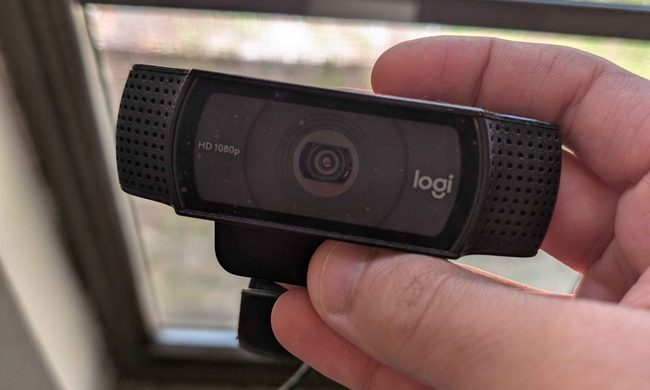
I'm holding my Logitech C920 1080p webcam in my hands.

The webcam built into your laptop might be good enough for a quick call with friends and family. But its shortcomings become much harder to ignore when you are presenting a semester project, interviewing for an internship, or maybe if you're planning to stream for fun.

Laptop cameras also tend to sit far too low, especially when the computer is placed directly on a desk. Meanwhile, a dedicated webcam lets you position the camera closer to eye level. This improves the framing and brings larger sensors, better microphones, and more effective low-light processing.

Read more
I desperately want a new classic Walkman, but Sony probably can’t give me one
Tech minimalism is begging for a new Walkman. Though rebuilding it may be close to impossible
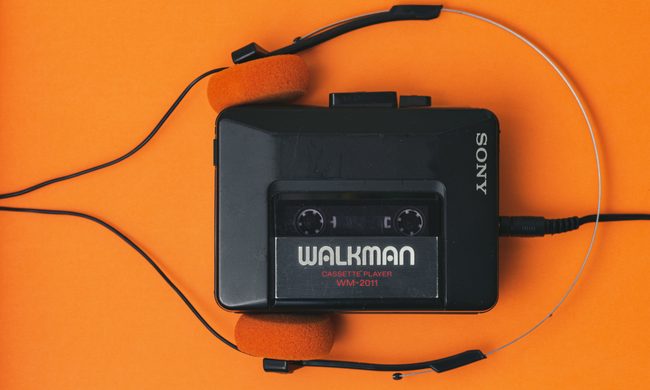
Sony Walkman WM2011

Every few months, another piece of tech that seems obsolete crawls out of a drawer and becomes cool again. The age of minimalism has revived the popularity of iPods among younger buyers. Dumbphones have become an escape hatch from endless notifications. Similarly, digital cameras are dangling from bags again. Physical media keeps attracting people who want something they can actually hold instead of another frustrating subscription.

All of this makes it the perfect time for Sony to bring back the classic Walkman, which was a phenomenon during the 80s and 90s. I would love one. Give me a compact cassette player, physical buttons, and wired headphones. Keep the apps, notifications, and algorithms that shape your taste of music. No more AI assistants or personalzied feeds, just you and your Walkman. There is only one problem though. Recreating the Walkman that people love and remember, would be far harder than putting an old design back into production.

Read more
Proton reveals how smart TVs track you and the escape situation is pretty grim 
Modern smart TVs fingerprint your screen content at the chipset level.
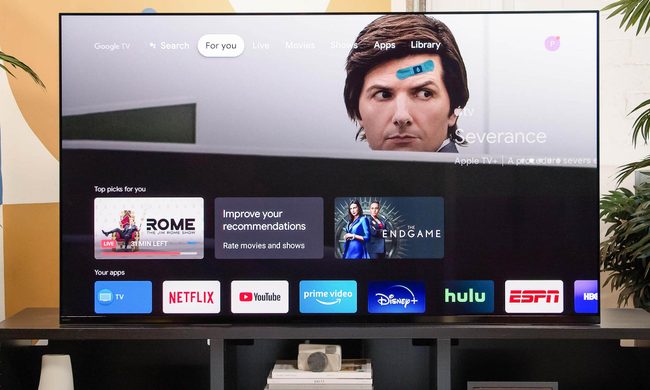
Google TV applications on the Sony A95K TV.

Your smart TV may know far more about your viewing habits than you realize, even if you rarely use its smart features. In a new privacy explainer, Proton warns that many modern TVs quietly collect data about everything displayed on the screen and share it with manufacturers, advertisers, and analytics companies.

The worrying part is that escaping this tracking is becoming increasingly difficult because many privacy controls are buried deep in settings or enabled by default. Proton argues that buying a smart TV today often means accepting a level of surveillance that most people never knowingly signed up for.

Read more