  1. Home
  2. Smart Home
  3. Emerging Tech
  4. News

Haier introduces a new solid state wine cooler at CES

Add as a preferred source on Google

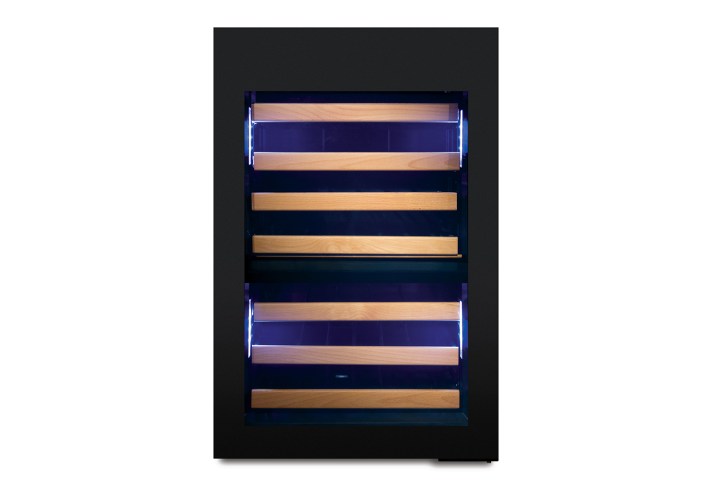
Buying wine may be a tricky business in and of itself, but storing it could be even more difficult. With minute temperature and humidity requirements, maintaining your impressive collection is an art in and of itself. Luckily, Haier America — and its continued improvements upon wine cooling systems — is here to help. At this year’s Consumer Electronics Show, the New Jersey-based subsidiary of the Haier Group is demonstrating its new alternative cooling system for wine cellars.

The company couples a solid-state chip that is 25 times lighter and 100 times smaller than other cooling compressors with H20/C02 heat exchange technology to create a precise and motionless storage system for even your most prized vintages. Whereas many storage systems are comprised of moving parts, which give way to vibrations (and that annoying humming noise), Haier’s latest wine cellar “uses advanced solid state cooling components and a heat exchange system with no moving parts, creating a completely still wine storage environment.” And because it’s still, it’s also silent.

Recommended Videos

“To maintain its quality, wine requires precise storage conditions with optimal environment needs to preserve taste that can be affected by subtle vibrations or temperature changes,” said Paul Riley, senior vice president of sales and marketing for Haier America. “This advanced compressor-less cooling technology commercialized by Haier creates the ideal storage conditions for your wine.”

With dual power control electronics, this next-generation wine cellar system can detect temperature changes at 0.5°F increments, allowing it to maintain a truly consistent environment for your vino. And with its constant humidity controls, you won’t have to worry about your wine oxidizing either.

Haier is partnering with Phononic for the device’s production, and Tony Atti, the manufacturer’s CEO, calls Haier’s solution “disruptive.”

“Haier has created an award-winning wine cellar that perfectly preserves wine and we believe this is just the beginning of a cold storage revolution for the home,” said Atti. There’s no word yet on release dates or prices, but wine connoisseurs, you’re going to want to get ready.

Lulu Chang
Fascinated by the effects of technology on human interaction, Lulu believes that if her parents can use your new app…
My smart home experiment has reached its natural limit
Smart-home technology keeps improving, but being easier to automate doesn’t make everything worth automating
Computer, Electronics, Laptop, Smart Home

The first device I added to my smart home was a light bulb. It seemed like the safest possible place to start. I could turn it on from anywhere, put it on a schedule, and eventually work it into routines with everything else.

Then I tapped the button in the app and waited. The delay was only about half a second, but half a second is surprisingly noticeable when the alternative is a wall switch that responds immediately and has never once asked for a firmware update. Using my phone was worse. I had to unlock it, find the app, open the right room, and tap the light I could have switched on several steps earlier.

Read more
Google Home’s Interactive Storytime feature has me wondering who actually asked for this
Google Home gets interactive AI storytime, smarter alarms, and broader camera support.
Computer, Electronics, Tablet Computer

Google Home's latest update introduces several new features, including Gemini-powered Interactive Storytime. While I’m not sure who asked for the feature, it lets families build original stories about specific topics on the fly, instead of just listening to a known story. 

So what's the big new feature here?

Read more
Proxima wants to move blood tests into the home, and it has cleared an important early hurdle
The portable analyzer delivers blood-count results in about 20 minutes, but its promise depends on transparent clinical data
Furniture, Table, Desk

Algocyte’s Proxima is designed to run blood-count tests from a small finger-prick sample and send the results to a clinician in about 20 minutes. For patients who need frequent monitoring, that could mean fewer trips to a clinic or laboratory.

The device has also moved beyond the concept stage. Proxima carries UK conformity credentials, while Algocyte operates under a certified medical-device quality system. Those steps give the project more weight than a prototype shown at a launch event.

Read more