
Did you know you may have a huge battery in your basement or utility closet? I didn’t. It’s been hiding in plain sight there for years, and Power X wants to unlock its potential for you. I sat down to speak with Power X CEO Manuel Schoenfield who told me about it — and it’s an interesting idea.
Power X is a New York-based startup that wants to use smart sensors and artificial intelligence (A.I.) I to fix the way power is used today. We’ve talked before about smart home devices that can help you monitor your power usage. I looked at Sense about a year ago (almost to the day) and have since found it helpful at figuring out where my power was going. Power X will do something similar, but bigger in a few different ways.
More than just electricity consumption
First and foremost, Power X will be able to monitor not one, but three utilities at once. In addition to monitoring your electrical usage, Power X can also monitor your water usage and your water heater usage. Using all three of those sensors, Power X can give you a much clearer picture of what’s going on and can identify devices in use much more quickly and accurately.
For example, when your dishwasher turns on, Power X will note a draw in electricity and water and be able to figure out much more quickly that this device is in fact a dishwasher. Put into perspective, Sense has been hooked up to my power box for a year now and there are still devices it hasn’t identified.
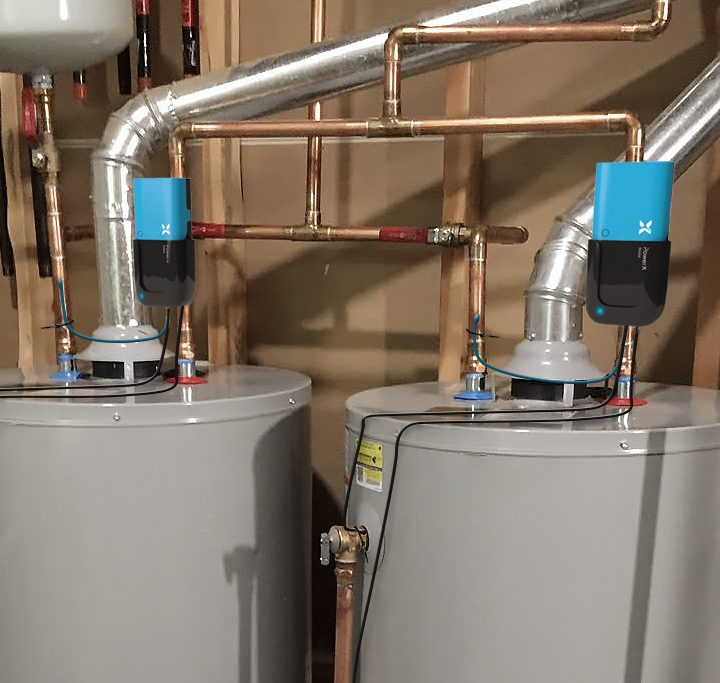
Your hidden “battery”
Second, and this is where we talk about that battery hidden in plain sight, Power X says it can use your water heater as a sort of “battery” to store power. If you’re like me, you just muttered “What the…?” under your breath, so allow me to explain. Power X is using the term “battery” in a more metaphorical sense.
Your water heater uses energy to heat up the water in its tank, and it takes a crazy amount of power to do that. Once your water tank is hot enough, it uses additional energy to maintain that heat. According to Power X, most water heaters lose between 2% and 6% of their heat energy per day. What that means is that water heaters can retain 94% to 98% of their energy every day, and that’s where the “battery” comes into effect.
Power X can monitor the heat of the water in the tank and only heat up that water when power demand is low. From a user perspective, that means you’ll always have hot water, but it’ll be heated when power demand is low. That can lead to cost savings. In fact, after heating and cooling appliances, water heaters are typically the next thing on the list that uses the most energy in a home on a daily basis. That breaks down to about 14% of the total usage, versus 4% for TV and media equipment.
From a power grid perspective, a community full of Power X water heaters can ease the burden on the grid by only firing up those water heaters when power demand is low, like during the day or in the middle of the night, or it can fire up those heaters when renewable energy sources are at their peak, like solar and wind power. This leads to an overall relief on the power grid at large, while still maintaining the user’s needs at home.
Just the beginning
Power X is in the beginning phases of its life, having recently completed a Kickstarter campaign and raising a round of seed funding to the tune of $4 million. This is on the back of a pilot program that Power X ran in the New England area during an admittedly odd 2020. Obviously, the pandemic affected home power usage dramatically, but according to Schoenfield, Power X still managed to save its pilot testers money on their bills.
For natural gas, customers were saving an average of 24.1% (peak 84.4%) on their water heating costs and for electricity, customers cut their power consumption by an average of 16.3% (peak 37%). I’ll be testing the system myself later this summer when sales begin to ship, so stay tuned for that. In the meantime, you can learn more by heading over to the Power X website for more details. In order to get a clearer picture of your smart home, it goes beyond just monitoring the electricity that your gadgets use.


