If you’re like most people, you’ve probably amassed a drawer of unused electronics over the years. Many of these are probably smartphones — after all, carriers offer great promotions nowadays, giving you a chance to upgrade your device every two years without paying hefty fees. However, instead of letting your old smartphones collect dust (or worse, throwing them away), consider turning them into a makeshift security camera.
There are plenty of great iOS and Android apps available that help turn your old smartphone into a security camera. These work by using your old smartphone’s built-in cameras to provide a live stream to your new smartphone. Best of all, many of these are affordable (or free) and work with just about any phone you might have purchased over the last decade.
Keep in mind that your smartphone isn’t weatherproof, meaning these apps are designed to create indoor security cameras. Be sure to check out our list of the best outdoor security cameras for options designed for your yard or porch.
Below you’ll find a list of the best apps that turn your smartphone into a security camera. Along with downloading these apps, you’ll want to invest in some sort of mounting system. Nothing is stopping you from trying to use these apps while resting your phone against a countertop or propped up on a stack of books — but if you want robust coverage, you’ll want to permanently connect it to an electrical outlet for continuous power and get it mounted in an ideal spot. If you need help, check out our guide on how to place security cameras throughout your home.
Alfred
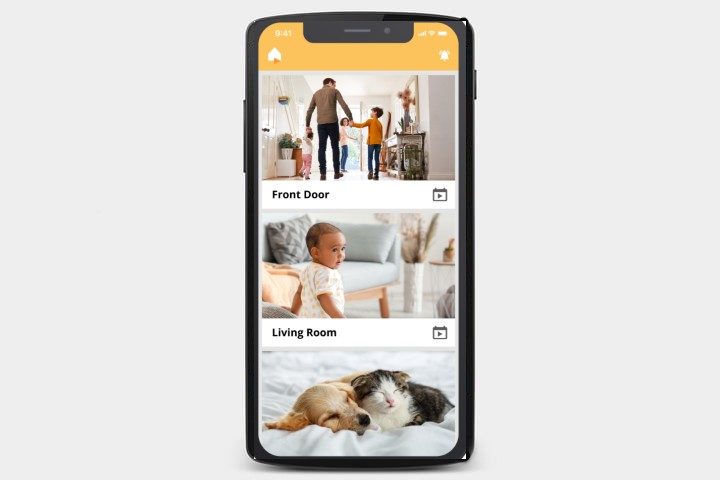
If you’re looking for the best security cam app to turn an old phone into a security asset, Alfred is your pick. This excellently designed app is installed on two phones — one for using your phone’s camera as a security cam, and one for controlling all of your settings and viewing footage.
Not only do you get streaming footage on your phone, but Alfred also offers a siren feature, two-way talking, motion detection, and a low-light filter. There’s also a “trust circle,” where friends will be able to access the cam themselves if necessary. It even works for multiple smartphone-turned-cam devices for whole-house monitoring. Paid versions are available for more advanced storage features.
The catch is that you have to have a fairly advanced smartphone to take advantage of all these features, so using a particularly old phone may not be very efficient.
AtHome Camera

AtHome is another app packed with useful features, including two-way talk options, night vision, and A.I. learning to recognize moving people as opposed to branches swaying in the wind. There’s also a mode that gives you a 24-hour time-lapse of everything the cam saw in the last 24 hours, so you can quickly look for anything suspicious.
If your phone has the right sensors, it can even automatically start filming if it detects vibration. Note that there are two versions of the app, one for the phone that will act as a cam, and one for your own phone for controls, so make sure you download the right options.
Manything

Manything is a free iOS app that can convert your iPhone, iPod Touch, or iPad into a Wi-Fi-connected security camera. Then, you can use a second iOS device as your mobile monitor or opt to keep an eye on things from the Manything web app.
This app provides more than just a security camera; it’s also got its own IFTTT channel, so you can link it to a huge range of web services and connected devices. For example, if you’ve got Philips Hue lights in your house, you could set them to turn on automatically whenever Manything detects motion — making your phone act as both a motion-activated smart switch and a handy home security tool that makes it look like someone’s at home.
Dormi
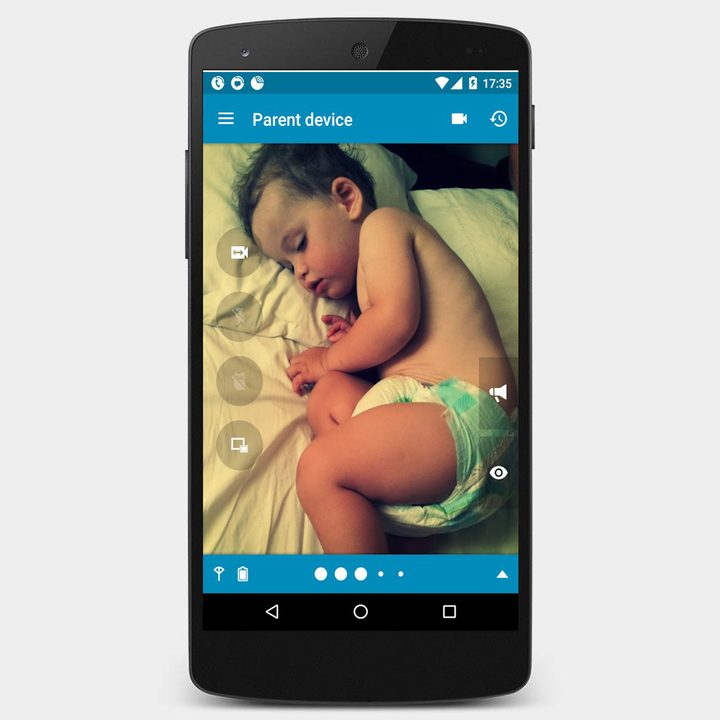
For $7, Dormi will take any Android phone or tablet running Gingerbread version 3.2 or greater and put its internet connectivity and advanced video and audio sensors to good use.
You plug the device into the wall, and it operates like a regular baby monitor. You can use your primary phone to monitor audio or video at any point in a drop-in style. Another option is to configure the app to send you automatic alerts when your baby wakes up. It continually senses ambient noise in a given room, which is what activates the notifications. As soon as your little bundle of joy wakes up and starts crying, you’ll know.
Cloud Baby Monitor
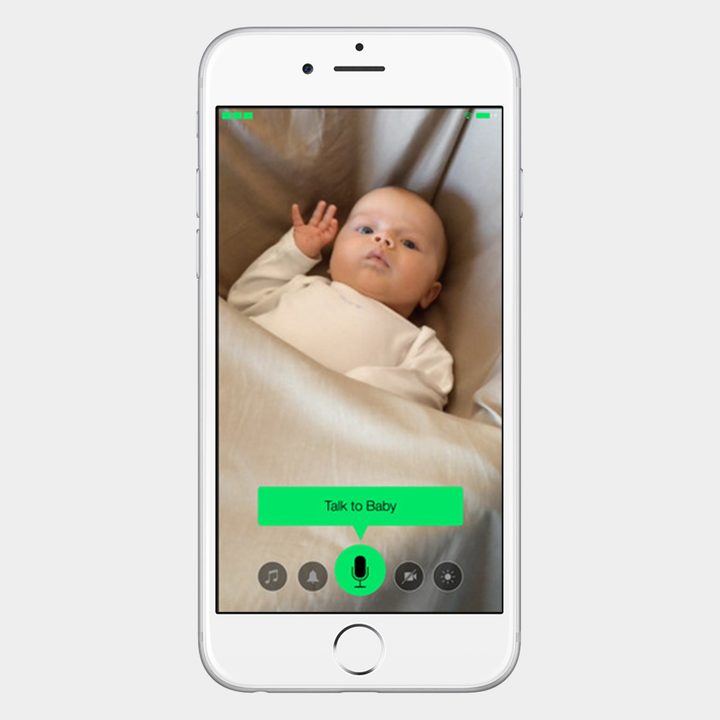
The Cloud Baby Monitor app affords you high-quality video and unlimited range through Wi-Fi, 3G, or LTE. It’s incredibly versatile, functioning as either a home security camera or a baby monitor.
Cloud Baby Monitor alerts you to both sound and motion, as well as allows you to talk to your little one remotely. This baby monitor can also play a lullaby or soothing white noise to help your baby get to sleep. Since it’s compatible with the Apple Watch, you can get motion or noise alerts right on your wrist no matter where you are.
Cloud Baby Monitor is also compatible with Mac computers, which includes both baby monitors and security operations. This baby monitor lets you keep an eye on your little one or your home using iOS while you’re out running errands or at work.
It can be challenging to figure out what to do with an old cell phone if you upgrade to a new one. Naturally, it’s not a good idea to throw it away only for it to sit for decades in a landfill, but you also don’t want to throw it in your junk drawer and let it sit there for years, either. It’s ideal to reuse your old electronics when you can, and Cloud Baby Monitor enables you to do that.
All it takes is the download of one simple app, and you can reuse your old cell phone and turn it into a small, portable security camera or a baby monitor. You don’t have to shell out a bunch of money to keep your baby, family, and home protected; repurpose your cell phone and enjoy peace of mind without paying a penny.