
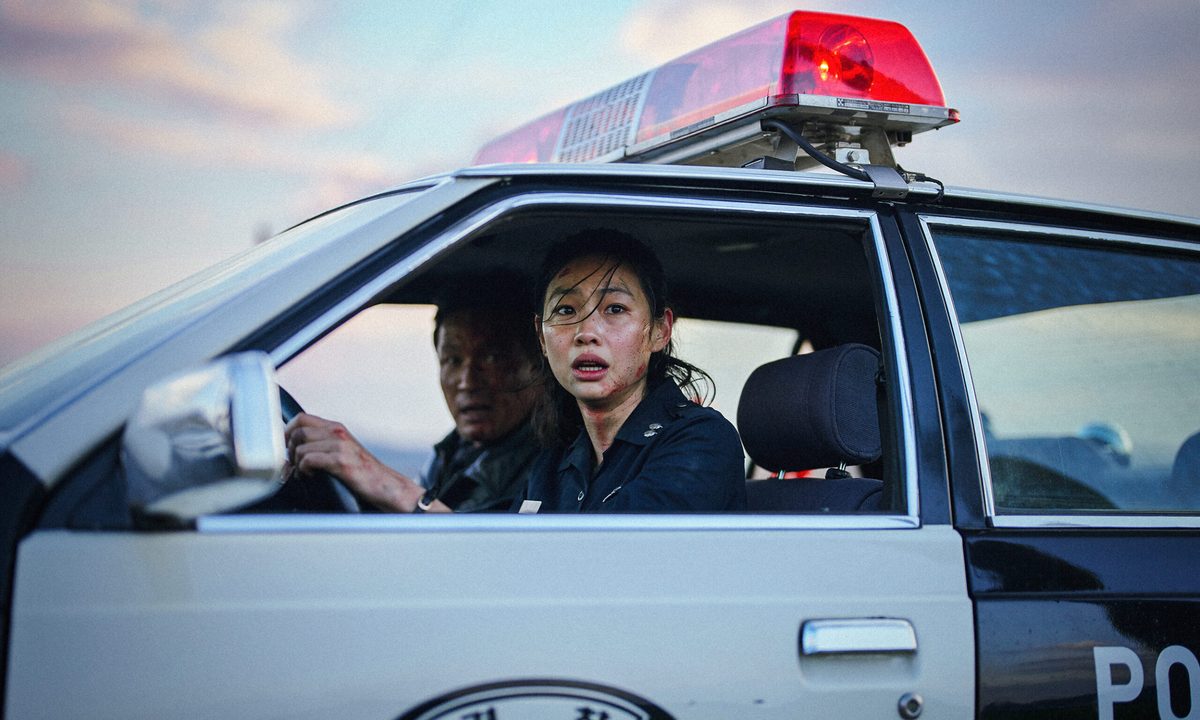
Ten years after releasing his horror film The Wailing, filmmaker Na Hong-jin has returned with a new feature, the epic sci-fi thriller Hope. Set in the town of Hope Harbor, this South Korean film follows the police chief (Hwang Jung-min), his deputy (Hoyeon), and a team of hunters as they try to kill a giant creature rampaging through their village, leaving death and destruction in its path.
Nominated for the Palme d’Or at the Cannes Film Festival, Hope delivers a suspenseful, gory, and action-packed adventure in the vein of Jaws and Attack on Titan. Having already premiered in South Korea, the movie has received a 78% “Fresh” rating from critics on Rotten Tomatoes. Acclaimed film studio NEON is now set to distribute the movie throughout the United States, giving American audiences a chance to see this unhinged, ultraviolent adventure.
In an interview with Digital Trends, Na broke down his inspirations for Hope and his ten-year journey bringing it from script to screen.
This transcript has been edited for length and clarity.
Digital Trends: What exactly was your inspiration for the story of Hope?
Na: Rather than being inspired by something in particular, I would say my overall inspiration for the film was people, the interior worlds of people, and the more primal sides of people. So those are the ideas that inspired me, and I’ve been writing and revising the script based on those ideas.
Digital Trends: Awesome. Now, as far as the filmmaking process, were there any specific movies that inspired you while you were crafting the film?
Na: I would say there’s a lot of movies that inspire the making of Hope. But they’re not the movies that you might be thinking of. They weren’t necessarily creature films. I was inspired more by movies that focused on people.
Digital Trends: Well, [Hope‘s] your first feature-length film as a director since your 2016 picture The Wailing, which I absolutely love. And I read that you actually came up with the idea for Hope back in 2017 or 2018. So why did you decide to make Hope now?

Na: I don’t know if you’re aware of this, but during that time is when there was a lot of news and rumors about an impending war in Korea. So there [was] news about fighter jets that were flying in Pyongyang, and it was almost like people were believing that war might break out any time soon. And I think the ideas for Hope started during that particular time.
Digital Trends: Oh, wow. I had no idea. Thank you for clarifying that. So how does it feel to have finally gotten your film finally made? What do you think audiences will get out of the story after all the work that you put into it?
Na: I just hope that they would simply have fun, that they would relieve their stress watching it, and that they’ll be able to enjoy it. As for the symbolic meaning behind the story of the film that I think a lot of the journalists are interested in, I think it’s simple enough that it can be applicable to most things that most people experience in their daily lives or in the news.
So I hope that the audience will focus more on enjoying the film rather than thinking about what’s the symbolic meaning behind it…and now that I’m done with the film, I genuinely just want to take a break and catch up on sleep.
Digital Trends: Okay, that’s great to hear. And I’d really like to talk about the cast. So not only do you have South Korean actors leading the film, but you also have some North American and European actors like Taylor Russell, Cameron Britton, Alicia Vikander, and Michael Fassbender. What was it like collaborating with this cast of both Western and Eastern actors?

Na: That cultural difference between our two different casts hadn’t occurred to me at all. Just like you said in the question, I also expected actors from the West to be different in terms of how I work with them. But there was no difference at all. And they were just the same as the Korean actors. And I truly enjoyed working with them.
Digital Trends: That’s terrific. So we sort of touched on this before, but what specific challenges did you face while filming Hope, if any? What [were] some of the hardest things you had to do in order to film this movie?
Na: I think I had the hardest time during post-production, specifically when we were working on the sound mixing.
Digital Trends: So, all in all, what scene in the movie do you think will stick out to audiences the most? What do you think will really latch onto their brains once they see this movie for the first time?
Na: I would have to pick the opening scene as the scene that I love the most. And as for other elements of the film that I hope sticks with the audience is a sense of speed, of action, of catharsis, and suspense. I hope all of that remains with the audience.
Hope premieres in U.S. theaters on September 9.


