  1. Home
  2. Entertainment
  3. Virtual Reality
  4. News

Netflix will air Marco Polo and Daredevil in HDR, but don’t hold your breath for VR

Add as a preferred source on Google

As 4K HDR (high dynamic range) television sets are becoming more popular and accessible, Netflix is set to take advantage and offer more upscale content to its subscribers. And though virtual reality is gaining steam, CNBC reports that the streaming service will not be boarding the VR wagon for the foreseeable future.

HDR video has been around for some time, and has made its way into television, films, video games, and photography. Essentially, it offers a greater contrasts between the darkest and lightest colors on a display. The brightest colors seem to pop, and images seen in a higher contrast can be more preferable to those displayed in a higher resolution with a lower contrast.

Recommended Videos

4K is a newer tech used mostly by TV manufacturers that essentially quadruples the number of pixels of a standard HD image. Samsung and LG both launched television sets that support both technologies in the past year.

Netflix is planning to have 600 hours of 4K content by the end of the year, while it also prepares to offer HDR support. The first season of Marco Polo as well as the second season of Daredevil will be the first ones available in HDR.

“Something that’s a little bit more out there that we’re really excited about is the notion of HDR or high dynamic range,” Chris Jaffe, the vice president of user interface innovation at Netflix said during a media briefing at Mobile World Congress (MWC) in Barcelona on Thursday. “It’s less about packing more pixels on the screen like the move from HD to Ultra HD 4K was, it’s about extending the total range of those pixels.” According to Jaffe, HDR support will launch later in the year.

Though you can buy a 4K HDR TV, expect to shell out some big bucks as you wait for HDR television content to catch up with the more established 4K. But there is some consolation, as Samsung reportedly told CNBC that it was “working with movie studios and content creators to begin accelerating the drive toward HDR content.” Speculation suggests that Netflix take part in this, as it will be spending $5 billion on original and licensed programming this year. While Netflix is banking on a fall in HDR TV prices, Jaffe says that 4K sets will be the more popular consumer choice for the time being.

Meanwhile, virtual reality is finding a foothold with the recently unveiled Samsung Gear 360 camera and HTC Vive VR headest, both of which were on display at MWC. Indeed, VR created quite a buzz in Barcelona, but Netflix is not quite ready to embrace the hype.

“We think there’s a great opportunity for VR in gaming and the gaming space is going to be an interesting place for them to explore it,” Jaffe said. We don’t see an opportunity right now in the near-term for Netflix and VR, but we do want to watch how great story tellers use this technology.

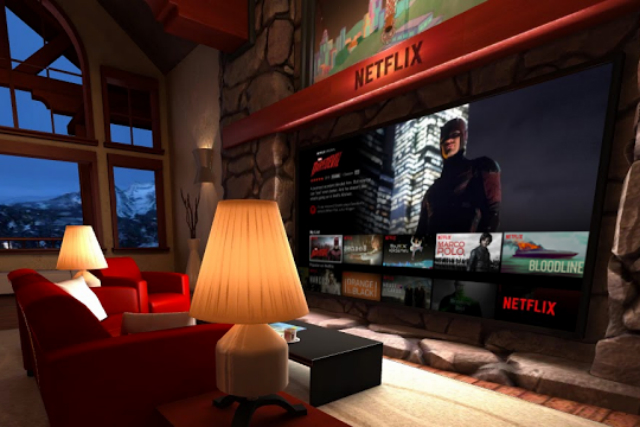
Netflix has launched an app for the Samsung Gear VR headset, but will sit tight and see how VR fares with consumers before producing its own such content. The streaming firm did launch an app for Samsung’s Gear VR headset, but it’s not planning to make any shows in virtual reality. Jaffe added that Netflix is just waiting to see if VR takes off with consumers.

Albert Khoury
Former Weekend Editor
Al started his career at a downtown Manhattan publisher, and has since worked with digital and print publications. He's…
Spotify’s new conversational AI can play tracks you request and answer your music questions
A ChatGPT-like AI feature is coming to Spotify for music requests and listening-history questions
spotify

Spotify is rolling out a new AI-powered conversational feature that lets Premium users talk directly to the app about what they want to hear. Users can type or speak a request and refine the results through follow-up questions instead of manually searching for a song, podcast, or audiobook.

The feature is available from Spotify’s Home and Now Playing screens and works much like a personal audio assistant. It can choose what plays, answer questions about the current track or album, recommend something new, and look through your listening history to provide more personalized responses.

Read more
Christopher Nolan’s personal take on smartphones is surprisingly practical
Christopher Nolan says not owning a smartphone helps him think better
Christopher Nolan sits in front of an IMAX camera.

Christopher Nolan has spent his career embracing cutting-edge filmmaking technology while resisting one of the most common gadgets on the planet: the smartphone. The Oscar-winning director behind Oppenheimer, Inception, and the upcoming The Odyssey says his decision isn't about rejecting technology altogether. It's about protecting something he believes has become increasingly rare - time to think.

In an interview with The Telegraph ahead of the premiere of The Odyssey, Nolan explained that he still doesn't own a smartphone, despite living in a world where QR codes, digital tickets, and messaging apps have become everyday necessities. His reasoning, however, is far more practical than philosophical.

Read more
Letterboxd could find a new home at Netflix, but Sony is fighting for it, too
Netflix wants Letterboxd, but Hollywood isn't letting it go without a fight
Letterboxd

Letterboxd, the fast-growing social network for film lovers, could soon have a new owner. According to a report by Puck News, the New Zealand-based platform has been exploring a potential sale, attracting interest from several major entertainment companies, including Netflix, Sony Pictures Entertainment, and Paramount Skydance.

While no deal has been confirmed, the discussions highlight how valuable online fan communities have become as streaming platforms compete not just for viewers, but also for the audiences that influence what people watch next.

Read more