


Apple has spent years watching Samsung and other Android brands refine foldable phones, so expectations were always going to be high for the iPhone Duo. One of the biggest questions was the crease running through the middle of its 7.6-inch folding display. Early hands-on impressions suggest Apple has managed to make it remarkably subtle, and the company has now explained part of how it pulled that off.
Speaking to TechRadar, Apple VP of Hardware Engineering Tom Marieb said the Duo’s matte nano-texture finish plays an important role. Glossy displays are highly reflective, which makes small variations in the surface easier to see. Apple chose a matte finish because it is more forgiving of changes around the hinge as the display ages. Marieb was confident enough to tell journalists, “Hold us accountable to that, please.”
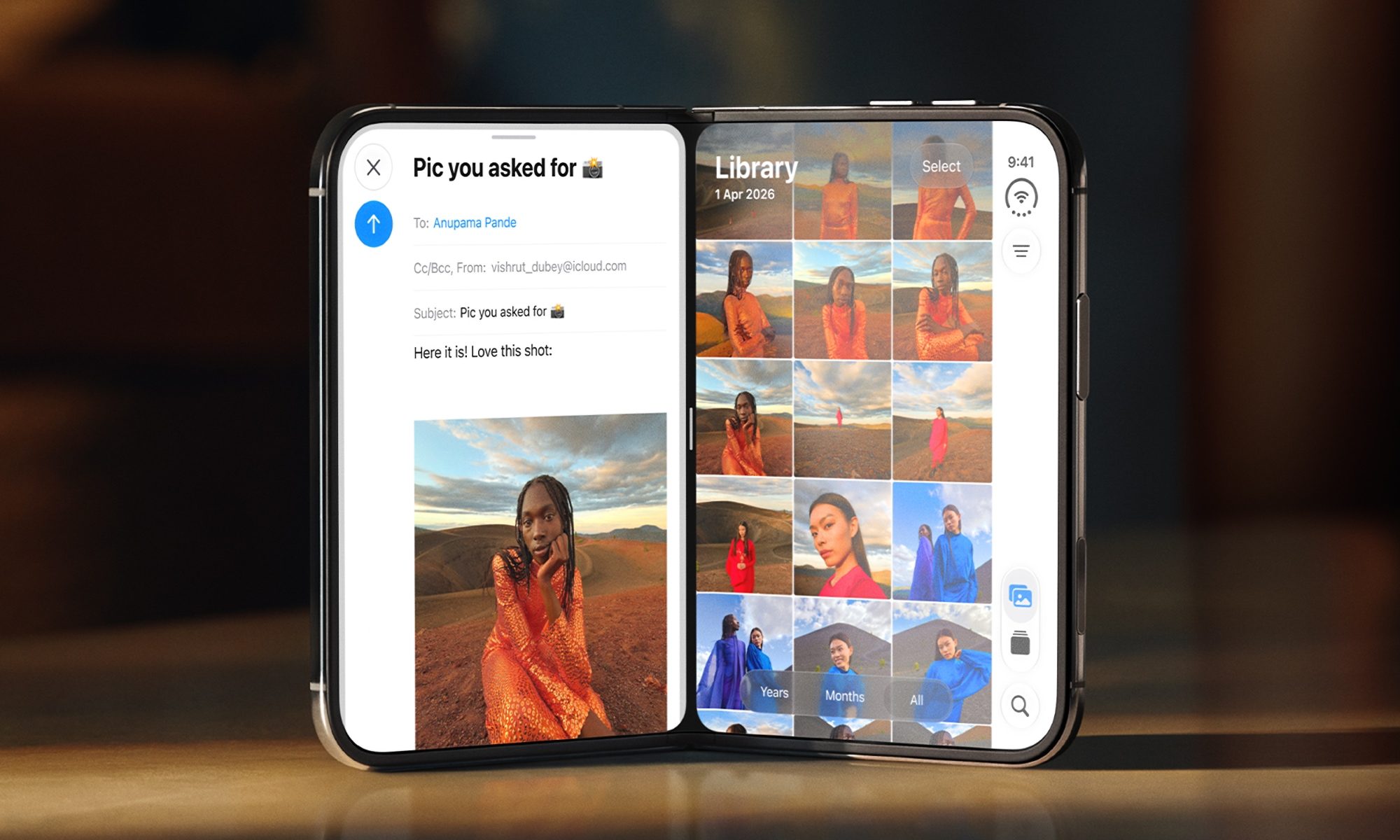
Apple is using the display finish to its advantage
Apple has also spent considerable effort on the hinge underneath the display. Marieb said the company tuned its torque profile so the Duo feels solid when fully open, closed, or left partially folded, rather than loose or floppy at different angles.
Apple is also accounting for what happens after months or years of folding. TechRadar pointed out that creases on foldables can become more prominent after extended use, and Marieb’s response makes clear that the matte finish is intended to keep those changes around the hinge from becoming as visually obvious over time.
It is a clever solution, but Apple is also leaning on a display treatment that comes with an unavoidable visual trade-off.
The matte display is still a compromise
Matte displays can soften some of the contrast and crispness people expect from a glossy OLED panel. Apple can refine its nano-texture coating, but it cannot remove the basic optical difference between matte and glossy surfaces.
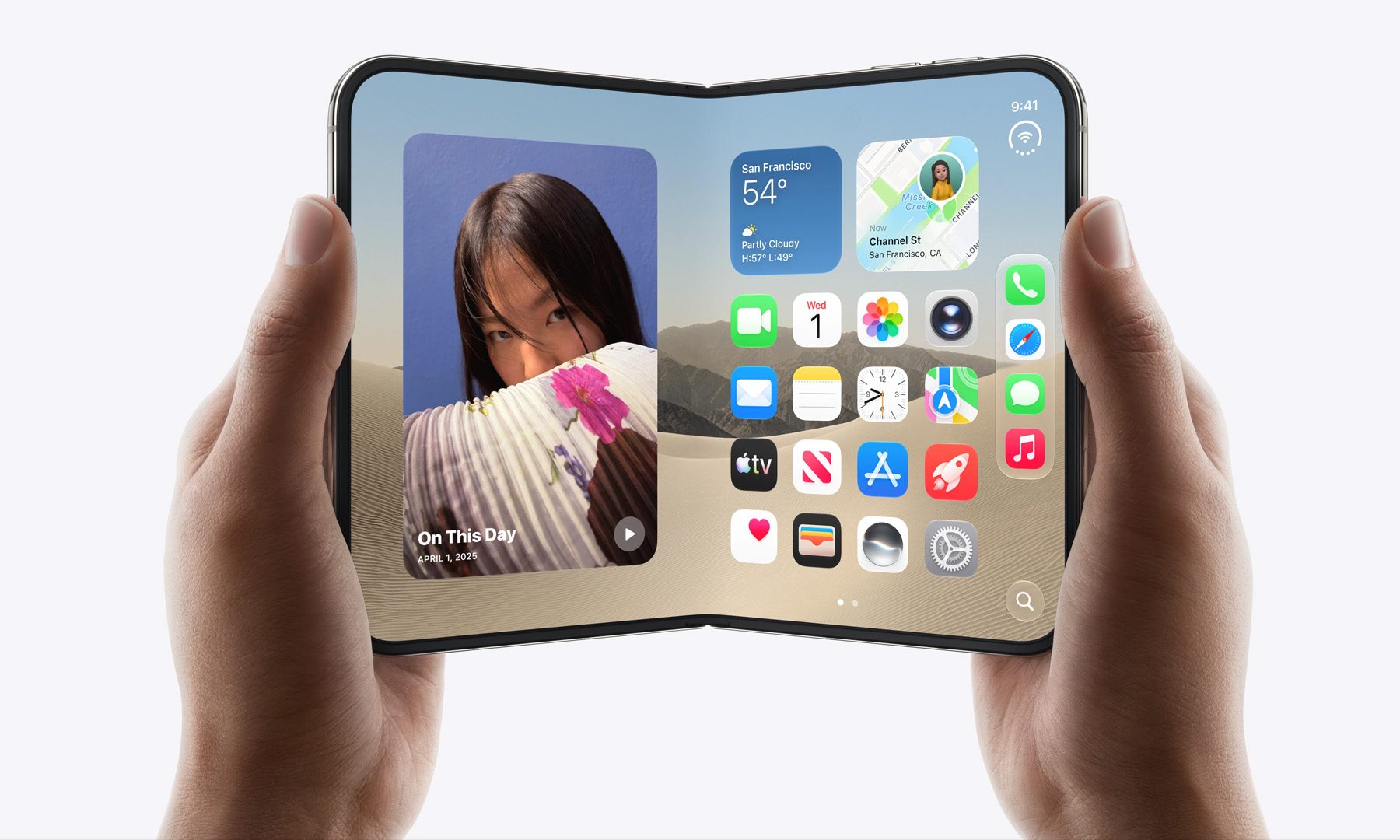
The issue carries more weight on a book-style foldable because the large inner screen is one of the main reasons to buy one. The Duo’s 7.6-inch inner display gives users far more room for video, games, reading, and other content that benefits from a larger canvas. Watching YouTube, streaming movies, or looking through photos will be a major part of the experience.
Samsung takes the more conventional glossy OLED route on the Galaxy Z Fold 8. Apple is asking buyers to accept a different-looking panel in exchange for fewer reflections and a crease that should remain less visible over time. Proper one-on-one display comparisons between the two phones are not available yet. Those should start appearing closer to October 23, when the iPhone Duo reaches customers and reviews come out. The results should give us a much better idea of how much visual quality Apple has traded for the less noticeable crease.
RELATED COVERAGE:
- iPhone Duo has unleashed a whole new MagSafe headache
- Three reasons I’m still hesitant to order the iPhone Duo
- iPhone Duo is late to the party, but gets better dust and water resistance than Samsung
- I tried all the iPhone 18 Pro colors, and Burgundy isn’t the ‘it’ shade I’d tell you to pick this year


