  1. Home
  2. Phones
  3. Mobile
  4. Photography
  5. News

Astrophotography: Google reveals how the Pixel 4 nails those night shots

Add as a preferred source on Google
Google

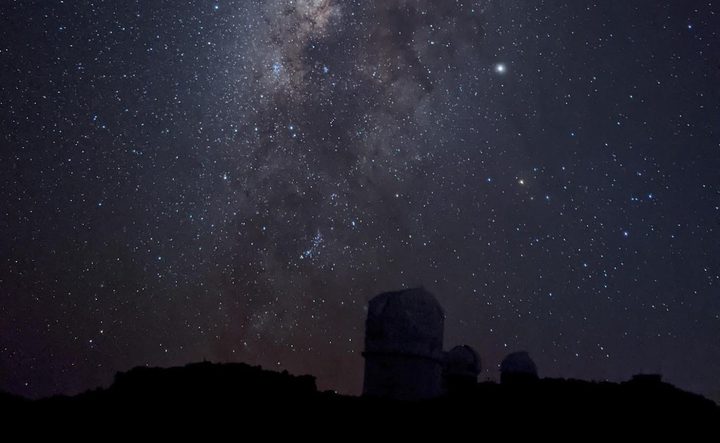
Google’s astrophotography mode that launched recently with the Pixel 4 before arriving for the Pixel 2 and 3 devices has proved a hit with fans of the night sky.

Using Google’s Camera app, the astrophotography mode lets you capture stunning shots of the stars that would usually involve photography equipment far bulkier and pricier than a simple smartphone.

Recommended Videos

With so much interest in the feature, the tech giant this week decided to offer some insight into how it works, explaining some of its smarts in a blog post.

The astrophotography mode is essentially a more advanced version of Night Sight, the powerful low-light feature that launched with the Pixel 3 in 2018.

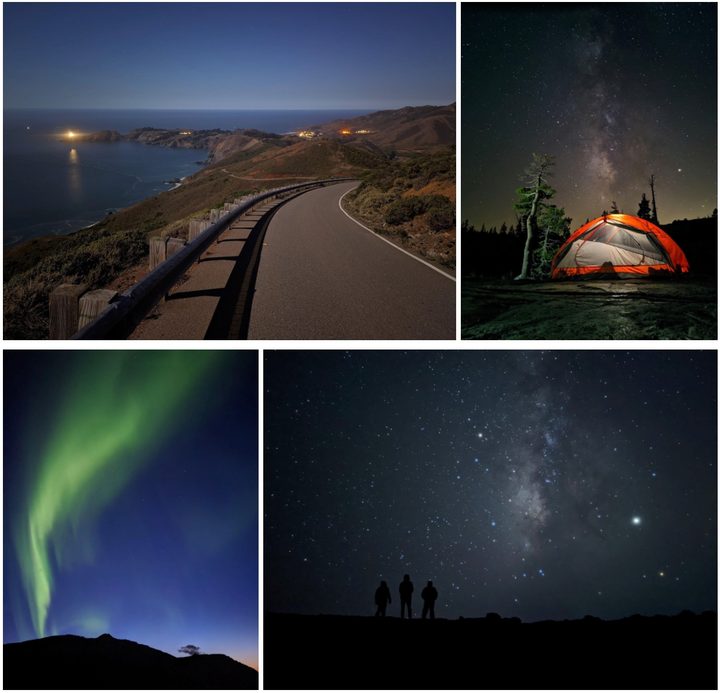
“This year’s version of Night Sight pushes the boundaries of low-light photography with phone cameras,” Google’s photography team wrote in the post. “By allowing exposures up to 4 minutes on Pixel 4, and 1 minute on Pixel 3 and 3a, the latest version makes it possible to take sharp and clear pictures of the stars in the night sky or of night-time landscapes without any artificial light.”
Google

The post covers a fair bit of ground, including how the feature helps to avoid camera shake and blurring from in-scene motion by splitting long exposures into multiple frames before automatically aligning them to create a sharp image.

For the astrophotography mode, the Pixel 4’s per-frame exposure time lasts no more than 16 seconds for a maximum of 15 frames. Longer exposures would create so-called “star trails” caused by the celestial bodies “moving” through the sky. While some astrophotographers like to capture images with star trails, Google’s feature aims to create pictures that make the stars “look like points of light.”

Google’s piece also explains how the software deals with what are known as warm and hot pixels, tiny bright dots that can appear with longer exposures captured by digital camera sensors.

According to Google, warm and hot pixels can be identified “by comparing the values of neighboring pixels within the same frame and across the sequence of frames recorded for a photo, and looking for outliers.” Once located, the pixel is then concealed by replacing its value with the average of its neighbors. “Since the original pixel value is discarded, there is a loss of image information, but in practice this does not noticeably affect image quality,” Google said.

The piece goes on to talk about how the software brightens the display to aid composition, and how it manages to ensure sharp focusing in the challenging low-light conditions.

It also explains how it uses machine learning to reduce noise and selectively darken the sky, giving a more realistic impression of the scene at the time, and making those stars, and the rest of the image, really pop.

You can find the article here.

Trevor Mogg
Contributing Editor
Not so many moons ago, Trevor moved from one tea-loving island nation that drives on the left (Britain) to another (Japan)…
Monster Hunter Rise is heading to Android and iOS through Netflix
Netflix looks set to bring Capcom’s Monster Hunter Rise to phones and tablets.
Monster Hunter Rise on Android and iOS

Monster Hunter Rise could soon be making the jump to phones and tablets. Store pages for a new Monster Hunter Rise Netflix edition have appeared on Google Play and Apple’s App Store, pointing to an upcoming mobile release through Netflix Games.

Netflix will publish the mobile version, which will require an active membership despite being free to download. Neither store listing gives us a release date yet, but this appears to be the full game rather than a stripped-down mobile spin-off.

Read more
Google is building a “black box” for Android AI, but the agents aren’t inside yet
AISeal begins by securing personal context before bringing models and autonomous assistants into the vault
Gemini AI on a phone.

Google has introduced AISeal, a hardware-isolated vault for the personal data that Android AI assistants will need. It’s designed to protect that information even if an attacker compromises the phone’s main operating system.

Think of the “black box” as a locked workspace inside the phone. Google is starting with secure storage for personal context, such as messages and calendar events. AI models and autonomous agents are supposed to move into that workspace later.

Read more
The phone that let me play Ghost of Tsushima is getting a sleek sequel
I pushed Red Magic’s last gaming phone to its limits. Now, we know what the next-gen model looks like
Red Magic 12 Pro+ Featured

I've already seen how far Red Magic lets you push a smartphone. When I reviewed the Red Magic 11S Pro, I threw benchmarks, emulation, extended gaming sessions, and eventually the PC version of Ghost of Tsushima at it. With some tweaking, I even saw the game climb beyond 40fps and occasionally touch 60fps in Diablo mode.

The experiment wasn't always stable, but watching a phone run AAA titles is just insane. Now, we finally have an official look at what the brand is building next, and I'm excited to say the least. Red Magic has revealed the full exterior of the upcoming RedMagic 12 Pro+ ahead of its October 15 launch in China. The phone will come in Transparent Dark Night, Transparent Silver Wing, and Transparent Ice Blue, with the company's visible RGB liquid-cooling hardware once again proudly showing through the rear panel.

Read more