  1. Home
  2. Phones
  3. Mobile
  4. News

Last hurrah: BlackBerry will make one more phone with a physical keyboard

Here's a first look at alleged images of the new BlackBerry

Add as a preferred source on Google

Feeling nostalgic for those days of yore when your phone came with a physical keyboard? Well, those days may soon be returning. According to John Chen, the CEO of BlackBerry, those who just can’t get enough of clicking away on an actual keypad may soon have reason to celebrate. “We have one keyboard phone I promised people,” Chen told Bloomberg TV. “It’s coming.”

Given that BlackBerry announced earlier in 2016 that it would no longer be designing or making its own smartphones, it looks like the firm is planning for one last hurrah and one that is true to BlackBerry’s signature keyboard. Because surely, we cannot live in a world where the only option is a touchscreen.

Recommended Videos

On Saturday, Chinese social network Weibo posted what appears to be leaked images of the upcoming BlackBerry phone. However, the authenticity of these images has not been verified.
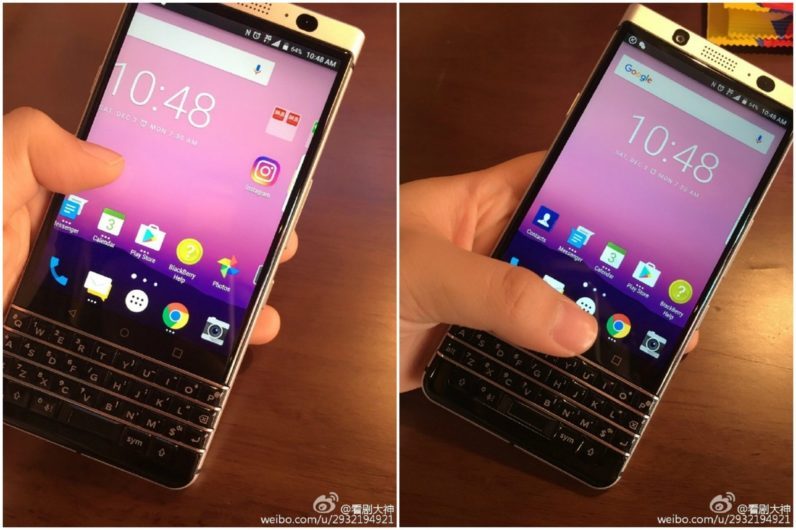
mercury-collage-796x530
Image used with permission by copyright holder

While no specs were released alongside the alleged images, rumors have suggested that the new handset will feature a 4.5-inch full HD display, a 2GHz octa-core Qualcomm processor, 3GB of RAM, an 18MP rear-facing camera, and an 8MP front-facing camera. As for its operating system, we can probably count on Android 7.0 Nougat.

It’s still unclear as to when the handset would be released and how much it would cost. For that matter, those of us in the U.S. might not even be able to get carrier support for a new BlackBerry, especially now that the company has moved more and more in the direction of software and away from its hardware roots.

While Chen has hinted at the possibility of a new BlackBerry phone with its trademark keyboard, his Bloomberg TV interview was the first confirmation we received of the handset. Now that he has really sent the rumor mill churning, we will be sure to keep you posted on any new developments about the smartphone.

But don’t hold your breath, friends. This one may be in the works for a while.

Article originally published in November. Updated on 12-5-2016 by Lulu Chang: Added leaked images and specs. 

Lulu Chang
Fascinated by the effects of technology on human interaction, Lulu believes that if her parents can use your new app…
The iPhone Duo is already sold out for Christmas, and you might not get one until 2027
Missed the preorder? Your best shot is a store line.
iPhone Duo

Preorder day is supposed to be the easy part of buying a new iPhone. It should involve little more than visiting Apple’s website, choosing the storage and color options, and paying the asking price to reserve a unit.

With Apple’s first foldable, that isn’t the case. Apple opened pre-orders for the iPhone Duo on Friday, October 16, 2026, and within an hour, delivery dates had slipped well into next year.

Read more
Samsung might swap the Galaxy S27 Ultra’s chip if Qualcomm can’t keep it cool
Qualcomm has until mid-October to chill out, or Exynos gets its comeback moment.
Samsung Galaxy S26 Ultra smartphone in blue color.

Nobody wants a phone that doubles as a hand warmer, and Samsung clearly agrees. As reported by Seoul Economic Daily, Samsung is unhappy with how Qualcomm’s next flagship chip handles heat, and that could shake up what powers the Galaxy S27 Ultra when it arrives early next year.

Qualcomm revealed the Snapdragon 8 Elite Extreme 6th generation last month, and Samsung has been putting it through its final round of testing. The results haven’t been great. During long, demanding tasks, the chip kept running hotter than Samsung’s limits allow, and its performance took a hit.

Read more
Google is bringing Android earthquake alerts to more than 200 regions
Google’s earthquake warning network is expanding again after reaching one billion alerts worldwide.
1 billion Google earthquake alerts sent

Google is expanding the Android Earthquake Alerts System to more than 200 countries and regions, up from 98 previously. The company says the system has already sent more than one billion earthquake alerts since it began rolling out.

The latest expansion includes places such as Panama and Guatemala. Google is also changing the alerts themselves, adding more information for people who may only have a few seconds to react before shaking begins.

Read more