
  1. Home
  2. Phones
  3. Mobile
  4. Evergreens

Does the Samsung Galaxy S25 have a 120Hz display?

Add as a preferred source on Google
Samsung Galaxy S25 Plus and Galaxy S25 Ultra.
Samsung Galaxy S25 (left), Galaxy S25 Plus, and Galaxy S25 Ultra Andy Boxall / Digital Trends
galaxy unpacked 2025
This story is part of our Samsung Galaxy Unpacked 2026 coverage
Updated less than 1 day ago

The Galaxy S25 is Samsung’s newest compact flagship. It sports a more refined design and focuses on enhancing the experience with better AI features. Now Galaxy AI has had time to mature, you get plenty of useful features on the device that are touted to make your day-to-day experience better. The new Samsung Galaxy S25, S25 Plus, and Galaxy S24 Ultra don’t feature game-changing hardware upgrades and one such spec on the sheet is its display. You get the same “Dynamic AMOLED 2X Display” panel as the Galaxy S24, S24 Plus, and S24 Ultra. Here’s what it means in terms of refresh rate and quality.

Does the Samsung Galaxy S25 range have a 120Hz screen?
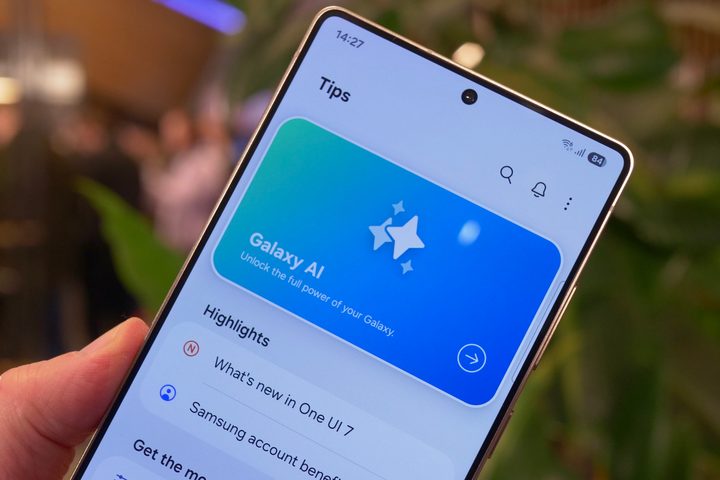
The Samsung Galaxy S25 Ultra with the Galaxy AI screen.
Andy Boxall / Digital Trends

The Samsung Galaxy S25 features a 6.2-inch screen, while you get 6.7-inch and 6.9-inch displays on the bigger Galaxy S25 Plus and Galaxy S25 Ultra flagship phones. While screen sizes vary in size, all of them have a Dynamic AMOLED 2X Display with a “Super Smooth refresh rate.”

Recommended Videos

This is Samsung’s marketing term to denote a 120Hz dynamic refresh rate on its smartphones. The answer is, yes, the Galaxy S25 trio has a 120Hz screen. It can go from 1Hz to 120Hz depending on the content on the screen. For instance, it can go down to 1Hz on Always’on display to save battery, and up to 120Hz when scrolling and gaming for a smooth experience.

This 120Hz refresh rate means, at its fastest, the Galaxy S25 range has twice the refresh rate of traditional 60Hz displays on older smartphones. But what does that really mean, and should you actually care? You absolutely should, and here’s why.

How does the 120Hz refresh rate benefit the Galaxy S25 range?
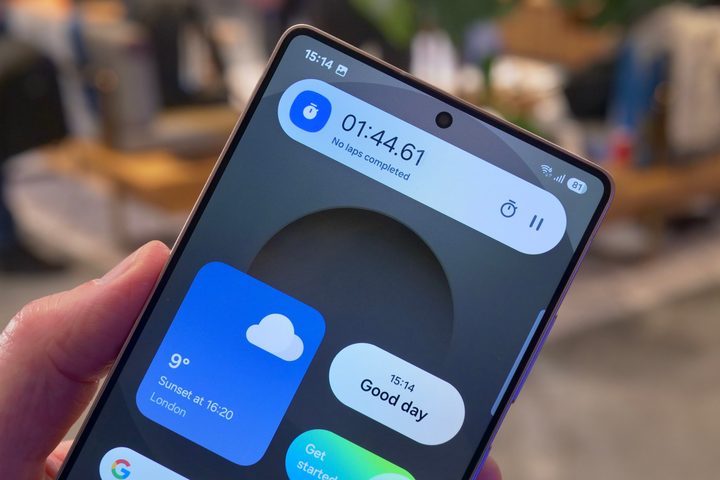
A timer running on the Samsung Galaxy S25 Ultra.
Andy Boxall / Digital Trends

In short, the refresh rate measures how many times the static image on a screen changes each second (how many frames it shows) in Hertz (Hz). As mentioned, having a screen that switches between 1Hz and 120Hz refresh rate based on the on-screen content means you get a more efficient setup, since it’ll be able to turn down the refresh rate when viewing static images, or reading webpages. If you switch over to a game, or scroll down the page, no problem, it’ll ratchet up the refresh rate to match. A lower refresh rate means a lower power drain, so the screen being able to swap dynamically means your battery will end up lasting longer.

What does a higher refresh rate do in practice? The 120Hz refresh rate on the Galaxy S25 series means you get smoother scrolling, transitions, animations, and enhanced responsiveness on all three phones. It also contributes to less tearing and stuttering when watching videos. Plus, if you play games on your smartphone, you’ll notice less motion blur, more precise controls, and more responsive gameplay with a higher refresh rate display.

The Galaxy S25 still costs the same $799 as the Galaxy S24. Despite minimal upgrades, it holds its ground at that price against the Googe Pixel 9.

Prakhar Khanna
Prakhar Khanna is an independent consumer tech journalist. He contributes to Digital Trends' Mobile section with features and…
I found six Android phone bargains worth your attention during Amazon’s Prime Big Deal Days
Electronics, Screen, Computer Hardware

Finding a genuine smartphone bargain during Amazon's Prime Big Deal Days can feel like searching for a needle in a haystack. To save you the hassle, I've sifted through the noise to select six standout deals on Android phones that deliver incredible value for every budget. From budget picks under $300 to cutting-edge foldables, these six picks deliver real savings of up to 33% off.

Google Pixel 11 Pro – $849 (23% off)

Read more
5 Amazon Prime Day charging accessory deals I’d grab before they sell out
From a wireless charging station to a high-capacity power bank, these five deals can make keeping your devices topped up a whole lot easier.
Electronics, Mobile Phone, Phone

Charging accessories aren't the most exciting gadgets to shop for, but the right ones can make a surprisingly big difference to your setup. Whether you want one station to handle all your devices, a wireless charger for your desk or nightstand, a power bank that can keep your laptop running, or a single brick capable of charging five devices at once, Amazon's Prime Big Deal Days has some worthwhile options. I've sifted through the barrage of off-brand junk to find five charging accessories that are worth your attention, with discounts that make them even more tempting.

Anker Nano 7-in-1 Charging Station – $59.98 (25% off)

Read more
A US state just approved an AI doctor. For now, it’ll only prescribe acne cures.
Aside from acne, Nolla's AI can also handle redness, fine lines and wrinkles, hyperpigmentation and dark spots, and under-eye bags.
Nolla Derm AI doctor app.

The first AI doctor is here. Despite all the skepticism and risks associated with AI models going haywire, the state of Utah just approved Nolla Health, a company that is providing an AI healthcare expert capable of writing prescriptions without any human in the chain. For now, it will only write acne prescriptions for Utah residents over 18 years of age, willing to pay a token monthly subscription fee that's lighter than your Spotify bill.

The big push here is that the Nolla Derm app will reduce the costs of medical consultation, save users the hassle of clinic visits, and take out the problem of waitlisting from the entire healthcare equation. “Unlike telehealth platforms that use AI only to collect information before handing patients off to clinicians, Nolla's AI system is designed to independently issue initial prescriptions within tightly defined, physician-approved treatment protocols,” writes the company. 

Read more