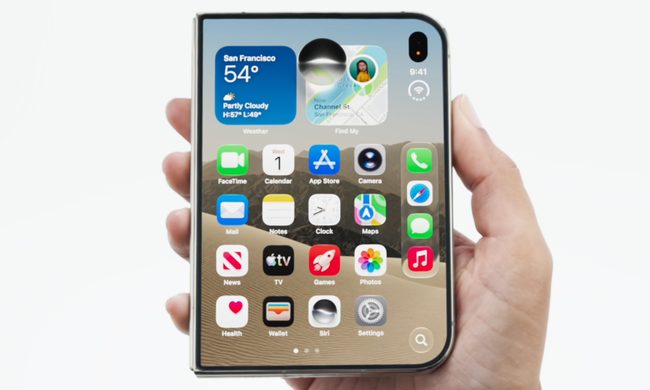
Samsung may have spearheaded the foldable smartphone revolution with its Fold series devices, but the company is in for some serious competition from rivals as the market for foldable phones is set to explode in the years to come. A recent IDC (International Data Corporation) report predicts that the market for foldable smartphones will show a healthy growth rate for the next three years. IDC’s predictions for foldable phones seem to stem from the stellar shipment figures of foldable devices from 2020 to 2021.
This one-year period saw shipments of foldable smartphones reach just over 7.1 million units in 2021, from a paltry figure of 1.7 million units in 2020. This growth, according to IDC, was largely fueled by the popularity of the Samsung Galaxy Z Flip 3, which, in hindsight, may just be remembered as the first successful mass-market foldable smartphone. The IDC report goes on to predict that the foldable smartphone space will continue on a high-growth trajectory for the next three years, with shipments reaching 27.6 million units by 2025. This translates to a compound annual growth rate (CAGR) of 69.9% in the five-year period from 2020 to 2025.
More importantly, the 27.6 million units of foldable phones projected to ship in 2025 will have a total market value of $29 billion.

Still a niche product in 2025?
Even though IDC’s figure of 27.6 million shipments for foldable phones looks impressive, it will only represent 1.8% of the smartphone shipments in 2025, a year when IDC expects manufacturers to ship more than 1.5 billion smartphones. There is no denying, however, that this increase will primarily come from an uptick in the number of premium smartphone buyers showing a willingness to abandon the traditional candy bar form factor and switch to the newer (and cooler) foldable design.
Interestingly, even within the foldable space, there seems to be competition brewing between the flip and fold form factors, and as of 2021, the flip form factor appears to be winning. Consumers seem to have taken a liking for the flip form factor made famous by the Galaxy Z Flip 3. And even though the phone’s compact dimensions (when folded) may have attracted a lot of buyers, IDC attributes the significant sales figures of the flip form factor to its relatively affordable price tag of around $1,000. The Galaxy Z Fold 3, on the other hand, continues to be out of bounds for even the most ardent of Samsung fans due to its nearly $2,000 price tag.
But given how fast the foldable space is evolving, IDC thinks it is still too early to pick a winner between these two form factors. There is a sizable chance that future refinements to the fold form factor and a reduction in production cost may lead to a $1,000 Galaxy Z Fold 4 in the years to come. Then there is the prospect of aggressive Chinese smartphone brands like Oppo, Xiaomi, and Vivo driving down the cost of foldable phones across the board, eventually forcing Samsung to do the same for the Fold series as well.
A great opportunity for brands
A key takeaway from the IDC report was how manufacturers see the evolution of the foldable segment as a major growth opportunity. With smartphone sales plateauing in most developed economies — primarily due to the lack of innovation in smartphone design for well over a decade — the visual change in smartphone design brought about by the arrival of foldables may rekindle consumer interest in smartphones.
Brands are also keen on gauging how the foldable form factor would attract buyers who wanted something that could double up as a smartphone and a tablet. IDC, however, believes the number of such users continues to be low in sheer numbers — but that hasn’t stopped smartphone brands from coming up with offers to entice business consumers who may find foldable phones to be a convenient tablet replacement.