  1. Home
  2. Phones
  3. Mobile
  4. News

Google is bringing its futuristic AR glasses to the real world … kind of

Add as a preferred source on Google

Google is bringing back Google Glass … well, sort of. The Silicon Valley tech giant has announced that it will be testing out its prototype AR smart glasses in the public starting next month.

The company gave a sneak peek of the prototype AR glasses at Google I/O 2022 back in May, where it said the glasses are designed to serve as a visual aid to people navigating different environments, especially if someone’s visiting other countries or communicating with family members who speak a different language. On Tuesday, Google wrote in a blog post that it will be sending the AR glasses to a few dozen people and trusted testers to use them in select public settings.
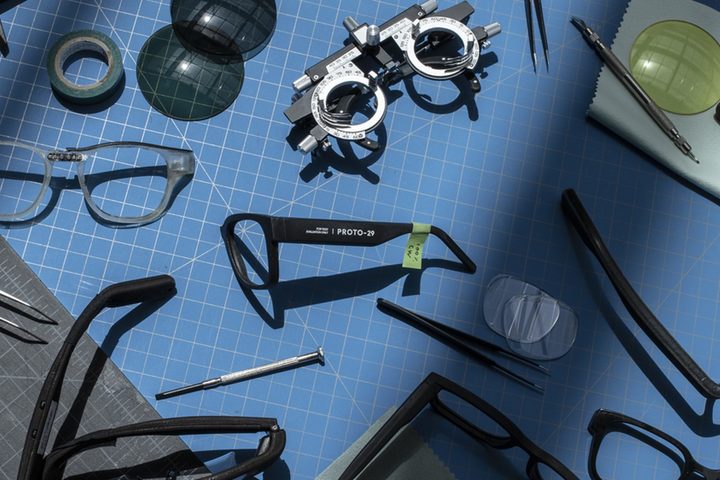
Google's AR glasses laying on a table.
Google / Google

The purpose of field-testing the prototype AR glasses is to help Google program features that will help users in their daily lives, including translation, navigation, transcription, and visual search. The glasses will come with built-in cameras, microphones, and in-lens displays to help recognize environments and languages through A.I. However, they won’t be able to take photos or videos. The only thing they’ll do is provide image data to enable translations, transcriptions, and directions in the testers’ field of vision in real-time. For example, they’ll translate the menu of a Spanish restaurant into English or provide directions to the nearest coffee shop (or Starbucks, for that matter).

Recommended Videos

As for where testers can use the prototype glasses, they can’t use them in schools, places of worship, government buildings, hospitals, places where children gather (i.e. playgrounds), rallies or protests, and other similar locations. Google also isn’t letting testers use the glasses while driving because, obviously, that’s dangerous.

Google’s field-testing of its AR glasses comes nearly a decade after the release of Google Glass, which wasn’t the most popular piece of digital eyewear due to privacy concerns. It was even parodied in The Simpsons episode Specs and the City, where Mr. Burns gives the glasses to Homer and his other employees for Christmas — only to use the glasses to spy on them, which is how Homer discovered Marge was seeing a therapist to vent about him. However, it made great strides in helping autistic children improve their life and communications skills, thanks to the Brain Power software.

When Google will make its new AR glasses commercially available is currently unknown. But if real-world testing is already happening, one can hope that day isn’t too far off.

Cristina Alexander
Gaming/Mobile Writer
Cristina Alexander is a gaming and mobile writer at Digital Trends. She blends fair coverage of games industry topics that…
I picked 5 Prime Day MagSafe and Qi2 power bank deals worth buying, starting at $35.99
These five magnetic power banks cover everything from affordable backup power to fast 25W wireless charging.
Prime Day MagSafe Qi2 power banks deals

A power bank is one of those accessories you don't think about until your phone hits 5% at the worst possible moment. I picked five Prime Day deals, from a $36 Ugreen that lives in your bag to a see-through Sharge with its own cooling fan.

Baseus Picogo Qi2.2 – $56.99 (24% off)

Read more
Prime Big Deal Days has 4 Android phone bargains worth your attention
I’d skip the flagships and grab one of these 4 Android phone deals instead
Electronics, Mobile Phone, Phone

If you’ve been holding off on upgrading because flagship phones keep getting more expensive, Prime Big Deal Days has produced a much more appealing set of alternatives. I’ve picked four Android phones covering everything from cameras and stylus support to long battery life and an unusually clever paper-like display, with every option here coming in below $350.

Motorola Edge 2025 — $299 (21% off)

Read more
Google’s Waze app is being misused by speeding drivers to dodge police fines
The crowdsourced incident reporting system in Waze is being misused by speeding drivers to dodge police action.
Incident reporting in Waze.

Waze is a popular navigation app that is used by millions of users across the globe. One of its standout features is a crowd-sourced incident reporting system, which now even ties into Google Maps, as well. The built-in Disruptions and incidents feature lets users add warnings about accidents, closed lanes, ongoing construction, traffic jams, and other road hazards on the map.

The objective is to use this crowdsourced incident reporting system to warn other drivers so they can adjust their routes accordingly. The Volpe Center for Transportation Research is even using the same data from Waze to predict crashes and deploy emergency responders. Well, it appears that rash drivers have found another way to use these alerts. According to research by the University of the Sunshine Coast, this live alert system is now being used to drop info about police presence on the map, so that other drivers can slow down in time and avoid speeding tickets.

Read more