

We’ve reached a point where a phone folding in half doesn’t feel particularly strange anymore. Huawei, however, is still determined to make foldables weird. The company has introduced the Mate XT 2 Ultimate Design, the second generation of its trifold smartphone. And while the basic idea remains familiar — two hinges, three sections, one enormous folding screen — Huawei has upgraded almost everything around it.
Fold the Mate XT 2 completely, and you get a relatively conventional 6.5-inch smartphone. Open another section when you need some extra room, or unfold the whole thing into a 10.2-inch, 3K display with an almost square 12.8:9 aspect ratio. Perhaps the wildest number is its thickness. Fully opened, the Mate XT 2 measures just 3.5mm. Naturally, stacking three sections of the phone on top of one another makes it considerably thicker, at 12.3mm when completely folded. And Huawei isn’t being subtle about the “Ultimate Design” part either. Black, white, and purple finishes are paired with gold detailing, while the camera housing gets a star-diamond pattern. It’s very clearly supposed to look as expensive as it is.
Huawei has tackled some of the obvious trifold problems
Put two hinges and a giant flexible display into one phone and durability becomes a pretty reasonable concern. Huawei says the Mate XT 2’s outer screen uses basalt glass with 30 times better drop resistance and 16 times better scratch resistance. The flexible inner screen has also been reinforced with multiple protective layers. More importantly for everyday use, the phone carries IP58 and IP59 ratings for dust and water resistance.
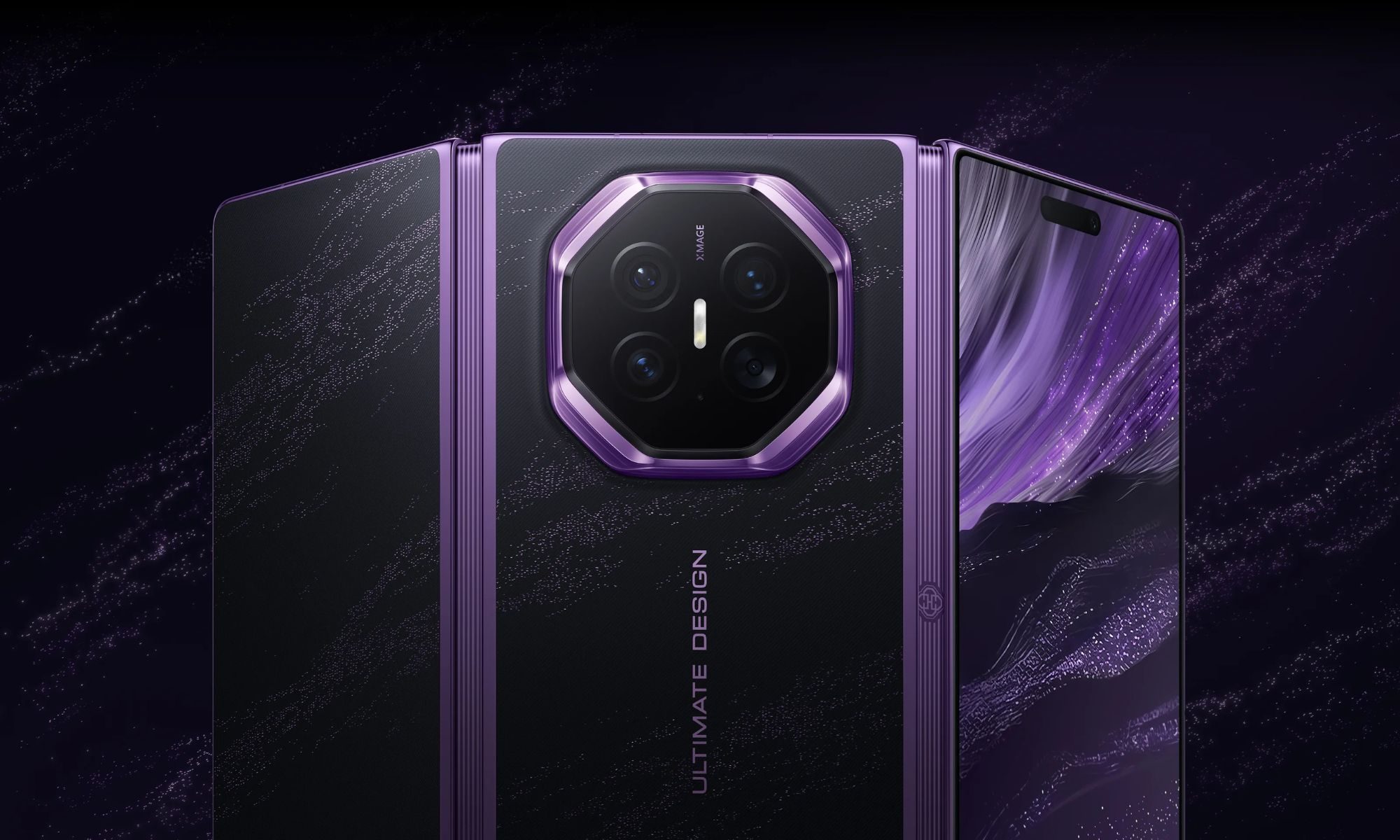
The cover display has another eye-catching number attached to it: up to 6,500 nits of peak brightness. That’s an enormous figure on paper, although peak brightness numbers don’t necessarily tell you how bright the entire display will get while you’re standing outside on a sunny afternoon. There’s also a special privacy-screen version of the phone, and this might be one of its more interesting ideas. Huawei uses hardware-level technology to restrict the angle at which the display can be clearly viewed. So, someone sitting beside you should have a much harder time reading your messages or seeing what you’re working on. That could be particularly useful on a phone designed to have multiple apps spread across a tablet-sized screen in public.
The craziness doesn’t stop at the displays
Inside is Huawei’s new Kirin 9050 Pro processor. The company claims CPU performance is up 42% compared with its previous tri-fold, while graphics performance is up 142%. Huawei has even added real-time ray tracing, along with a new cooling system designed to keep temperatures under control during gaming. The cameras haven’t been treated as an afterthought either. There’s a 50MP main camera with a variable aperture, a 50MP periscope camera offering 3.5x optical zoom, and a 40MP ultrawide. A separate color sensor also improves color accuracy.

HarmonyOS 7 is built to take advantage of all that screen space. The Mate XT 2 can display three apps side by side, and Huawei is pushing a more PC-like experience when the phone is fully unfolded. It also supports satellite calling and messaging in China, alongside an on-device AI model and additional hardware-level security features.

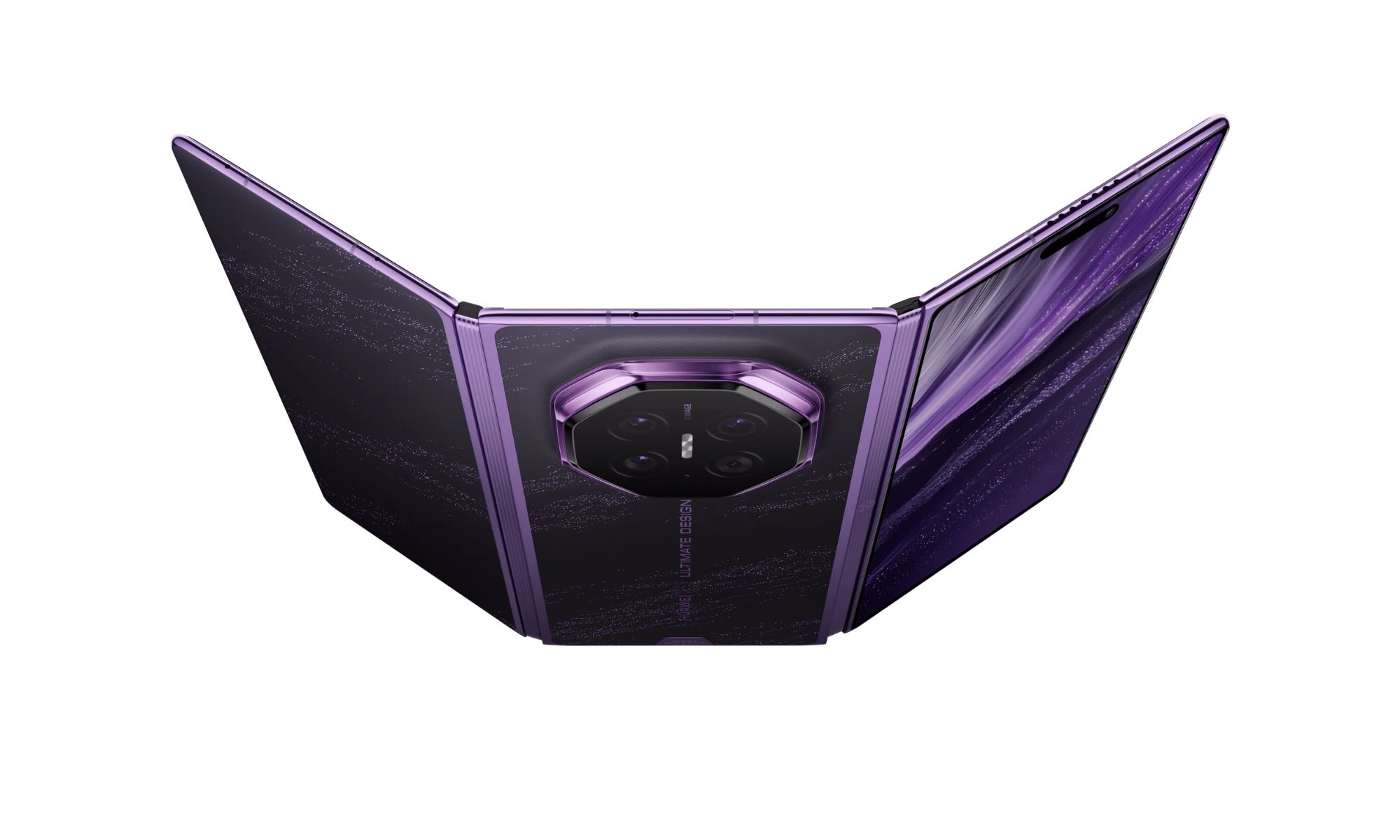
The Mate XT 2 starts at 19,999 yuan (roughly $2,800), and that’s only for the 256GB model. The privacy-screen version with 1TB of storage costs 24,999 yuan (around $3,500), while the 2TB special edition with a stylus reaches an eye-watering 29,999 yuan, or about $4,200. So no, Huawei isn’t suddenly making the trifold phone affordable. If anything, the Mate XT 2 is leaning even harder into the idea of an ultra-premium phone that doubles as a tablet and happens to fit into your pocket. But there’s something refreshing about how excessive it all is. Foldables are gradually becoming thinner, safer, and more conventional. Huawei’s response seems to be to add another hinge, an enormous screen, a privacy mode, satellite communication, and a price tag that could buy you several flagship phones instead.


