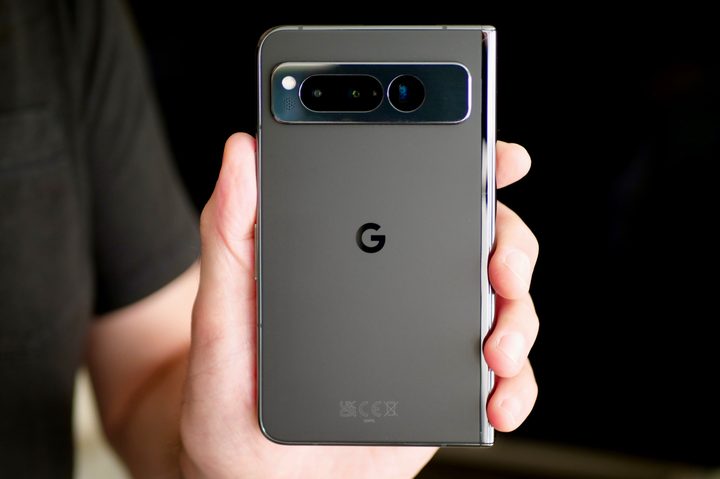
A few years ago, the dominant player in the foldable market was Samsung, at least in the U.S. However, 2023 seemed to be the year of folding phones, as Google entered the fray in July 2023 with its very first foldable, the Google Pixel Fold.
One of the problems I have with the Samsung Galaxy Z Fold series is the narrow cover screen, which makes it awkward to type and use when closed. But the Google Pixel Fold was appealing to me because the cover display was essentially the same size as a standard phone’s, so it felt easier to use. I also like that it opens up like a book. I gave the Pixel Fold an overall positive review as a result of all those things.
But then OnePlus also launched its first foldable, the OnePlus Open, a few months later in October. Though the name is silly, it’s a surprisingly great foldable for a first-generation product, and it’s made me reconsider the Pixel Fold and its flaws.
Google’s software isn’t quite there
With a foldable, one of the things that you expect it to handle well is multitasking. After all, you open it up to take advantage of a larger screen, which is the perfect stage for handling multiple apps at once.
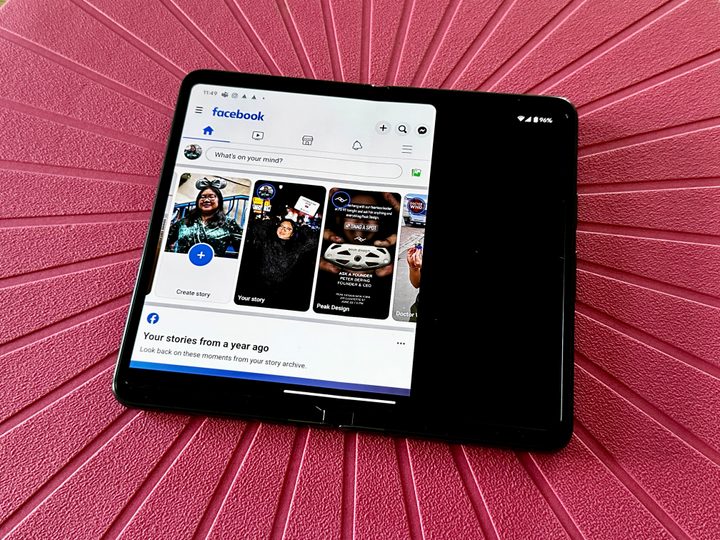
However, while Google has focused on optimizing a lot of its own apps for the larger inner display of the Pixel Fold, it’s still pretty subpar when it comes to third-party apps. Since the Pixel Fold opens up to a horizontal orientation layout, non-optimized apps — such as Facebook and Instagram — still have black bars on the sides while the app is centered in the middle.
If you want to make use of the full screen, you have to rotate the Pixel Fold 90 degrees so that it is technically in a vertical orientation, which will allow those apps to take up all the space. This is not an issue with other foldables like the Galaxy Z Fold 5 and OnePlus Open because those inner displays are already vertically oriented.
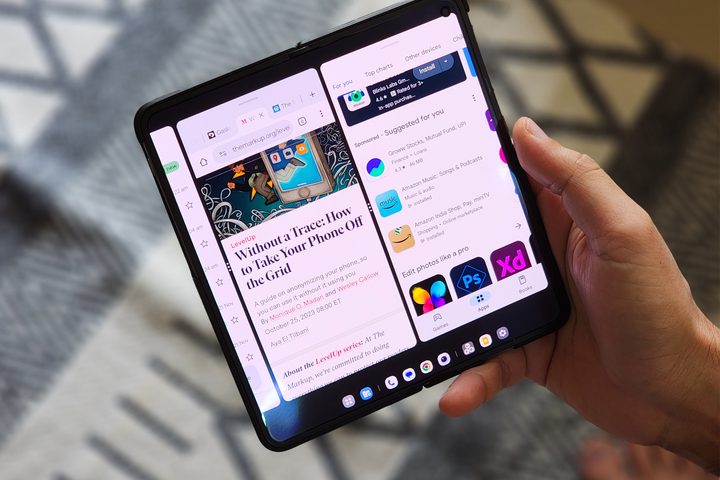
Another limitation with the Pixel Fold is multitasking. You’re limited to just two apps running in split-screen at once, and there isn’t a way to save paired app presets. However, OnePlus has the ability to have two apps running in split-screen, as well as a third one in a floating window. But OnePlus takes it even further with Open Canvas, which allows you to run multiple apps in full-screen or compact mode, with the full-screen option utilizing virtual screens to the left, right, or above the actual display. You can also save an app group as a shortcut for easy access in the future.
The Pixel Fold is Google’s first foldable, and the OnePlus Open is also the first one for OnePlus. However, only one of these was able to really utilize the power of a foldable for productivity.
The Pixel Fold is too heavy
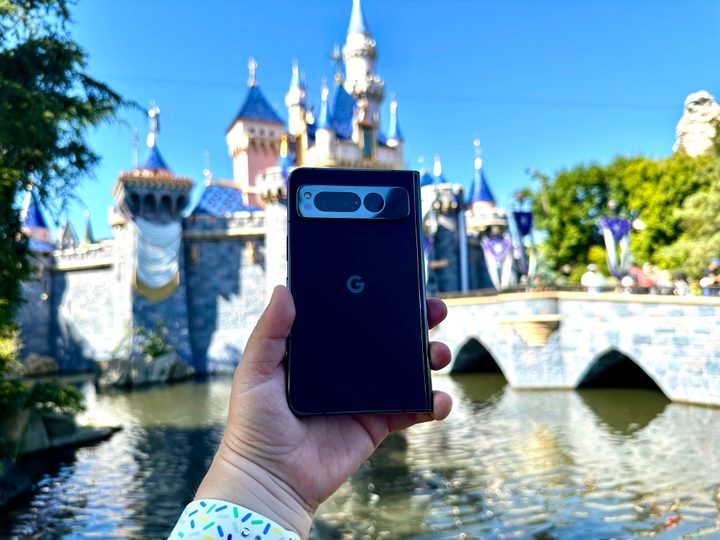
Since folding phones are essentially two slab phones put together, it’s a given that they’re going to be thicker and heavier than a “regular” phone.
Though one of my favorite things about the Pixel Fold is the size, I can’t say the same thing about its weight — this phone is heavy at 283 grams. For comparison, the Samsung Galaxy Z Fold 5 is only 253 grams, while the OnePlus Open is a mere 239 grams, making it the most lightweight foldable right now.
For some people, the weight may not be too noticeable. When I reviewed it, I mentioned that it was still pretty manageable for typical one-handed smartphone use with the cover display. However, I have noticed the weight is a little hard to deal with when using it as a camera with one hand, especially as I use it for taking product photos (i.e., taking a photo of a phone in my other hand). The OnePlus Open’s lightweight body makes it a lot easier to use overall, especially when taking one-handed photos.
Again, I like the Pixel Fold’s size, but I hope that Google can improve the device’s overall weight in a future iteration. I shouldn’t have to experience hand cramps when trying to snap a good in-hand product photo.
It’s all about the hinge and inner display
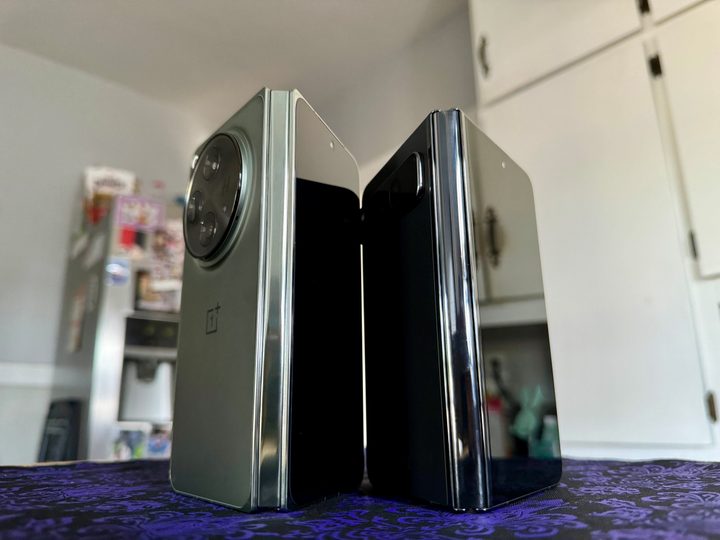
An important aspect of a folding phone is the hinge. And for the most part, Google’s custom-designed hinge is pretty good.
The Pixel Fold’s hinge feels great to open, with not too much friction when pulling the halves apart. It’s also not going to open up accidentally, either. But one thing has bothered me about it is that it won’t open fully flat without some force. And even then, due to the highly reflective inner screen, the crease is always pretty noticeable.
This is another area where OnePlus does it better with the Open, though it’s also not perfect. The OnePlus Open’s Flexion Hinge was designed with fewer components than the competition to make it more lightweight, and it easily opens flat because it kind of “snaps” into a fully open position after reaching a certain angle. This is a double-edged sword, however, as the OnePlus Open is a bit harder to keep in clamshell mode at an obtuse angle (over 135 degrees). But thanks to the antireflective layer on the OnePlus phone, you also don’t really see the crease.
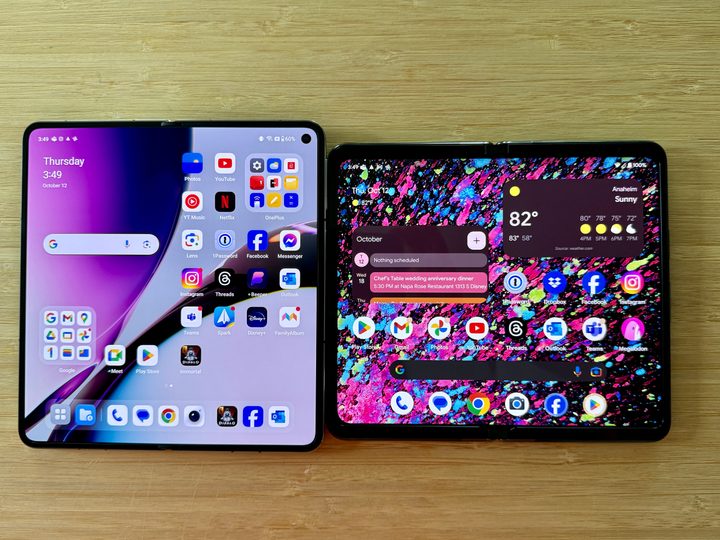
The Pixel Fold’s screen looks great, but it falls short by being overly reflective and only getting to 1,450 nits peak brightness. It’s a bad combination with the glare, so it is kind of hard to use outdoors. The OnePlus Open one-ups the Pixel Fold by being antireflective, so it’s easier to see and reaches 2,800 nits peak brightness.
Though I was impressed with the Pixel Fold’s inner display when it first came out, it’s not nearly as special when compared to the OnePlus Open’s. I still prefer the stiffness of the Pixel Fold’s hinge, as I can use it in clamshell mode at any angle, but the rest of the hardware hasn’t aged as gracefully.
Not all first-generation foldables are equal

When the Google Pixel Fold first came out, I was surprised and impressed with how good it was — or so I thought. At the time, the Galaxy Z Fold 5 wasn’t out, and the Pixel Fold was the only foldable that didn’t have a gap when closed.
But now we have the Galaxy Z Fold 5 and the OnePlus Open. The Pixel Fold is a good first attempt by Google for a foldable, but it just doesn’t feel like it lives up to the competition. Even the cameras are better on the OnePlus Open, though Pixels generally take very good photos thanks to their software processing.
The Google Pixel Fold is a decent start for Google’s foldable series, but hopefully, it can learn from competitors and make the next generation even better.