
Having a wealth of up-to-the-minute climate data at our fingertips is something most of us take for granted. Thanks to a reliable cell connection, our smartphones, and the work of hundreds of meteorologists and climatologists around the globe, keeping abreast of an incoming storm isn’t so much a matter of how, but how quickly. Unfortunately, though, that isn’t the case for everyone.
In developing countries, cellular connectivity is congested, intermittent, and in the worst cases inaccessible. That’s why IBM, in collaboration with developers at The Weather Company, introduced Mesh Network Alerts, a new technology that provides a peer-to-peer means of facilitating communications between residents of underserved nations.
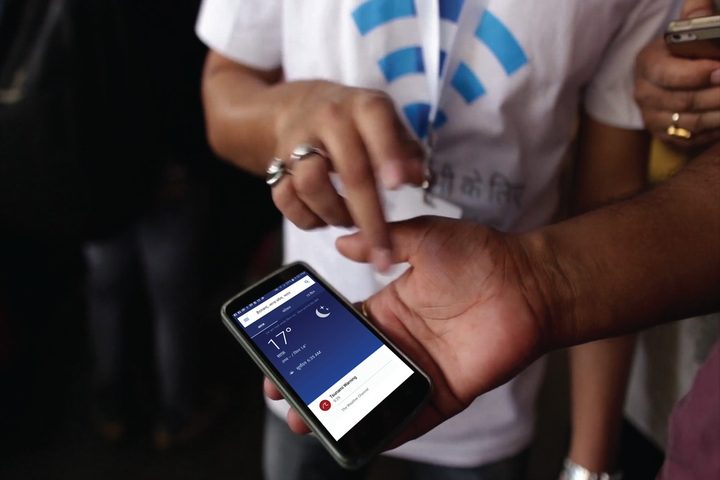
“The combination of the innovative Mesh Network Alerts and global reach of The Weather Channel mobile app can help deliver a new level of emergency awareness to underserved populations,” Bijan Davari, IBM Fellow and vice president at IBM research, said in a press release. “We’re proud to be able to quickly offer a critical and potentially lifesaving capability to hundreds of millions of people around the world.”
Mesh Network Alerts work by linking mobile devices directly to one another, daisy-chaining handsets in a sort of node network. Using a combination of Bluetooth and Wi-Fi, each connected smartphone stores and propagates messages to devices within a 300- to 500-foot radius, creating a mesh that can effectively reach more devices.
Normally, government-issued messages are broadcast via cell towers. IBM’s network steps in as a fallback — when central networks go down, the mesh activates. And it works off the grid in remote areas and disaster zones without impacting battery “any more than an ordinary app.”

IBM’s mesh works in a version of The Weather Channel app for Android specially designed for emerging markets. At 3.2MB, it’s significantly smaller than The Weather Channel app and so easier on unreliable connections and pricey data plans. It’s optimized for low-powered devices, and can launch within two seconds on 2G. And it sports built-in options allow users to store weather data offline for up to 24 hours or choose to update on Wi-Fi, cellular, or on request.
The Weather Channel says that many of the new app’s features will launch broadly in the coming months.
IBM, which bought The Weather Company in 2016, has made significant investments in the data-forward company. Last year, it expanded the weather.com site to 62 languages and 178 countries. And on mobile devices, it launched global weather forecast notifications that provide severe weather information in the form of real-time notifications.
“IBM once again shows its leadership in edge computing capabilities, and this next important milestone will help bring the value of edge compute to life. Mesh Network Alerts extend the ability to receive a potentially lifesaving alert to a global audience, even with limited connectivity,” Cameron Clayton, general manager and CEO of The Weather Company, said. “With IBM collaboration, investment, and research, we can now reach users in previously underserved areas and better deliver the information they need.”


