
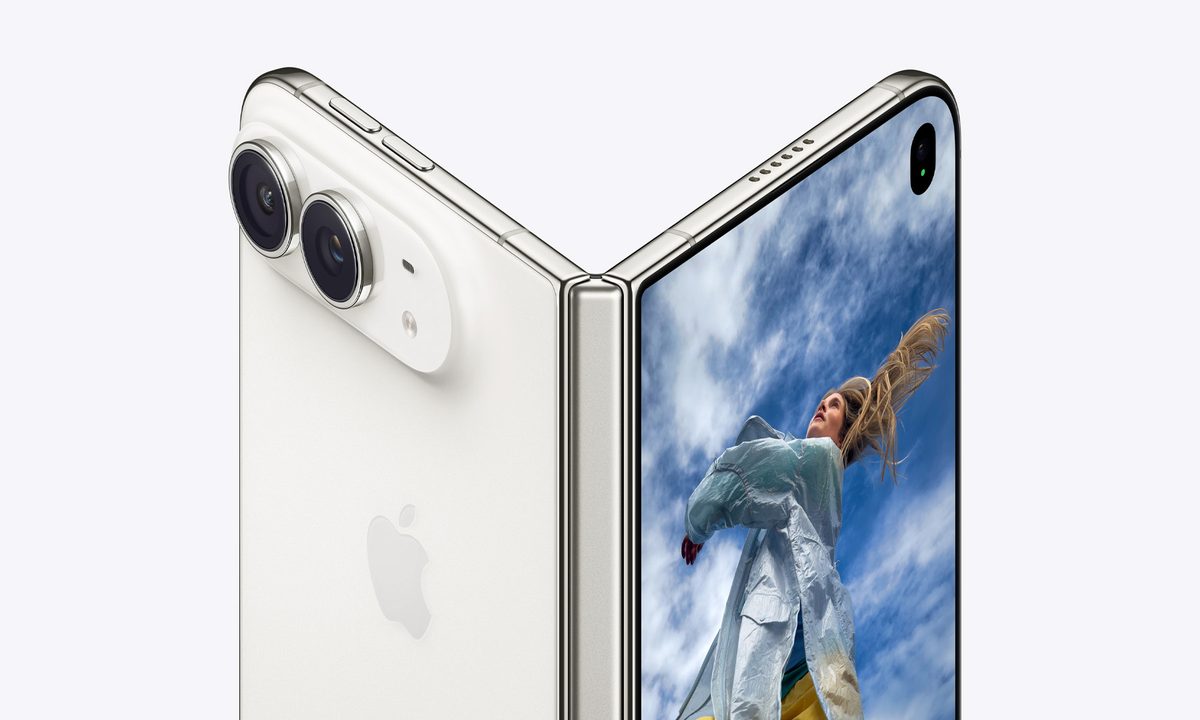

Apple’s first foldable iPhone is doing something surprisingly radical beyond the folding screen: the iPhone Duo is eSIM-only worldwide. It has no physical SIM tray, regardless of the market. That might sound like a small change, but on a device where every millimetre of internal space matters, removing the SIM tray gives Apple a little more room to play with. And judging by the company’s focus on battery life, it looks like they put that space to good use.
The iPhone Duo has gone all-in on eSIM
The idea is straightforward. Instead of inserting a tiny piece of plastic into the phone, the iPhone Duo handles cellular connectivity digitally through an eSIM. There is no nano-SIM slot hiding around the frame, and no regional version with a physical SIM tray for markets where Apple has historically kept one.

That makes the Duo’s cellular setup consistent worldwide, while also fitting neatly into Apple’s broader move toward eSIM. The company has already been pushing this approach with newer iPhone models, but the Duo takes it one step further. For most users, the practical experience should be fairly painless. Multiple eSIM profiles can be stored on the phone, with two lines able to remain active simultaneously. Switching between carriers or adding a new plan is handled digitally rather than by playing the world’s tiniest game of SIM-card Jenga.
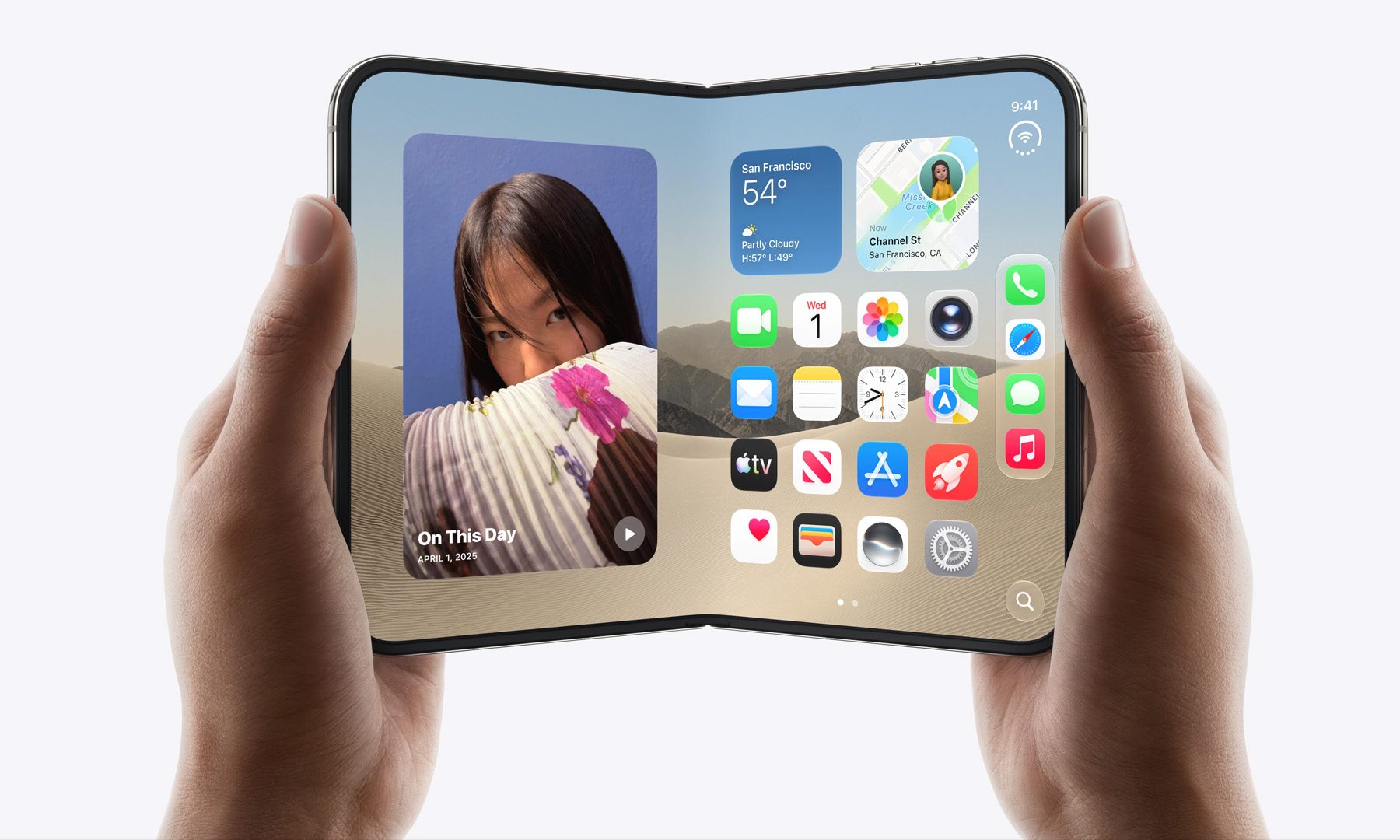
There is one obvious catch: the carrier needs to support eSIM. That’s increasingly common, but it isn’t universal. For travellers, however, the upside is pretty compelling. A local data plan can be added without removing the primary line or physically swapping SIM cards.
Apple’s C2 modem and the battery-space tradeoff
The iPhone Duo also uses Apple’s second-generation C2 modem, following the C1 and C1X modems that have already started Apple’s transition away from Qualcomm cellular hardware.
The C2 is designed around better power efficiency while also aiming for higher peak speeds, improved carrier aggregation, and stronger performance in congested or weak-signal areas. Apple is also positioning it as a more tightly integrated part of the iPhone’s hardware and software stack. The modem is fabricated using a 4nm process, and while mmWave support remains a complicated regional consideration, the overall goal is clear: faster connectivity without treating battery life as collateral damage.
That matters enormously on the Duo because Apple is trying to squeeze a lot into a very thin foldable body. The company says its dual-battery system and space-saving eSIM design help maximise the room available for battery capacity. The result is rated for up to 31 hours of video playback on the inner display and up to 44 hours using the outer display.

The missing SIM tray is really less about Apple hating plastic and more about squeezing every last millimetre out of a foldable. With two displays, a hinge, dual batteries, cameras and the C2 modem fighting for space, ditching the physical SIM frees up room for the things that actually matter. The SIM card had already become optional. On the Duo, Apple has decided it can disappear completely.


