
Great things come in small packages. Well, that’s the kind of thinking Apple hopes will entice customers to the recently unveiled iPhone SE, the latest addition to Apple’s lauded lineup of smartphones. The sleek device essentially serves as an updated version of the company’s dated 4-inch iPhone. But it’s packed with the same hardware and processing power as the iPhone 6S, minus the exuberant price tag.
The iPhone SE touts Apple’s A9 processor and M9 co-processor, along with a 12-megapixel iSight camera, compatibility with Apple Pay, and a wealth of other features that have come to define Apple’s ecosystem and iOS 9. It’s poised to set the bar when it comes to pint-sized mobile computing, but how does it compare when placed alongside the iPhone 6? Check out the in-depth spec comparison below for a closer look at all the details.
iPhone SE
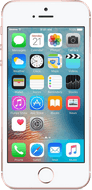 |
iPhone 6 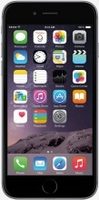 |
|
| Size | 4.87 x 2.31 x 0.30 inches | 5.44 x 2.64 x 0.27 inches |
| Weight | 3.99 ounces | 4.55 ounces |
| Display | 4-inch (diagonal) LED-backlit widescreen Multi‑Touch display | 4.7-inch (diagonal) LED-backlit widescreen Multi‑Touch display |
| Resolution | 1,136 x 640 pixels | 1,334 x 750 pixels |
| OS | iOS 9.3 | iOS 9.3 |
| Capacity | 16, 64GB | 16, 64GB |
| Processor | A9 chip with 64‑bit architecture, M9 motion coprocessor | A8 chip with 64-bit architecture, M8 motion coprocessor |
| RAM | 2GB | 1GB |
| Connectivity | 4G LTE, 802.11a/b/g/n/ac, NFC | 4G LTE, 802.11a/b/g/n/ac, NFC |
| Camera | 12MP rear, 1.2 MP front | 8MP rear, 1.2MP front |
| Video | 4K at 30fps, 1080p at 30, 60, 0r 120fps, 720p at 240fps | 1080p at 30 or 60fps |
| Bluetooth | 4.2 | 4.2 |
| Sensors | Touch ID fingerprint sensor, three-axis gyro, accelerometer, proximity sensor, ambient light sensor | Touch ID fingerprint sensor, barometer, three-axis gyro, accelerometer, proximity sensor, ambient light sensor |
| Apple Pay | Yes | Yes |
| Battery | Up to 14 hours of talk time on 3G, up to 13 hours of video playback | Up to 14 hours of talk time on 3G, up to 11 hours of video playback |
| Charger | Lightning | Lightning |
| Marketplace | App Store | App Store |
| Avg. Price | $399, $13.30 a month with carrier financing | $549, $18.30 a month with carrier financing |
| Availability | Shipping March 31 with AT&T, Verizon, Sprint, T-Mobile | Available now with AT&T, Verizon, Sprint, T-Mobile |
| Colors | Space Gray, Silver, Gold, Rose Gold | Silver, Space Gray |
| DT Review | 4 out of 5 stars | 4.5 out of 5 stars |
Design
Outward design is the first thing anyone sees, and in the case of Apple, it’s something the company has always prided itself on. It’s also the most immediate difference between the iPhone SE and the 6. The smaller of the two iPhone offerings is just shy of 5 inches in length, though other differences in measurement are negligible. Both utilize the same combination of bead-blasted aluminum and glass that Apple has employed since Apple decided to discontinue the 5C. The SE is slightly less rounded, however, and feels chunkier than the 6. Its design is nearly identical to the iPhone 5S. The SE is also available in silver, gold, rose gold, and space gray, while the latter is only available in either silver, gold, or space gray.


The display is where the size difference is really apparent. The display components are the same on both phones, but the SE comes outfitted with a smaller, 4-inch screen instead of the 4.7-inch display found on the 6. This translates to a lower contrast ratio and lower resolution on the SE — 1,136 x 640 opposed to 1,334 x 750 — which isn’t surprising when you consider the size of the display. That said, the SE additionally lacks dual-domain pixels, a feature that allows for wider viewing angles. The multi-touch Retina display on the SE will look just as sharp in your hand, and the difference isn’t too great. The main thing is size. If you want a smaller iPhone, the SE is the one for you. If you don’t mind going a hair bigger, then go with the 6 or 6S.
Winner: Tie
Power and productivity
Apple built the iPhone SE with the iPhone 6S in mind, not the 6. This means that the SE features more capable hardware than the 6, whether you’re talking sheer computing power or the camera. The smaller of the two models boasts Apple’s new A9 chip, which is a 2GHz dual-core 64-bit ARM processor, along with an M9 coprocessor. Its larger brother still features the last-gen A8 processor and M8 coprocessor, which will soon be pretty outdated. The faster coprocessor on the SE also allows for better motion tracking and other tasks, namely always-on Siri. The SE even sports twice as much RAM as the 6, which results in quicker multitasking and leads to better performance.
In terms of storage and connectivity, however, the two devices are identical. Both the SE and the 6 ship with either 16 or 64GB of storage and feature the same kind of connectivity we’ve now come to expect from a smartphone (Bluetooth 4.2, 4G LTE, NFC, etc.). They also come equipped with identical sensors — a barometer, a three-axis gyro, an accelerometer, a proximity sensor, and an ambient light sensor — though, the SE does boast better battery life when watching video. Apple’s latest mobile operating system, iOS 9.3, comes standard on both devices.
Differences between the two cameras are even more key. The SE features the same 12-megapixel rear camera with the true tone flash unit as the iPhone 6S, and it supports Live Photos, as well as Apple’s new image signal processor. The latest iPhone can even capture hulking 63-megapixel panorama photos and shoot in 4K, while the last-gen 6 remains restricted to 1080p video at either 30 or 60 frames per second. And did we mention the camera on the SE sits flush with the smartphone’s back instead of sticking out like it does with the 6?
Winner: iPhone SE
Price and availability
The iPhone SE is an entry-level model, in that it’s about to be the most affordable iPhone on the market. Apple will start taking orders on the SE on March 24, though, it won’t officially hit shelves until Thursday, March 31. When it does, the 16 and 64GB models will retail for $400 and $500, respectively, or for an upwards of $13.30 a month with carrier financing. The iPhone 6, on the other hand, is currently available in either a 16 or 64GB configuration for $550 and $650, or for an upwards of $18.30 a month, depending on your carrier. Thankfully, most major carriers will support either phone — including AT&T, Verizon, Sprint, and T-Mobile — so finding an appropriate network and flexible plan shouldn’t be much of an issue.
Regardless, the iPhone SE is a steal. It’s got all the great specs of the new iPhone 6S, but a price that’s less than the lower-spec iPhone 6.
Winner: iPhone SE
Conclusion
The iPhone SE sacrifices screen real estate in favor of better components and faster processing power. The inner hardware is designed to go head to head with the flagship iPhone 6S, only with a 4-inch screen. It’s also cheaper than the iPhone 6 and outfitted with a more advanced camera, which makes its smaller size the only real drawback. That so-called “drawback” is also part of the smartphone’s appeal, however, given the sheer number of consumers who’d rather have a phone that can fit in their pocket than one they can use as a replacement for their full-size tablet.
It all comes down to individual wants and needs, but if you’ve been longing to upgrade your iPhone 5 or 5S for a new powerful 4-inch phone, look no further than the iPhone SE.


