
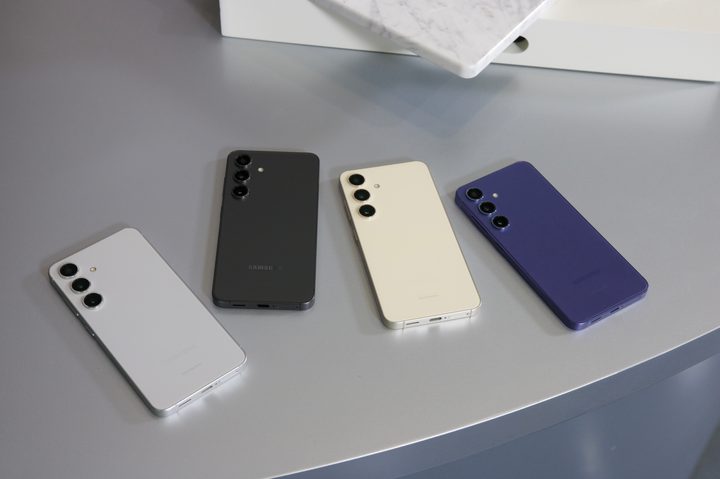

The Samsung Galaxy S24 series is the newest and best from Samsung, with noteworthy improvements and some surprising alterations over last year’s Galaxy S23 lineup. With all the improvements, these models don’t come cheap. So, when you’re spending a fortune on these new Samsung champs, you should know how well they can stand being exposed to water.
With its first launch of the year, Samsung is embracing AI as a core element of the new Galaxy S24 series, with all-around improvements to the software experience — which follows a major design change in the previous year.
Besides software, external hardware gets minor, yet meaningful changes in the form of refined designs and brighter displays. Does that impact the Galaxy S24 series’ resilience against water? Is it better or worse than the Galaxy S23? Let’s find out.
The Samsung Galaxy S24 is water-resistant

The new Samsung Galaxy S24 series is water-resistant, which is good news considering these phones will not be easy on the pocket — and neither will potential repairs. Just like the Galaxy S23 series, all models — including the Galaxy S24, Galaxy S24 Plus, and the Galaxy S24 Ultra — come with an IP68 rating.
OK, but what does that mean?
As per the International Electrotechnical Commission (IEC), which uses a numeric rating system to describe the resilience of consumer electronics against dust and water, an IP68 rating means the device can be immersed in water without incurring damage. However, this only applies to specific test cases and conditions.
What the IP68 rating really means
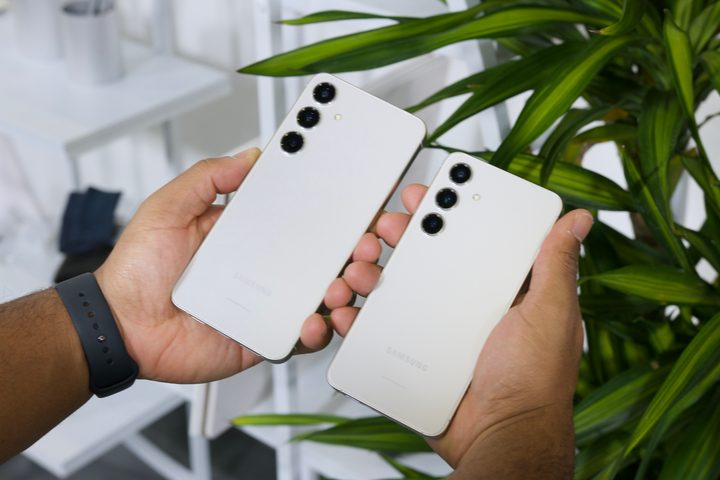
While IP stands for Ingress Protection, the first numeral refers to resistance to dust and fine particles, while the second signifies resistance to water. The 6 in the IP68 rating implies the device offers excellent protection against dust, sand, and other fine particles and will not allow them to enter the body — even though they can accumulate inside the ports and other exterior crevices.
Meanwhile, the 8 refers to protection against “continuous immersion” in water and is awarded to any device that endures being submerged in water for up to 30 minutes at a depth of up to 1.5 meters (slightly over 4.9 feet). IP68 is the highest IP rating most commonly awarded to phones and tablets. Even though IP69 also exists, it applies to rugged devices that can withstand water jets at high temperatures and pressures.
For most people, an IP68 rating is a go-ahead to douse their phones (with an IP68 rating) in water — to show off to friends or to record videos underwater. While the Galaxy S24 series can facilitate underwater video recording, a few caveats can not be overlooked. First, these conditions only apply to the device being dunked in freshwater at a nominal temperature between 60 and 95 degrees Fahrenheit. These protections may not apply to water in a swimming pool since it usually has some chlorine mixed in it to kill bacteria. Similarly, you might want to be extra cautious around the sea or ocean since salt from the water may not only seep into the phone’s body, but also damage the outward-facing components such as ports and the speaker.
The last condition to note with any IP68 rating device — not just the Galaxy S24 series — is that despite these claims, any damage caused to internal circuits is not covered under warranty. If you consider yourself clumsy, you might want to insure your device or buy a protection plan under Samsung Care Plus.
Pre-Order Now Pre-Order Now


