1. Home
  2. Phones
  3. Emerging Tech
  4. Mobile
  5. News

The days of exploding lithium-ion batteries might soon be over

Add as a preferred source on Google

Have you ever wondered if the laptop that’s been gradually cooking your lap is about to explode? Worry no more — the days of batteries that overheat to the point of exploding are over. Stanford researchers have just introduced a fail-safe for lithium ion batteries.

“We’ve designed the first battery that can be shut down and revived over repeated heating and cooling cycles without compromising performance,” said Zhenan Bao, professor of chemical engineering and one of the study researchers, in a statement.

Recommended Videos

We all know that a sharp poke, a short, or even overcharging can cause a lithium-ion battery to overheat. At about 300 degrees Farenheit, the electrolyte gel carrying particles between the two electrodes of the standard lithium-ion battery can ignite, and then boom goes the dynamite.

Designers have tried flame-retardant additions to the electrolyte, and things as simple as a battery warning system (also created by a Stanford engineer, back in 2014).  The problem was those fixes were a one off. “These techniques are irreversible, so the batter is no longer functional after it overheats.” Co-author Yi Cui explained.

OK, maybe laptops haven’t been blowing legs off in recent years, but “hoverboards” have been making the news as fire hazards so often that they’re not even allowed on major airlines. The new nickel-filled plastic overlay was designed to prevent batteries from bursting into flame. A new battery with this overlay will shut down when it overheats, preventing combustion.

The experiment involved coating the nickel particles with graphene and an atom of carbon, then embedding them in elastic polyethylene. “To conduct electricity, the spiky particles [of nickel] have to physically touch one another. But during thermal expansion, polyethylene stretches. That causes the particles to spread apart, making the film non-conductive so that electricity can no longer flow through the battery.”

The researchers used a hot-air gun to turn up the temp, and each time the battery responded as it should – once the battery hit about 160 degrees, the film expanded and shut down the battery. When the battery cooled, the particles came back into contact at the battery began to work again. “We can even tune the temperature higher or lower depending on how many particles we put in or what type of polymer materials we choose,” Bao said. “We might want the battery to shut down at 50 degrees Celsius [about 120 degrees Fahrenheit] or 100 C [about 210 F].”

SLAC National Accelerator Laboratory and the Precourt Institute for Energy at Stanford supported this research. The team published the results in Nature Energy. “Hoverboard” manufacturers should say thanks, even though it will be a while before this technology makes its way to consumers.

Aliya Barnwell
Former Contributor
Aliya Tyus-Barnwell is a writer, cyclist and gamer with an interest in technology. Also a fantasy fan, she's had fiction…
Samsung may give the Galaxy S27 Ultra a major eye comfort upgrade
A new leak suggests Samsung could add DC dimming to reduce OLED flicker on its next flagship phones.
Samsung Galaxy S26 Ultra smartphone in blue color.

Samsung’s Galaxy S27 Pro and Galaxy S27 Ultra are shaping up to look quite different from the current generation, but the changes underneath may not be nearly as dramatic. Camera processing is reportedly being tweaked for warmer, more natural-looking photos, while certification filings point to a much-needed battery bump.

A fresh leak, however, points to an upgrade that could matter a lot more to people with sensitive eyes. Tipster WalleGalaxy claims Samsung will introduce DC dimming support on the Galaxy S27 Pro and Ultra, potentially moving away from the PWM-only approach it has relied on for years. The current Galaxy S26 series still uses PWM at around 480Hz and offers no DC-like flicker reduction option.

Read more
Apple is making sure you can’t walk into a store without bumping into the iPhone Duo
Apple is putting the iPhone Duo on display like it’s the star of the show
Photography, Face, Head

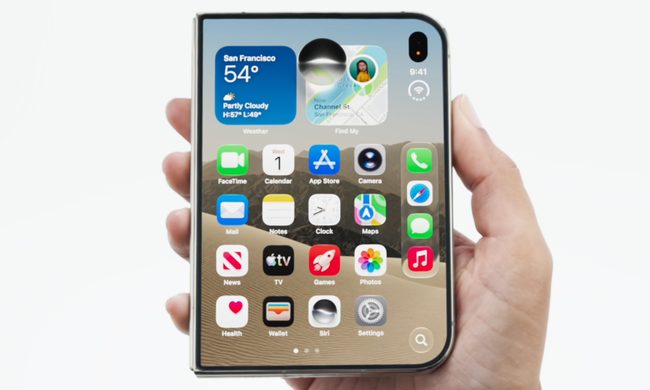
Apple is preparing an unusually large retail push for the iPhone Duo, its first foldable iPhone, with flagship stores expected to feature dozens of hands-on demo units and dedicated displays. The aim is to give customers a proper look at the foldable device before deciding whether it is worth the premium price.

According to Bloomberg’s Mark Gurman, Apple is planning more than 150 demo units at its Fifth Avenue flagship in New York City. The Apple Park Visitor Center is expected to have nearly 100, while stores on Michigan Avenue in Chicago, the Grove in Los Angeles, and Manhattan’s Upper West Side could each receive around 30 to 40 units. Smaller stores are expected to have roughly 20 demo devices.

Read more
Apple’s foldable iPhone could greet you like you’re the main character
iPhone Duo launch could bring a personalised first-boot greeting
Electronics, Phone, Mobile Phone

Apple could add a personal touch to its upcoming iPhone Duo launch, letting buyers see their names on the screen the first time they turn on their new phones. According to Bloomberg journalist Mark Gurman, Apple retail stores in the US will have a system to customise the device’s initial greeting, so it displays a message such as “Hello, Mark” instead of the usual generic welcome.

https://twitter.com/markgurman/status/2108679134872490044?s=20

Read more