
Motorola has slowly but surely been adopting newer design trends in its budget and midrange handsets. The Moto One series, which includes devices like the Motorola Moto One Action, is a perfect example of this. Now, however, there’s a new handset to consider — the new Motorola Moto One Hyper.
The Moto One Hyper offers a few features never before seen on a Motorola phone. For example, there’s a new pop-up camera similar to that found on the OnePlus 7 Pro and OnePlus 7T Pro. At its core, however, the Moto One Hyper is less about all-new features and more about being a solid, reliable device at an affordable price.
A modern design
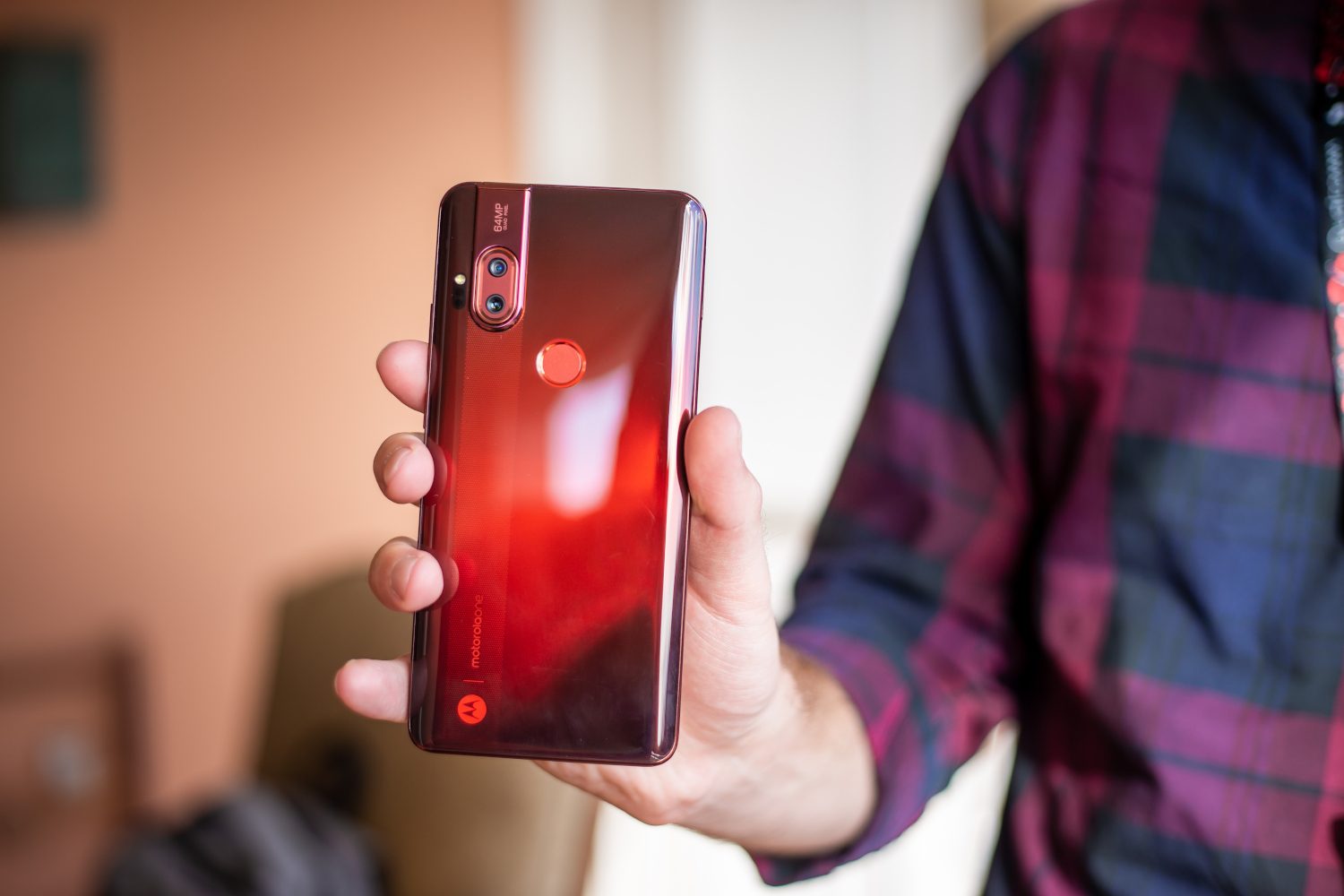
The most striking thing about the Moto One Hyper, at least in this price range, is its relatively modern design. The device offers a near edge-to-edge display, with only a small chin at the bottom and no notch — it’s not a bad-looking device at all. The relatively nice design extends to the back of the phone, with a so-called “racing strip” along the left side and three good-looking colors — though only two of them will be available in the U.S. The phone will be available in Deepsea Blue and Dark Amber in the U.S., with Fresh Orchid coming to other markets.


There are some things about the Moto One Hyper that you don’t see all that often. Notably, the device features a notched design thanks to the pop-up camera on the top right of the device. Like the OnePlus 7 Pro, the pop-up camera will automatically activate when you enter selfie mode, and retract back into the phone when you exit. It should also retract if you drop the device — though we were unable to test out that feature for reliability.
There’s another feature that’s rare these days — a headphone jack. It’s a nice inclusion in a wireless world, and while many may not need it, those who do will be glad it’s there.
In general, the phone felt nice in the hand — not too heavy and not too chunky. Make no mistake, it is a relatively large phone, thanks to the 6.5-inch 1,080p display, but it’s not over-the-top by any means.
Decent performance
The Moto One Hyper may look modern, but it’s not the most powerful device out there. Ultimately, it’s aimed at a more budget-minded market than are flagship phones.
Under the hood, you’ll get a Qualcomm Snapdragon 675 processor, along with 4GB of RAM and 128GB of storage — though if you need more storage there is a MicroSD card slot in there too. In the limited testing time we had, the phone generally seemed to perform decently — though again, the testing time we had was limited, and we couldn’t really put the phone through tasks like mobile gaming or benchmarks.
The battery on the phone is pretty big, coming in at 4,000mAh. It can charge quickly too because it supports up to 45W charging. In the U.S., the phone will come with an 18W charger out of the box.
The Moto One Hyper isn’t a powerhouse, but for the price, it’s about what you would expect.
A camera built to impress
Motorola has never delivered a camera up to par with the likes of Google and Apple, but that’s not to say that its cameras are bad. We weren’t able to really test the camera on the Moto One Hyper, but we can run through the specs. You’ll get a dual-lens rear-facing camera, plus a time-of-flight sensor. There’s a 64-megapixel main sensor, along with an 8-megapixel ultrawide sensor. Motorola is using a quad-pixel technology here to make for brighter, more detailed shots — so on the 64-megapixel sensor, you’ll end up with 16-megapixel photos. This feature can be switched off if you so choose.
On the front, there’s a hefty 32-megapixel selfie camera. This camera also uses quad-pixel tech, so you’ll end up with 8-megapixel images, but that’s not bad at all and should make for better shots in the end.
We can’t really vouch for the quality of images on the Moto One Hyper, but it seems like Motorola made an effort to build a phone that offered some decent features in the camera department.
Software
The Moto One Hyper ships with Android 10, and Motorola says the device will get one major software update, along with two years of security updates. That’s pretty standard — though an extra major update would have been nice. Despite the name, the phone does not ship with Android One.
The software experience on the Moto One Hyper is very smooth, thanks to the fact that it’s near stock. Really, the only changes Motorola has made to the software is the addition of the Moto Actions gestures, so if you want a minimalist experience, you’ll get one here.
Wrap Up
The Motorola Moto One Hyper has a lot to offer, especially for a phone in this price range. It also has some serious competition. For example, the Google Pixel 3a may not offer the same modern design as the Motorola device, but it almost certainly takes better photos and will probably get more software updates. Aside from the Pixel 3a, however, you’d be hard-pressed to find a device that offers better value-for-money in the $400 price range than the Moto One Hyper.
The Motorola Moto One Hyper is now available from the Motorola website, for $400. At launch, it’s only available in Deepsea Blue, but Motorola says the Dark Amber variant will be available in the near future. It’s important to note that the phone is GSM-only — so you’ll only be able to use it on T-Mobile and AT&T in the U.S.


