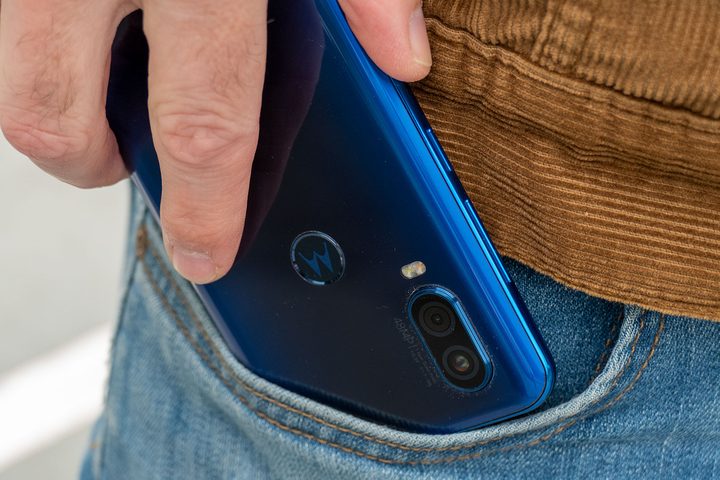
The Motorola One Vision offers a large display, an impressive dual-lens 48-megapixel and 5-megapixel camera, and a big battery at a very tempting price. It also runs pure Android as Google intended, with a guarantee it will be updated in a timely fashion. It looks like a lot for not much more than the cost of a Moto G7, so should you bite? Read on for a complete breakdown of these two Motorola phones and find out which is the right one for you.
Specs
| Motorola One Vision | Moto G7 | |
| Size | 160.1 × 71.2 × 8.7 mm (6.3 × 2.8 × 0.34 inches) | 157 × 75.3 × 8mm (6.18 × 2.96 × 0.31 inches) |
| Weight | 180 grams (6.35 oz) | 172 grams (6.06 ounces) |
| Screen Size | 6.3-inch IPS LCD | 6.2 inch MaxVision LCD |
| Screen resolution | 2,520 × 1,080 pixels (432 pixels per inch) | 2,270 × 1,080 pixels (403 pixels-per-inch) |
| Operating system | Android 9.0 Pie | Android 9.0 Pie |
| Storage space | 128GB | 64GB |
| MicroSD card slot | Yes | Yes |
| Tap-to-pay services (NFC) | Google Pay | No |
| Processor | Samsung Exynos 9610 | Qualcomm Snapdragon 632 |
| RAM | 4GB | 4GB |
| Camera | Dual lens 48-megapixel and 5MP rear, 25MP front | Dual 12-megapixel and 5MP main camera, 8MP front |
| Video | 2,160p at 30 fps, 1,080p at 60 fps | 2,160p at 30 fps, 1,080p at 60 fps |
| Bluetooth version | Bluetooth 5.0 | Bluetooth 4.2 |
| Ports | USB-C, 3.5mm headphone jack | USB-C, 3.5mm headphone jack |
| Fingerprint sensor | Yes (back) | Yes (back) |
| Water resistance | IP52 | Water-repellent coating |
| Battery | 3,500mAh
Fast charging 15W |
3,000mAh
Fast charging 15W |
| App marketplace | Google Play Store | Google Play Store |
| Network support | TBA | T-Mobile, AT&T, Verizon, Sprint |
| Colors | Bronze, Sapphire | Ceramic Black, Clear White |
| Price | 299 euros (around $335) | $300 |
| Buy from | Motorola | Buy at Amazon |
| Review score | 3.5 out of 5 stars | 4 out of 5 stars |
Performance, battery life, and charging

It’s interesting to see Motorola opt for a Samsung Exynos 9610 processor in the One Vision. It’s a midrange chip, just like the Snapdragon 632 in the Moto G7, but the Samsung processor has a higher clock speed, and should be better at pushing graphics and processing images. Based on benchmarks, the Samsung chip is superior. Both devices have an ample 4GB of RAM. The One Vision also offers 128GB of storage to the G7’s 64GB and both have MicroSD card slots.
The Motorola One Vision also wins out in the battery department with an extra 500mAh of capacity over the 3,000mAh battery in the Moto G7. Both support fast charging at 15W with the kit in the box, which can deliver seven hours of power in just 15 minutes.
Winner: Motorola One Vision
Design and durability


- 1. Motorola One Vision
The Motorola One Vision is taller and fatter than the Moto G7, but not as wide. It has a more modern-looking 6.3-inch display with a hole-punch front-facing camera at the top left. There’s a bezel at the bottom of the screen. The back is curved glass with a dual-lens camera module at the top left and a fingerprint sensor in the middle with the classic M logo. The One Vision also features a gradient design in bronze or sapphire.
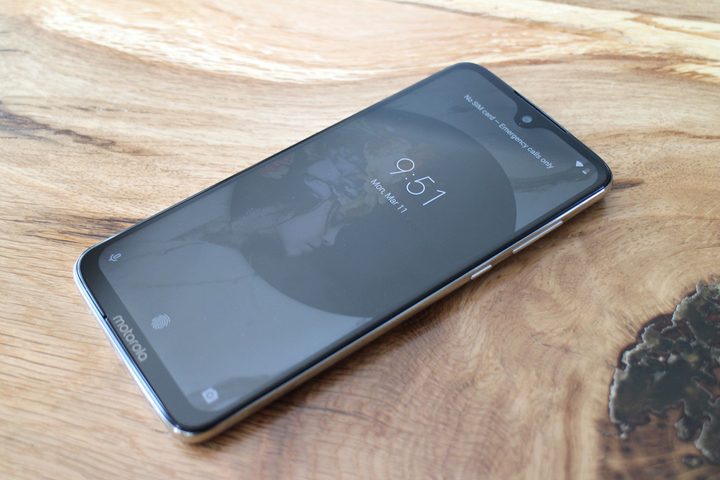
The Moto G7 has a teardrop notch and a fairly large bezel at the bottom of the screen. It also has a curved glass back, but the camera module is centered, round, and quite pronounced. Once again, there is a central fingerprint sensor on the back with the M logo. It comes in classic black or white.
While the Moto G7 has a water-repellent coating, the Motorola One Vision scores an IP52 rating. They’re both glass, so cases are advisable. This is a close category, but we prefer the look of the Motorola One Vision.
Winner: Motorola One Vision
Display
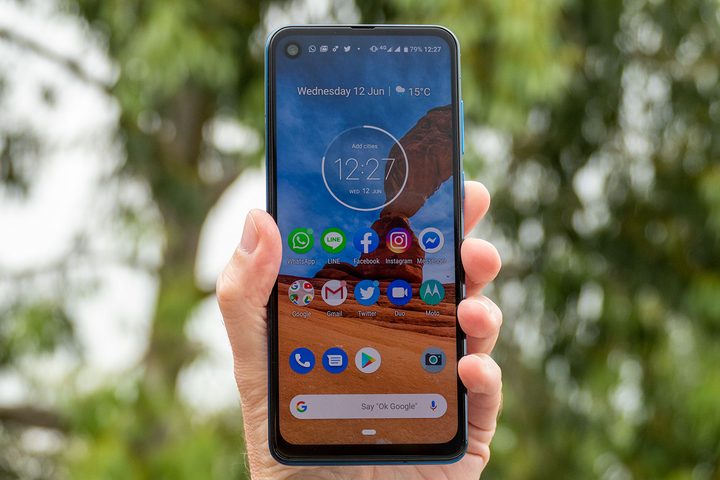
Both phones have LCD screens, but the 6.3-inch display in the Motorola One Vision boasts a 2,520 x 1,080-pixel resolution that works out to 432 pixels per inch (ppi), which is sharper than the Moto G7 with its 2,270 x 1,080-pixel resolution for a 403 ppi. The reason that the One Vision isn’t so wide is that it has a 21:9 aspect ratio, instead of 19:9. Just like Sony’s Xperia 10, the One Vision’s aspect ratio is perfect for watching movies.
Winner: Motorola One Vision
Camera
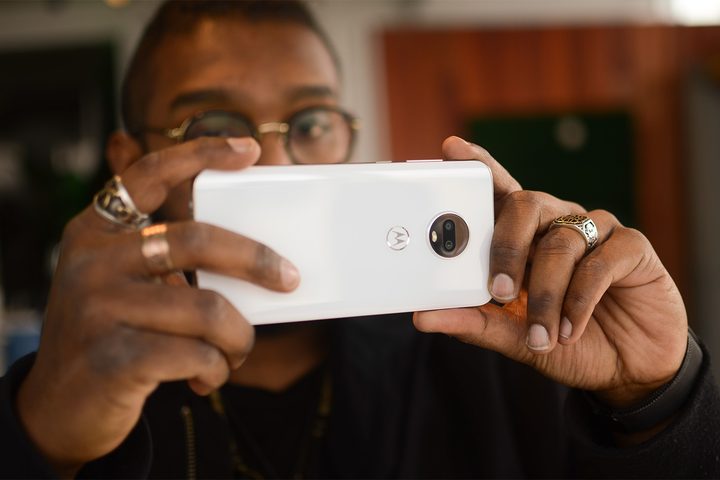
Perhaps the biggest difference between these two phones on paper is the camera. The Motorola One Vision has a dual-lens setup that pairs a 48-megapixel lens with a 5-megapixel lens. It actually produces 12-megapixel photos, but thanks to a technique called pixel binning the clarity should be far superior to the Moto G7’s dual-lens 12-megapixel and 5-megapixel camera. In both cases, the secondary 5-megapixel lens is used for depth and helps to produce nice portrait shots with blurred backgrounds. Beyond the hardware, the Motorola One Vision also features A.I. image recognition, a night vision mode, portrait lighting, and more extras.
It’s a similar story around the front, where the One Vision boasts a 25-megapixel camera and the Moto G7 makes do with an 8-megapixel shooter. Both can capture 4K video.
Winner: Motorola One Vision
Software and updates
We’ve been pretty impressed with Motorola’s budget Android smartphone lineup, but the reason that the Moto G7 was pipped to the post in the $300 category of our best cheap phones roundup is that Nokia has been turning out Android One devices. Being part of the Android One program means no bloatware, just pure Android, but more importantly, it guarantees at least two years of Android version updates and three years of security patches and that’s rare for budget phones. The Motorola One Vision is an Android One device. It also still offers Moto Actions like chop twice for flashlight and twist to launch the camera.
Right now the software experience is going to be very similar, but our concerns about how often the Moto G7 will be updated and how long it might take make this an easy win for the One Vision.
Winner: Motorola One Vision
Special features
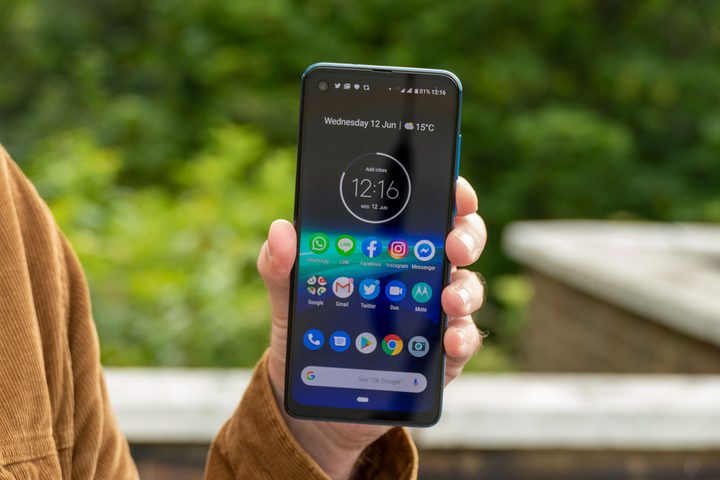
The standout features for the One Vision include the various A.I. and image processing smarts in the camera, the fact it runs Android One and the aforementioned Moto gestures. The Moto G7 only has the gestures and adds Moto Voice on top for hands-free interaction while driving. The U.S. version of the Moto G7 also lacks NFC, which the Motorola One Vision has, but it is also present in the U.K. version of the G7.
Winner: Motorola One Vision
Price and availability
The Moto G7 costs $299 and it’s widely available in the U.S. direct from Motorola or from retailers like Amazon, Walmart, and Best Buy. You will also find it at Google Fi, Republic Wireless, and Ting.
There’s no release date for the Motorola One Vision stateside just yet, but it is available in Europe now for 299 euros (around $335). You can also buy it in the U.K. from the end of the month for 269 British pounds — that’s 50 British pounds more than the Moto G7 is currently selling for. The One Vision is also available in Brazil and it’s coming to Mexico and some Latin American countries soon, but we don’t know if or when it will land in the U.S. or Canada.
Overall winner: Motorola One Vision
This has been a very one-sided competition. The Motorola One Vision improves on the Moto G7 in every department. Some of the improvements are slight, as with the design and display, but the vastly improved camera and the presence of Android One are major considerations, and that’s before we discuss the enhanced processing power and battery life. There is no doubt that the Motorola One Vision is a better phone, and if it’s offered close to the same price then it’s a far better buy than the Moto G7.