
Let’s be honest: The smartphone has reached the peak of design, and the only way forward does not seem to lead upward. The eagerness to cram more tech in less space is what has driven the companies selling the best smartphones. But the rectangle slab we treat as our babies have limited phone companies in terms of the experiments they can do to keep their designs fresh and exciting.
Despite these limitations, some brands have successfully introduced unique elements, facilitating them to create distinct personas for their phones. Companies have especially turned their attention to the back of smartphones to ensure maximum utilization of the available real estate. This includes the Vivo Nex and the ZTE Nubia X with two full-fledged displays, to the Xiaomi Mi 11 Ultra with a tiny rear display. More recently, the Doogee S98 rugged phone and the Nothing Phone 1 are among such devices that attempt to accomplish something unusual with their rear design.

These unique designs have challenged what we usually expect from smartphones. And while part of that should be commended, they still feel lacking in terms of optimal space usage. As much as secondary screens are useful, they can be very reductive to the user experience instead of being additive. After using one such device, I’ve begun to realize why the second screen form factor rarely works as expected.
Limited functionality

There’s a conundrum every phone designer must face when tasked with making space for a second screen on the smartphone. There are two apparent paths one can take. First, the phone may be blessed with a large secondary screen that sprawls across a significant portion of the phone’s entire surface area other than its main screen. That could either happen like Vivo or Nubia implemented a fully functional second screen on the back, or in the form of an external display on foldable phones such as the Galaxy Z Fold/Flip or the Motorola Razr.
The second route for a mobile designer would be to use a smaller screen that is only as big as a fitness tracker or a smartwatch. While the smaller size severely restricts the display’s functionality, it uses much less area on the back and doesn’t make the phone as thick.
One of the most marketed features on phones with a secondary display is that it allows users to utilize the full capabilities of the primary rear camera for selfies. Other than that, small secondary displays may be used for peering at notifications, controlling music, and picking up or dismissing incoming calls.
Most of these functions can also be performed using a smartwatch or by flipping the phone over. A secondary rear display might become an unwanted and distracting feature as soon as the novelty fades. As our Senior writer Andy Boxall notes in his Nothing Phone 1 review, the so-called Glyph interface is cool as a concept but comes across as non-striking in daily usage.
Bad or wasteful use of space

Secondary displays on smartphones have yet to reach their optimal utilization. Because most small secondary displays play the same role as a fitness band or a smartwatch, there is barely anything new that a secondary display offers. To make the secondary display actually usable (such as in the case of the Motorola Razr, which lets you type from the outer display), phone companies require more volume in the phone’s chassis. And that cannot be achieved without making a phone thicker.
While an increase in thickness may still be tangible and acceptable on foldable smartphones, the same can be attributed to a less pleasing design on a phone with a flat surface.
Making it harder to ignore your phone
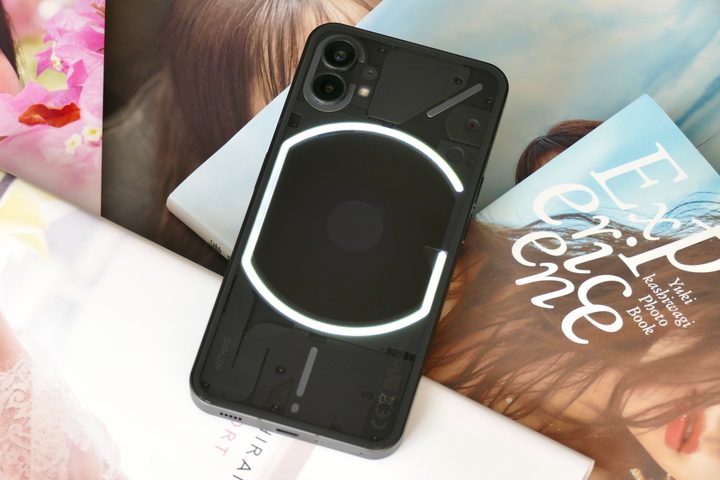
We constantly haul our phones in our hands, finding reasons to unlock the screen just one more time and take a quick scan at the swathe of (often useless) notifications. Therefore, putting the phone away and spending time without it requires a conscious effort. In an age where smartphones get lambasted for being highly addictive, rear displays contribute to users being hooked even when they want to withdraw.
Putting your phone facing downward is symbolic of taking a retreat and avoiding the noise. But with backs of phones that actively change or update with new notifications, they can continue invading the user’s mind space and prevent them from actually tuning out. Every time a new notification arrives, the rear display on the Nothing Phone 1(aka the Glyph interface) lights up, demanding the owner’s attention.
It’s already difficult enough to tune out your phone with notifications flooding the front display. When they can also grab your attention from the back, ignoring all those alerts becomes all the more impossible.
More QC issues and complicated repairability
Phones are getting harder to make, with companies having to cram more components in the same or even less space, which already increases challenges in maintaining reasonable quality control (QC). Further, densely packed components make it even more difficult for phones to get repaired. Usually, the phone’s back is the safest place to start the repair process, but with secondary displays or other elements crowding up the space, repairing can become highly challenging — especially if you were hoping to rely on a third-party service.
A video by YouTuber Dave2D shows how the panels with LED on the Nothing Phone 1 add an extra layer that is to be stripped off before you can access the actual internals of the phone. In cases like these, you are better off relying on official service providers, which is expected to add to the cost of any repairs.
Similarly, the complicated design can also result in challenges in production. The first batch of the Nothing Phone 1 has been infested with issues such as dust creeping inside the transparent back, misplaced ribbon cables, and damaged internals. The LED strips, more specifically, have also been peeling off.
Concurrently, the rear display on my Doogee S98 rugged phone also started glitching randomly after a few days of usage, even before I could test the phone for its ludicrous durability claims.
In addition to the issues that may crop up for phones with extra displays, keeping them protected in day-to-day usage is a more significant challenge altogether. While full displays can substantially stave off cases one can use with these phones, even smaller secondary displays add to the fragility of the smartphone and require extra caution during usage.
What’s the point of the dual-screen gimmick?
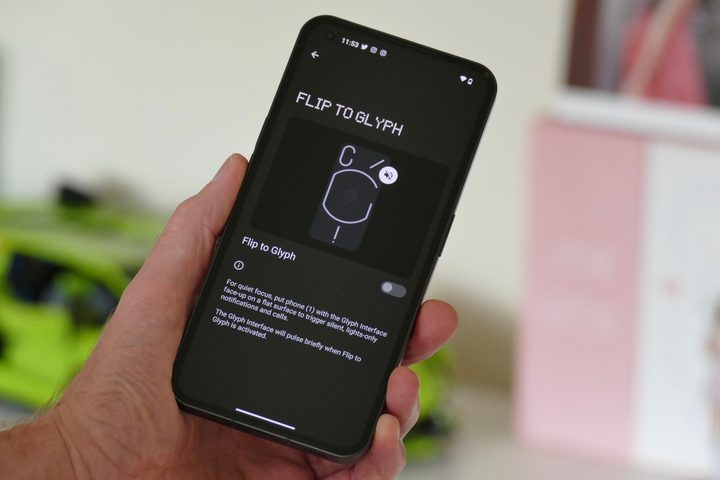
With the intent to set themselves apart, phone companies often tread unusual routes, relying on features that may often seem gimmicky. Secondary displays, in most devices available in the market at present, feel like an unnecessary gimmick that doesn’t add much value. Adding a secondary display could result in needless and preventable trade-offs in terms of durability and repairability. Not to mention, the extra display is also heavier on the battery and the processor on the device.
While a flashy and dazzling element on the back of the phone may help companies get hyped up and stand out among the crowd — as in the case of the Nothing Phone 1, the product’s effectiveness stands the test of time in the market.
As a service to the community, smartphone companies should aspire to make phones more utility-based and less distracting. By doing this, we can ensure that our phones and other gadgets do not completely cloud our attention and judgment while dissociating us from the physical world.


