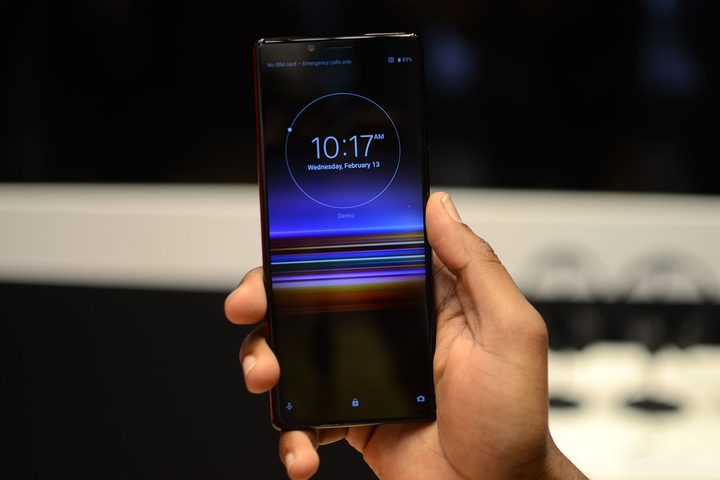

Sony might not be showing off a futuristic folding phone or fancy 5G hardware at MWC 2019, but it has brought three unique new phones. The Sony Xperia 1, Xperia 10, and Xperia 10 Plus are the latest in Sony’s flagship and midrange lineup, and they all come with something we haven’t seen before in a smartphone — an ultra-wide display that stretches up to a 21:9 aspect ratio.
With that in mind, is there any real difference between the three? If you’re looking for a new smartphone and you love Sony’s style, which one is best for you? We pitted these three head-to-head to find out.
Specs
| Sony Xperia 1 |
Sony Xperia 10 Plus |
Sony Xperia 10 |
|
| Size | 167 x 72 x 8.2 mm (6.57 x 2.83 x 0.32 inches) | 167 x 73 x 8.3 mm (6.57 x 2.87 x 0.33 inches) | 155.7 x 68 x 8.4 mm (6.13 x 2.68 x 0.33 inches) |
| Weight | 180 grams (6.35 ounces) | 180 grams (6.35 ounces) | 162 grams (5.71 ounces) |
| Screen size | 6.5-inch OLED | 6.5-inch IPS LCD | 6.0-inch IPS LCD |
| Screen resolution | 3,840 x 1,644 pixels (642 pixels per inch) | 2,520 x 1,080 pixels (422 pixels per inch) | 2,520 x 1,080 pixels (457 pixels per inch) |
| Operating system | Android 9.0 Pie | Android 9.0 Pie | Android 9.0 Pie |
| Storage space | 64GB, 128GB | 64GB | 64GB |
| MicroSD card slot | Yes, up to 512GB | Yes, up to 512GB | Yes, up to 512GB |
| Tap-to-pay services | Google Pay | Google Pay | Google Pay |
| Processor | Qualcomm Snapdragon 855 | Qualcomm Snapdragon 636 | Qualcomm Snapdragon 630 |
| RAM | 6GB | 4GB | 3GB |
| Camera | Triple-lens wide-angle 12MP (OIS), 12MP telephoto zoom, and 12MP ultrawide-angle rear, 8MP front | Dual 12MP wide-angle and 8MP telephoto zoom rear, 8MP front | Dual 13MP and 5MP rear (both wide-angle), 8MP front |
| Video | 4K at 30 fps, 1080p at 60 fps, 1080p at 960 fps | 4K at 30 fps, 1080p at 30 fps | 4K at 30 fps, 1080p at 30 fps |
| Bluetooth version | Bluetooth 5.0 | Bluetooth 5.0 | Bluetooth 5.0 |
| Ports | USB-C | USB-C, 3.5mm headphone jack | USB-C, 3.5mm headphone jack |
| Fingerprint sensor | Yes, side-mounted | Yes, side-mounted | Yes, side-mounted |
| Water resistance | IP65/68 | No | No |
| Battery | 3,300mAh
QuickCharge 3.0 fast charging Qi wireless charging |
3,000mAh
QuickCharge 3.0 fast charging |
2,780mAh
QuickCharge 3.0 fast charging |
| App marketplace | Google Play Store | Google Play Store | Google Play Store |
| Network support | T-Mobile, AT&T, Verizon, Sprint | T-Mobile, AT&T, Verizon, Sprint | T-Mobile, AT&T, Verizon, Sprint |
| Colors | Black, gray, purple, white | Black, navy, silver, gold | Black, navy, silver, pink |
| Price | TBC (expected $1,100) | $430 | $390 |
| Buy from | Sony | Sony | Sony |
| Review score | Xperia 1 news | Hands-on review | Hands-on review |
Performance, battery life, and charging
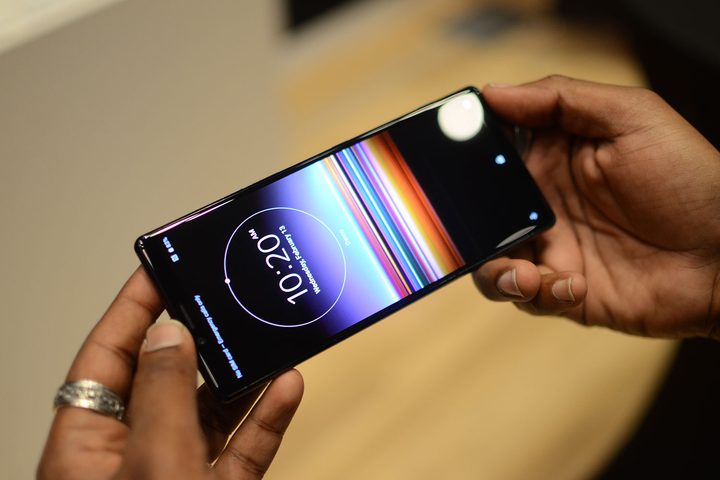
The Xperia 10 and 10 Plus are powered by the Snapdragon 630 and Snapdragon 636 respectively. We’ve seen similar chips in past phones — most notably the Snapdragon 636 in the BlackBerry Key2 — and we expect similar levels of performance in both midrange Xperia phones. They will both likely have enough power for day-to-day tasks, but will fall short of running the latest and most demanding games. That won’t be an issue with the Xperia 1, as it’s packing the powerful Snapdragon 855 chip. This phone will be able to handle anything you throw at it, from demanding mobile games to swapping between multiple apps. It’s a serious mismatch in power.
But they’re closer in battery than you might imagine. The Xperia 1 leads in pure battery capacity, followed by the Xperia 10 Plus and then the Xperia 10, but we imagine you’ll need to charge each of them every day. QuickCharge 3.0 support across the board means you won’t have to wait long when you plug in, but only the Xperia 1 has Qi wireless charging.
The superior processor, extra battery capacity, and wireless charging give the Xperia 1 the win here.
Winner: Sony Xperia 1
Design and durability

The ultrawide displays are likely Sony’s biggest selling points for these new phones, but it does mean you’re looking at some extremely long and thin phones. Both the Xperia 1 and 10 Plus are the worst hit by this — you’re unlikely to be able to reach the top of either without using two hands. The Xperia 10 is smaller, but it’s still within large phone range, just a few millimeters shorter than the Galaxy S9 Plus. If you love big screens that’s great, but anyone with smaller hands will struggle with all three of these.
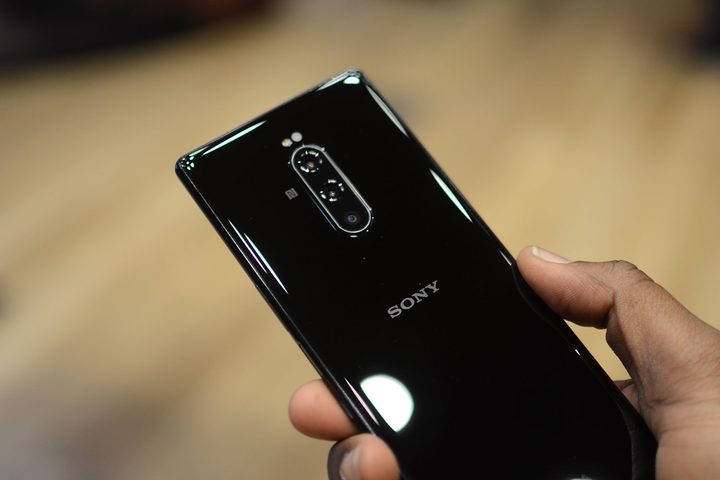
All three sport similar looks, with slim bezels, a large forehead, and a boxy silhouette. However, while the Xperia 10 and 10 Plus have polycarbonate bodies, the Xperia 1 has a glass body marking it as the more premium phone. That does mean it’s more likely to shatter if dropped, but that can be somewhat prevented with a good protective case. The Xperia 1 also sports an IP68 rating for water resistance; neither the Xperia 10 or 10 Plus have been reported to have any water resistance, which is unusual for Sony.
The glass body and the water resistance seal this for the Xperia 1.
Winner: Sony Xperia 1
Display
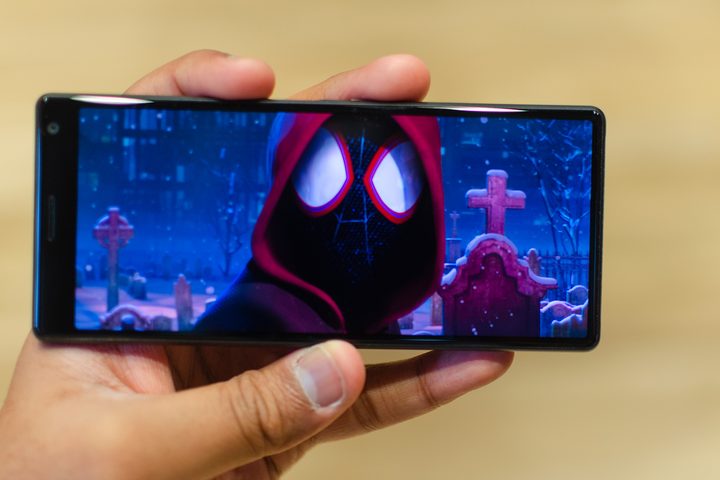
As mentioned, all of these phones feature stunning ultrawide displays that will be perfect for films, Netflix, and even certain games. The Xperia 10 and 10 Plus come with a 6-inch and 6.5-inch screen respectively, and the 2,520 x 1,080-pixel resolution means they are both relatively crisp. However, the Xperia 1’s 6.5-inch display sports the first mobile 4K resolution on an OLED display — it’s super-sharp, and it’ll show incredibly deep blacks and vibrant colors. This is a clear win for the Xperia 1.
Winner: Sony Xperia 1
Camera
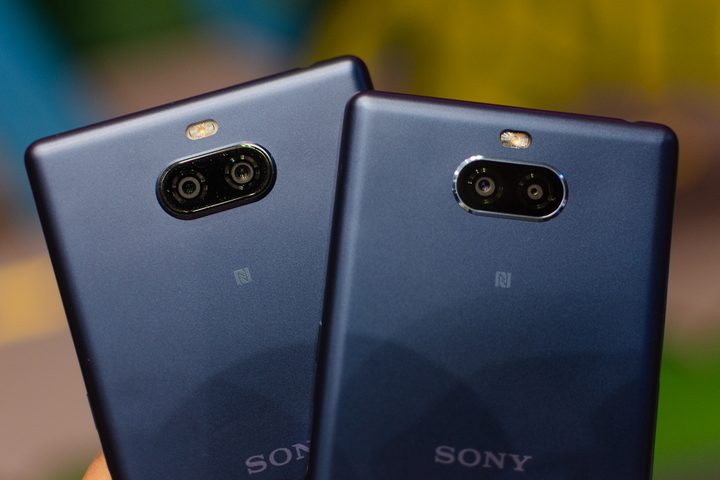
The Xperia 1 comes with three 12-megapixel lenses on the rear of the phone — a standard lens with optical image stabilization, a telephoto lens, and a super wide-angle lens. The Xperia 10 Plus has a 12-megapixel lens and an 8-megapixel lens on the back, and the Xperia 10 has a 13-megapixel primary lens paired with a 5-megapixel secondary lens. All three have an 8-megapixel selfie lens around the front.
This category is tricky, as we haven’t had much time with any of these phones yet. However, it seems the most likely that the triple-lens 12-megapixel lenses on the Xperia 1 will prove to be the most effective of the three. The three lenses are — on paper — similar to those on the very impressive Galaxy S10 Plus, and while it may not prove equal to Samsung’s flagship, it will outstrip the other two Xperia phones. Midrange phones often fall on the camera front, and our initial assessments of the Xperia 10 and 10 Plus suggest that may be the case.
Winner: Sony Xperia 1
Software and updates
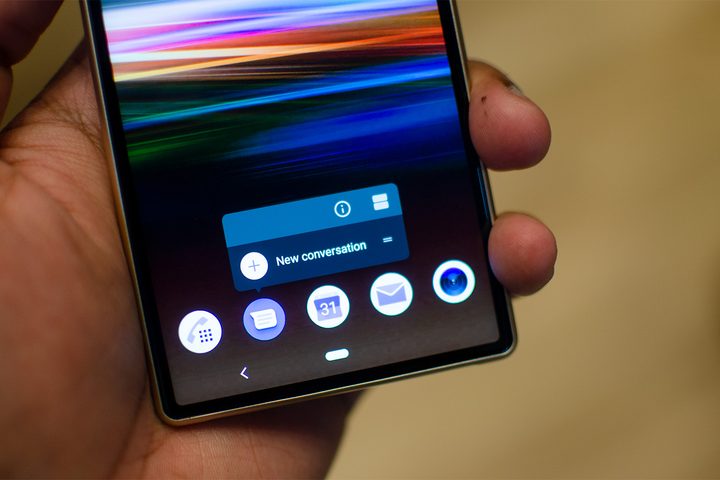
You will find Android 9.0 Pie with Sony’s manufacturer user interface on all of these phones. It’s a good enough UI, and while it isn’t as slick as stock or Pixel Android, it’s not as large a change from the norm as some other Android skins. Sony’s record with updates isn’t the best, but it’s far from the worst. Two years of updates are usually standard, so you can expect all of these phones to be updated to Android Q eventually, and possibly Android R.
All three run the same software, and while the Xperia 1 may get updates before the other two phones, there’s probably not going to be a huge gap between them.
Winner: Tie
Special features
Since all three phones are from Sony, you’ll find similar offerings on each. There are the old Android mainstays, including Google Assistant, Google Lens, and all the rest — but there are some interesting Sony-only features, too, like Side Sense. This sidebar can be opened to reveal a customizable list of apps to launch quickly. You’ll also find support for high-resolution audio on all three.
As the flagship, the Xperia 1 comes with a bit extra. It boasts Dolby Atmos support, the Dynamic Vibration System, and the Game Enhancer app. While the Xperia 1 doesn’t come with anything groundbreaking, it does have a few additions that push it above its peers.
Winner: Sony Xperia 1
Price
The Xperia 10 and 10 Plus are due to arrive on March 18, with prices starting at $350 for the Xperia 10 and $430 for the Xperia 10 Plus. The Xperia 1 is significantly more expensive and though U.S. pricing hasn’t been released yet, it’s expected to cost 849 British pounds (roughly $1,100) in the U.K. The Xperia 1 is expected sometime in the spring.
Overall winner: Sony Xperia 1
With a price tag that’s likely to be more than both other phones combined, it would have been odd if the Xperia 1 hadn’t topped this list. With powerful specs, a gorgeous display, and an impressive-looking triple-lens camera suite, it’s clear the Sony Xperia 1 is the most capable of Sony’s three newly revealed phones.
However, that’s only if the price is no issue, and with decently powerful specs and the same 21:9 aspect ratio, the Xperia 10 and 10 Plus should definitely be on your list if you’re looking to save a little money. If you’re looking for the best possible media experience, the ultrawide 6.5-inch and 6-inch displays will be hard to pass up. Both have stiff competition from the Moto G7 range though, so make sure to do your homework before you commit.