If you’ve been taking portrait photos on your phone for several years, you’ll know that most phones have gotten progressively better. As smartphone camera technology has evolved, so has the ability of phone makers to capture depth information better. As a result, we’re able to take portrait photos with better bokeh and detail.
However, there’s still a long way to go, especially as each smartphone takes wildly different portrait photos. Last week, during CES 2025, I saw a new holographic technology that holds a lot of promise and could usher in a new era of smartphone portrait photography. Here’s how it works and everything you need to know about it.
How PxE’s holographic technology works
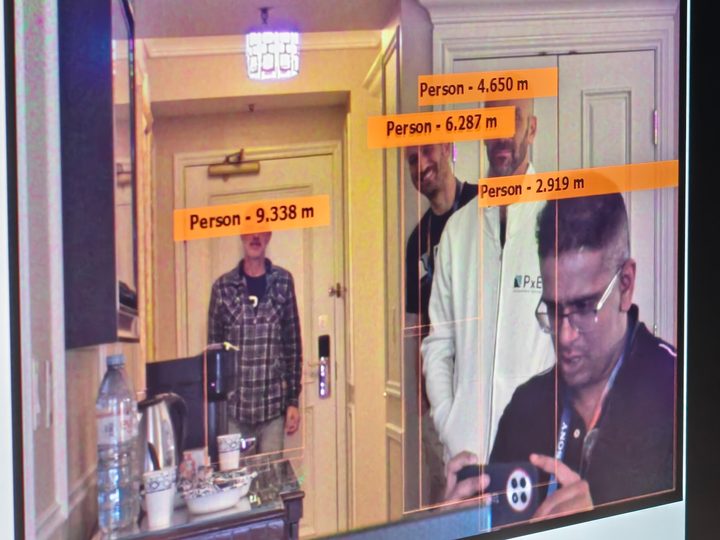
The key issue at the heart of smartphone portrait photography is depth information. When a phone maker can accurately identify depth information, it can parlay this into the image signal processor (ISP) and ensure that it accurately picks up every strand of hair or minute details.
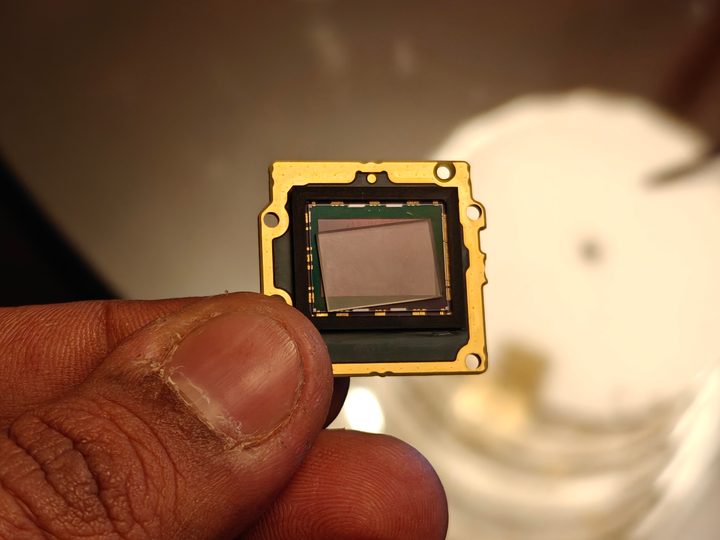
It works by treating light as waves rather than the light rays used in classical imaging. This allows it to pick up far more information, especially since the Bayer filter — used in traditional imaging — has been replaced by the PxE HoloCoder. The result is a much better understanding of depth information.
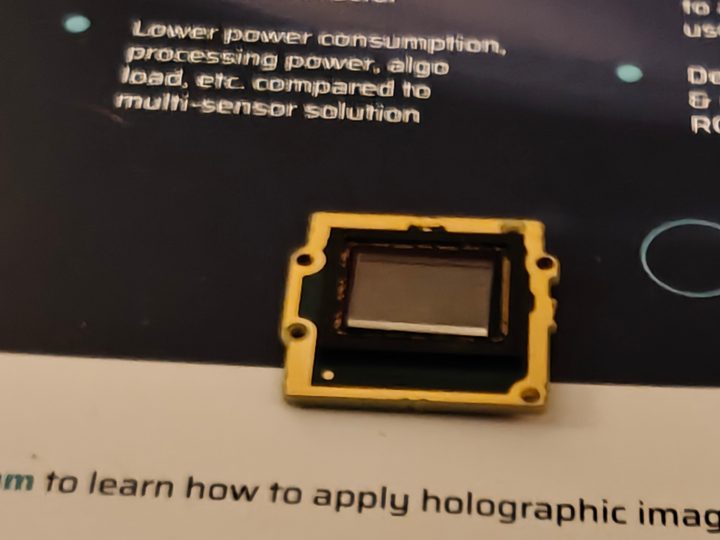
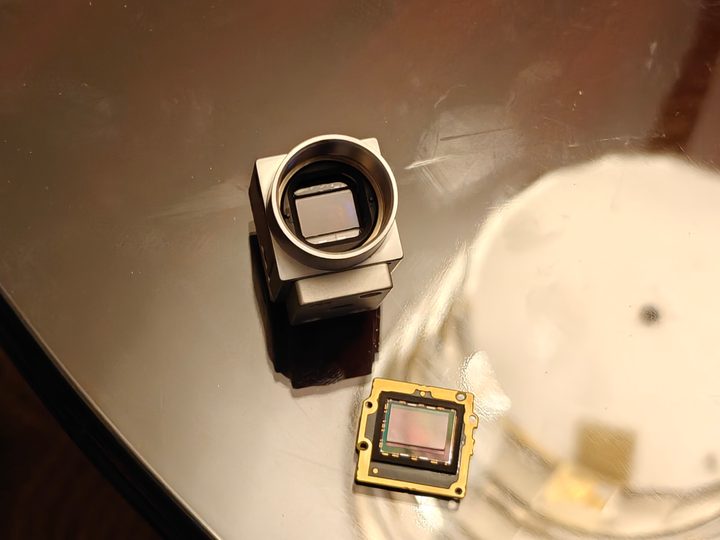
The actual sensor is extremely small, but to demonstrate its capability, the company built it into a camera to showcase just how accurate its depth information is. The result is accuracy to a thousandth decimal, even at longer distances.
During the demonstration, the company showed off how the sensor picks up objects at different focal lengths and applies different colors to each subject based on how far away it is from the camera. A red outline means it’s closest to the camera, followed by yellow, green, and blue to denote objects further away.
Is this accurate? The best example is how it picks up micro movements when leaning against a wall. Even when we assume we’re standing perfectly still, the camera can pick up those slight movements that are barely perceptible to the human eye. It’s this technology that has vast potential to improve smartphone portrait photography.
How could this improve smartphone photography?
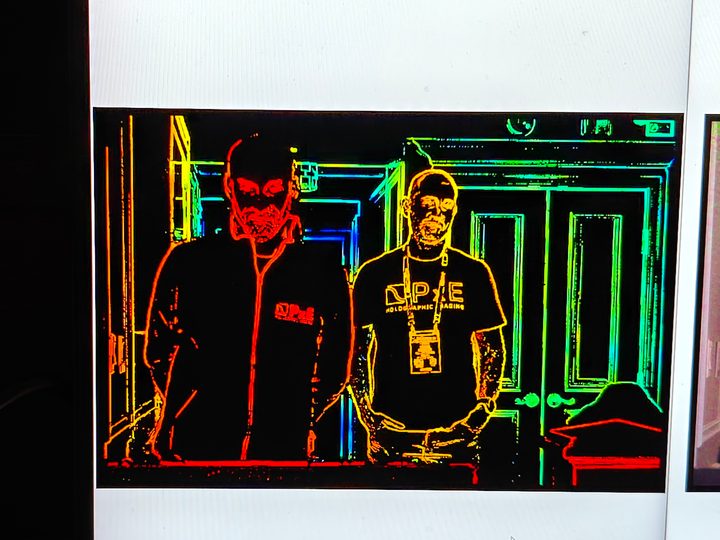
The key benefit of this holographic technology is its ability to pick up depth information in a hitherto unheard of way. For example, we’ve all seen portrait photos where strands of hair have varying degrees of focus, but this technology can pick up the micro details in a way that allows it to identify strands of hair, even at a distance.
While this has fantastic potential to improve portrait photography, it also has the potential to improve all aspects of taking photos with your phone. For example, the real-time information collected by the holographic sensor and the accuracy to the thousandth decimal, even when moving, mean it has huge potential to improve photos of moving subjects.
We’ve all taken photos of someone or something that’s moving slightly — or when we’ve been moving — resulting in a slightly out of focus photo. PxE’s technology could help improve this — especially for moving subjects — as it can capture all these details. Applying this directly to the camera sensor ensures that the information is fed into the raw data captured by the ISP. While it’ll rely on phone makers’ ability to use this data, it has huge potential to improve smartphone photography.
When could we see this on phones?
I asked the founders when we can expect to see this on smartphones, and what does that process look like? The answer is somewhat nuanced, but the company hopes to bring this to smartphones in the next few years.
Considering that the smartphone development cycle is around two years on average, it makes sense that we’re unlikely to see this for at least that long, but the actual timing could be further away. In particular, the company is aiming to work with both Sony and Samsung — who make the majority of camera sensors used in phones — as well as the phone makers and chipset makers like MediaTek and Qualcomm to ensure that it’s implemented throughout all stages of the smartphone experience.
Building a smartphone is complex, and just applying this technology to the sensor wouldn’t be enough to fully realize its potential; using this depth information requires collaborating with each stakeholder in the smartphone process. That said, there are also far more applications beyond smartphone photography.
Other applications beyond smartphone photography
For many years, we’ve heard about the smart cities of the future, where autonomous vehicles talk to the environment around them, and this technology has huge potential to help usher in this era. The key issue so far has been accuracy, and PxE technology could help vastly improve the information gleaned.
Then there’s automotive, and as this video shows, this technology could help usher in much better autonomous driving. Applying this to the camera sensors used in cars could ensure that they pick up accurate depth information about the distance to the car ahead, meaning it’ll know exactly when to start slowing down or when it’s safe to speed up again. It also has the potential to make object and hazard detection far more accurate, which is a key problem seen in most current approaches to autonomous driving.
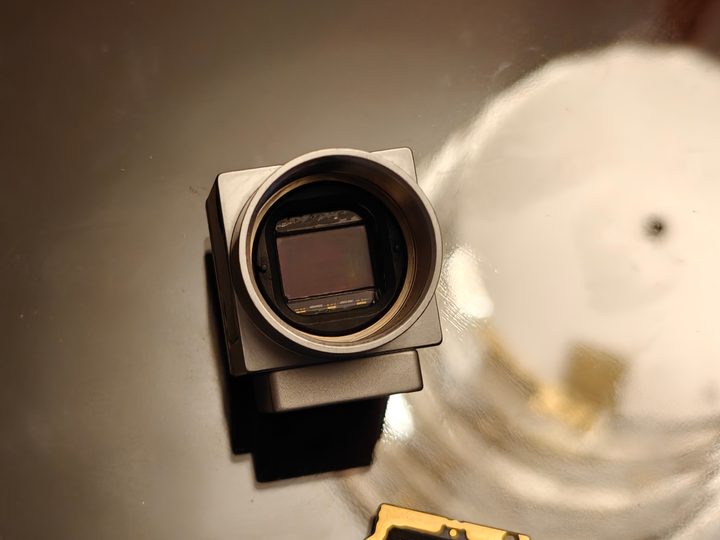
Lastly, imagine this applied to the world of science. The PxE website discusses its potential applications toward precision imaging, i.e., scientific applications such as microscopes. The camera used in the demonstration at CES could easily be applied to a vast array of applications, especially as it’s an all-in-one solution.
Why is this so exciting?
The answer is fairly obvious: much like smartphone photography has improved from one generation to the next, this technology could usher in the next generation of smartphone photography. An era of holographic information has a wide array of potential applications, and crucially, it could vastly improve smartphone photography.
Natural bokeh, portrait photos, and even a better understanding of object data all mean it has the potential to improve all areas of smartphone photography. It might take a few years, but I can’t wait for this next era in imaging to become a reality.