
The use of mobile phones in Russia’s assault on Ukraine is changing the nature of modern warfare and presenting new challenges for troops that could reverberate in future conflicts.
Russian forces are reportedly targeting their Ukrainian adversaries using sophisticated electronic warfare systems. In turn, the Ukrainians are intercepting unencrypted communications between Russian soldiers. And both sides are using footage captured by mobile phone cameras to present their sides of the war.
“Either side that uses an insecure mobile phone is at major risk,” retired U.S. Army Maj. John Spencer, the chair of Urban Warfare Studies with the Madison Policy Forum, told Digital Trends in an interview. “The signals from these phones can be captured, geolocated, and then targeted for artillery or bombing strikes.”
Mobile targets
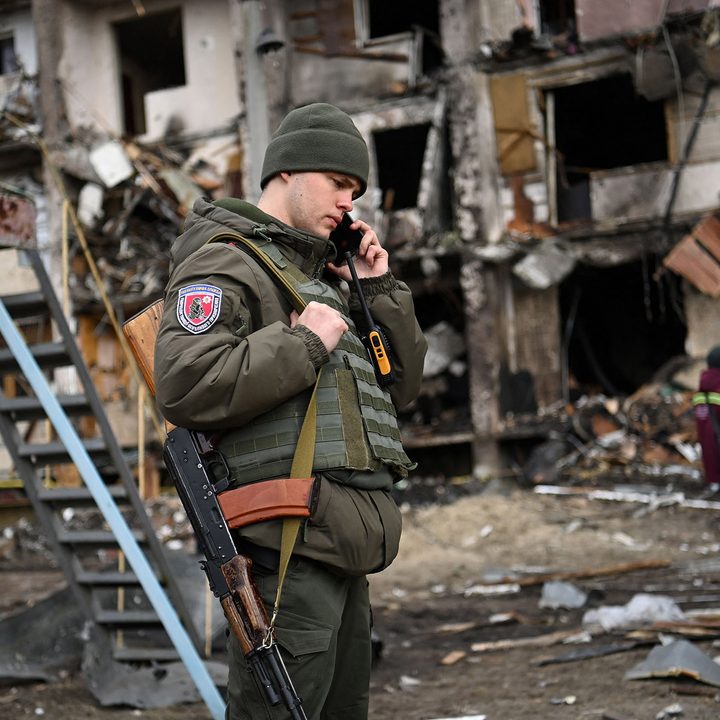
One juicy target for Ukrainian intelligence has been simple chats between Russian soldiers in the field. Instead of turning to encrypted communications as is standard procedure with most Western militaries, the Russians surprisingly continue to use regular commercial phones.
Unfortunately for Russian soldiers, much of their military-grade radios have not been modernized, Adam Fish, the CEO of data platform Ditto, said in an interview. As a result, the Russians rely on commercial mobile devices and networks to exchange tactical information for fire support coordination and maneuvers.
Spencer said that Ukrainian forces were able to listen in on communications, have targeted senior commanders for aerial bombings, and intercepted valuable messages about troop orders, movements, and morale issues.
“The Ukrainian military is aware of the dangers and put out cautionary instructions to not use unsecured communications,” Spencer added.
Brig. Gen. Robert Spalding, a senior leader in the U.S. Air Force, said in an interview with Digital Trends that cell phones are more convenient for soldiers than clumsy military radios, but they are insecure. Military equipment is secure and hardened, but often systems are not interoperable.
“For example, I know one country where the army and navy have different systems for tactical communication,” Spalding added. “This means they cannot communicate. So, it is not surprising that the Russians have chosen to use cell phones. Doing so, though, makes them vulnerable in the field.”
The problem is that regular mobile phones weren’t designed to hide users.
The problem is that regular mobile phones weren’t designed to hide users. All phones leave a digital footprint that can be easily accessed through software development kit (SDK) data, Spalding said. This data provides a geographic location that when paired with other pieces of information can allow the user to be identified.
“For example, say you know a unit is operating in a certain location, you can buy the data for that location,” Spalding added. “Then you can watch what the devices there do and where they go. From watching where the device goes, you can identify who it belongs to.”
Another way opposing forces can identify users is to hack into the cellular network itself, Spalding noted. This can allow them not only to identify location data, but also to listen in on calls. Some police departments and militaries use what’s called a stingray, a method that allows you to hijack the cellular signal and get the same data as if you hacked into the cellular network. “The stingray works by tricking the phone into thinking it is the network,” Spalding added.
Tim Redfearn, an information technology expert with ADS, Inc., a military equipment supplier, told Digital Trends in an interview that stingray devices, also called cell-site simulators, can pick up the signals of nearby cell phones. The simulators can identify user locations by tricking cell phones into connecting with multiple masts in the area. “This helps both sides identify the location of enemy troops, and often leads to artillery or airstrikes,” he added.
Open-source intelligence
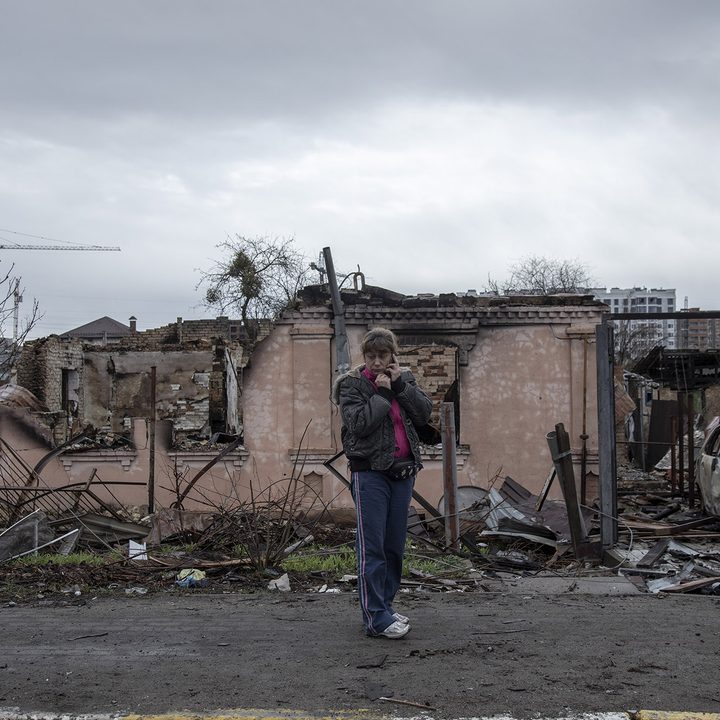
The Ukrainians are also turning to ordinary mobile users for intelligence about where to find their foes. Civilians have used their mobile phones to upload videos and photos of invading Russian forces, Spencer said.
“This allows the Ukrainian military and open-source intelligence to gather not only where the Russians were/are, but also very specific information on what unit, and what type of equipment,” Spencer added.
Mobile phones have themselves become targets. According to reports, Russian soldiers in the suburbs of Kyiv displaced residents from their apartments, held them captive in basements, and seized many of their cell phones and laptops under threat of execution.
Unlike in many previous wars, there are likely more cell phones in Ukraine than people.
Unlike in many previous wars, there are likely more cell phones in Ukraine than people, Spencer noted. The increase in cell phones means more sensors to capture Russian movements.
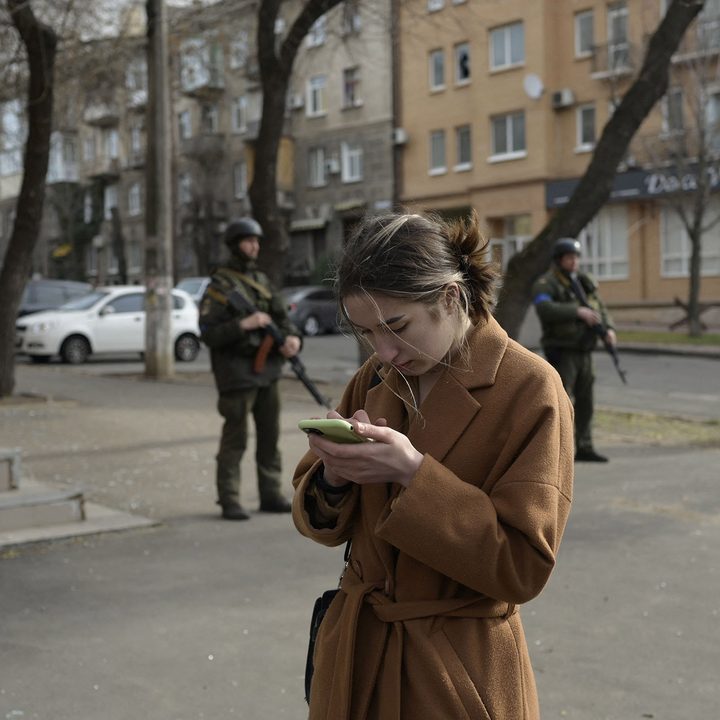
“As this trend continues, it is like war is happening in an arena and each of us is a witness to the event, every detail, every firefight, every death,” Spencer added. “It is changing how we motivate soldiers to fight and how political will is garnered, contested, and lost.”
Both sides in the Ukraine conflict are using mobiles phones as a propaganda tool. The Ukrainian government set up a hotline for Russian families to call to find out any information on their relatives who had been captured. The very immediacy afforded by mobile communications means that the walls between the fighter soldier and home — and vice versa — are gone on today’s battlefields, Spencer said.
“The first thing captured Russian soldiers were often handed by Ukrainians was a mobile phone so that they could call home,” Spencer said. “That is very different. It influences their will to fight and the families’ will to support the war.”
Changing the nature of war
The outcome of the conflict in Ukraine may ultimately rely on which side wins the information war and that, in large part, will be waged over mobile phones. Ukrainian president Volodymyr Zelenskyy has won billions of dollars in aid for his country through the skillful use of appeals on television and internet appearances. Meanwhile, Russian leader Vladimir Putin has been relatively silent in presenting his rationale for battle.
“In the West, the objective in war has been to use force to achieve a political outcome,” Spalding said. “What authoritarian regimes have discovered is that political warfare can go global by using the same tools the tech companies use to make you a better consumer.”


