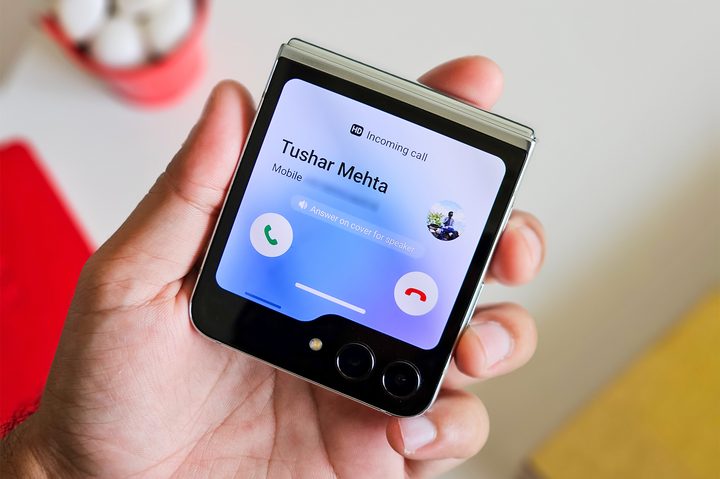
Seeing “Unknown Caller” appear when your phone rings can be a bit unsettling. Most of us are never quite sure whether to take a chance and answer these calls or send them off to our voicemail.
After all, you never know if the person on the other end is a telemarketer or if it’s a robocall, a work colleague, or a friend or family member calling from an unusual place.
While we can’t offer you any advice on what to do with these unknown calls — you’ll have to make that “call” yourself — we can help you understand exactly what it means when your phone shows Unknown Caller and hopefully put your mind a bit more at ease.
What does Unknown Caller mean?

Unlike “No Caller ID” or “Private Number,” the term “Unknown Caller” typically means precisely what it says: your phone has no idea who’s calling.
Assuming your phone service includes Caller ID, this lack of knowledge likely extends beyond your phone to your telecom provider, whether that’s a mobile carrier or a traditional landline company. In short, your phone isn’t provided with information about the caller because it isn’t available.
Unfortunately, there can be several reasons for this. It could simply be a network error or a glitch somewhere along the path. Sometimes, the caller ID information gets lost in transit the way a return address label might fall off an envelope in the mail.
More often, it’s a compatibility problem between different telecommunications networks. For example, someone calling you from a VoIP app may not provide proper caller ID information — or any caller ID information at all. Professional, business-grade VoIP services typically require their customers to send caller ID, but many smaller ones don’t.
Calls coming in from overseas (outside of North America) can also be problematic since not all foreign telephone networks present caller ID in a way that your carrier expects to receive them. Some carriers will strip out what they consider invalid caller ID information rather than present you with a useless string of numbers.
Can you find out who an Unknown Caller is?

Most of the time, you won’t be able to easily identify an unknown caller. As we described above, this message usually means the caller ID information isn’t there, and you can’t find what’s not there.
However, just because your phone is missing the caller ID information doesn’t mean your carrier doesn’t know where the call came from. In addition to the caller ID information that’s designed to be shown on your phone’s display, telecom networks also pass originating numbers around using a technique known as automatic number identification (ANI).
ANI is used internally between networks for tracking and billing purposes; it’s not typically available to end users. It can also be different from the caller ID. For example, in a business with multiple lines, the ANI will be the actual line the call came from, while the caller ID may be a generic customer service number or a direct number to an employee’s desk.
While your carrier is unlikely to provide you with these details if you simply ask for them, but you can involve law enforcement if you’re being seriously harassed by someone from an unknown number, as they can request whatever information your carrier has available through the investigative and legal channels available to them.
Depending on your telecom provider, you may also be able to call back an unknown caller using a feature commonly known as last call return. While this is rarely available on mobile phones, most North American landline providers allow you to dial *69 to call back the last call received.
In most cases, this works even when caller ID has been deliberately blocked; it won’t tell you the number, but it will call it back. It’s more of a long shot when dealing with unknown callers, but it’s worth a try. Just keep in mind that you won’t find much out unless someone answers that return call.
Dozens of apps on the Play Store and App Store claim they can help you find out who unknown callers are. Don’t waste your time with these in this scenario, as none can help you find the phone number of an “Unknown Caller.” That information is simply not available, and there’s no magical way for them to get at it — at least not without illegally hacking into your carrier’s network.
Instead, most of the more reputable apps that claim to identify unknown numbers are talking about matching names to calls from unrecognized numbers that show up on your caller ID. Some of those apps work pretty well by using online databases and reverse number searches;. However, you can often get some clues on your own by searching out those numbers on Google.
Lastly, apps like TrapCall can help identify unknown callers — but only if you set them up to intercept those calls in advance. These services route declined calls through their own phone networks so they can read the ANI even when the caller ID isn’t available. With monthly subscription fees — and some potential privacy issues — they’re probably not worth it merely to satisfy your curiosity, but they can be helpful if somebody is pestering you. TrapCall works very well with blocked calls (“No Caller ID” or “Private Number”), but it can be hit-or-miss with unknowns (“Unknown Caller”) as there may not be any caller information for it to capture.