
Google is beefing up the financial safety aspect for its Chrome browser and Android smartphone users. Say hello to virtual cards, a system that replaces the actual bank-assigned unique number for a credit or debit card with a virtual set of numbers. The idea is to keep the original card information safe as users are no longer required to manually enter card details every time they make an online purchase.
Announced at the Google I/O 2022 event, the virtual card system has been designed for the autofill system on Android and Chrome for storing sensitive banking details. “If you enroll a virtual card for Autofill, you can keep your actual card number hidden when you check out on merchant websites,” says Google.
A virtual banking card will generate its own set of crucial details such as card number, expiration date, and CVV, all of which differ from the information printed on a physical card. They can be used for purchasing items at all sale points where a physical card is accepted. When using the feature, users may be asked to verify their identity via a code verification protocol that sends an authentication SMS to their registered phone number.
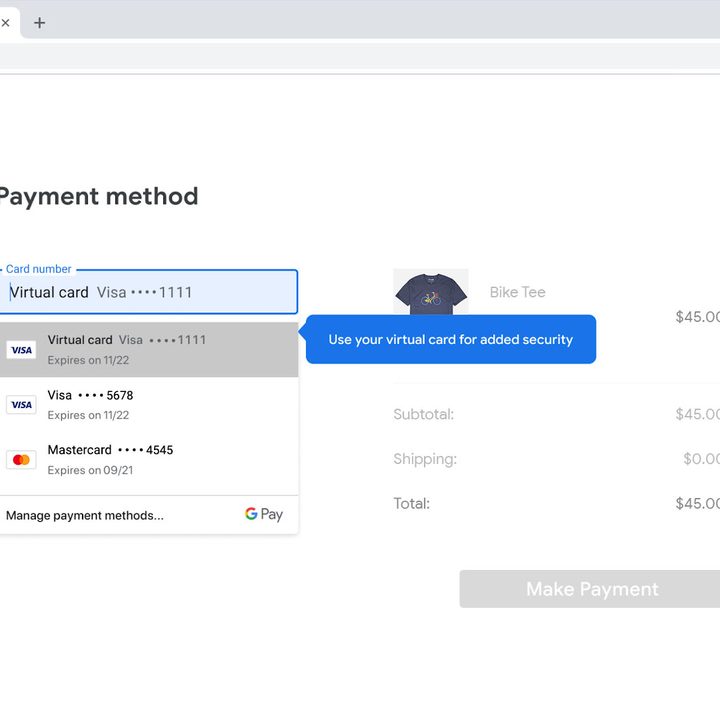
The pay.google.com portal acts as a dashboard for managing all virtual card-related activity. Users can check their virtual card number here and also keep track of all transactions involving the virtual banking card. Google says the feature will be rolling out for Chrome and Android users later this year in the U’S. Google will offer support for Visa, American Express, and all Capital One cards in the initial phase, and will bring Master Card into the fold later this year.
The official Google support page for virtual cards currently mentions support for only Capital One cards. In order to enable the virtual card feature, users need to log in to their banking service account and link their debit or credit card to their Google Pay account using the wallet management option. Once it’s done, a temporary token charge is deducted from the bank account to verify the process, but it will be reimbursed soon after.
The virtual card feature is an extremely meaningful addition from a security perspective, as it shields card details from web trackers and bad actors trying to trick users into handing over their sensitive banking information. And since Chrome’s autofill feature is widely used, the threat is very much real.
Google is not the only brand to offer a virtual banking card solution. Apple also offers similar protections such as the rotating security code feature with its Advanced Fraud Protection suite for Apple Card. Once enabled from the Wallet app on iPhones or the Apple Pay dashboard, the three-digit Apple Card security code is changed periodically after it has been autofilled for a transaction in Safari.


