
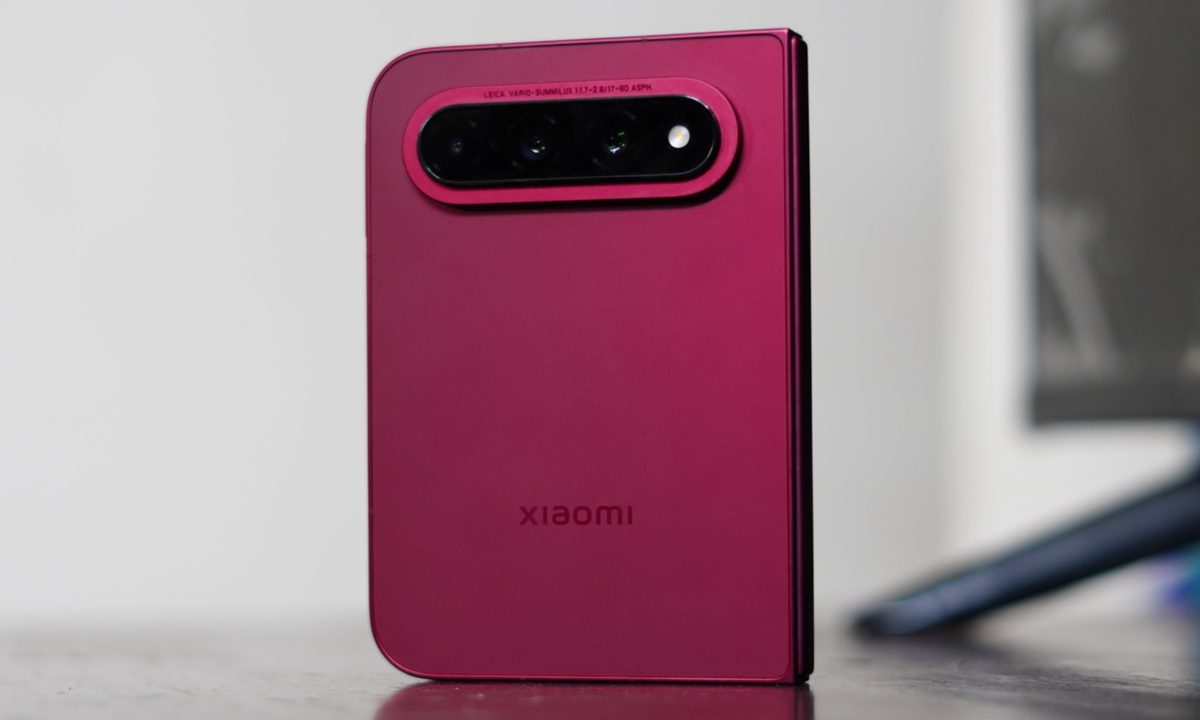
Foldable phones have spent the past few years trying to answer one basic question: how do you give users a much larger screen without making the phone too heavy or cumbersome to carry? Xiaomi’s answer with the Xiaomi 18 Fold is to focus on the compromises that matter most in everyday use.
The company’s first mid-size flagship foldable combines a 219-gram body with a 5.02mm unfolded profile, a 7.58-inch inner display, a 6,000mAh silicon-carbon battery and a 200MP Leica triple-camera system. It is powered by Xiaomi’s XRING O3 processor and is designed around the idea of making a large-screen foldable more portable.
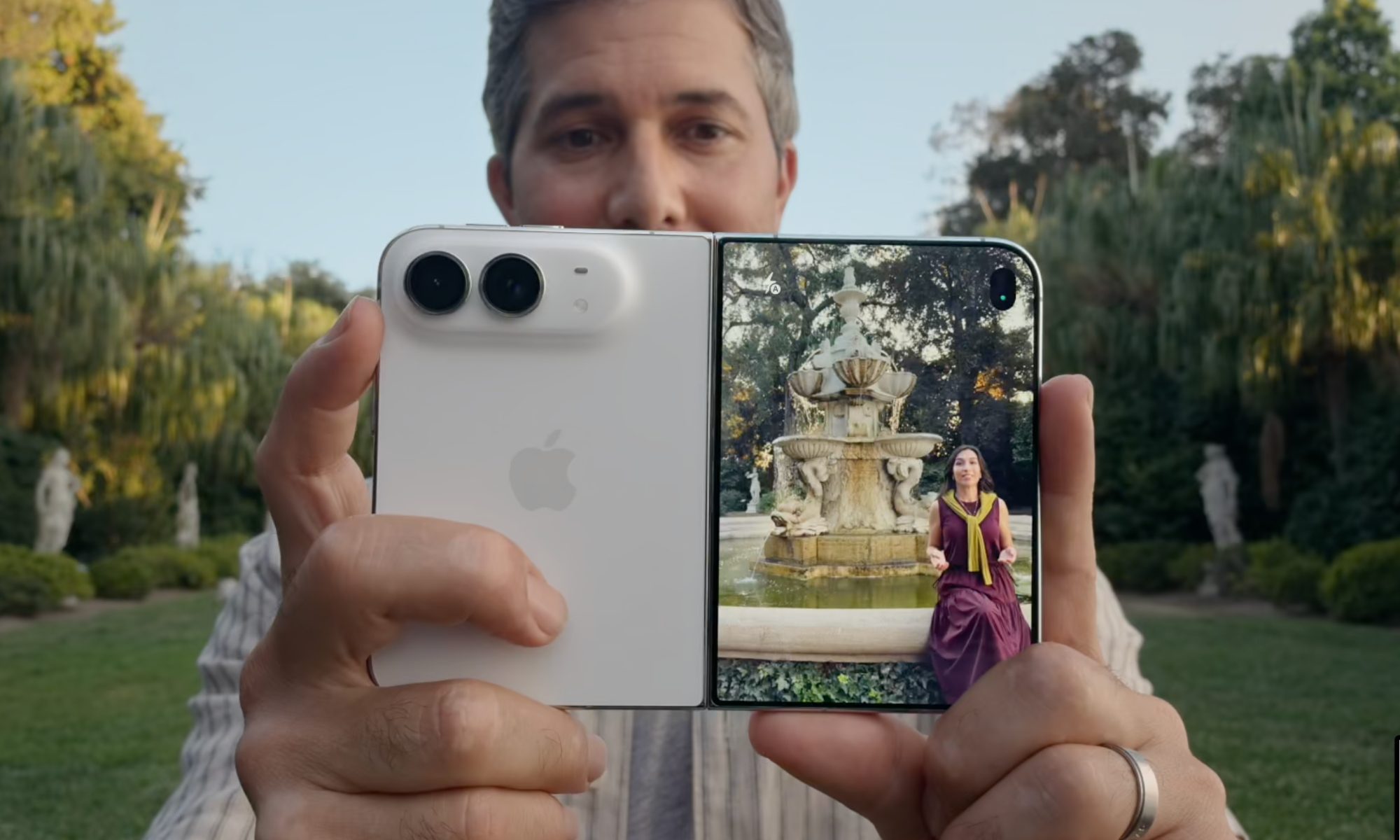
That puts the Xiaomi 18 Fold in an interesting position against Apple’s first foldable, the iPhone Duo. Apple’s device weighs 254 grams, measures 11.3mm when folded and 5.2mm when open. It also has a 7.6-inch inner display, a 5.4-inch outer display, a 48MP dual-camera system, and 25W MagSafe and Qi2 wireless charging.
The numbers reveal a clear difference in priorities. Xiaomi has focused heavily on reducing weight and thickness while adding more camera hardware and a larger battery. The result is a foldable that is not simply about having a bigger screen. It is about making that larger screen easier to carry and giving users more flexibility once they start using it.
A lighter foldable can make a difference every day
Weight is one of those specifications that can look insignificant on a product page but becomes much more relevant after several hours of use.
The Xiaomi 18 Fold weighs 219 grams, compared with 254 grams for the iPhone Duo. That is a 35-gram difference. The Xiaomi is also 83.6mm wide when folded, compared with 84.1mm for the iPhone Duo. Its folded thickness is 10.68mm, while the iPhone Duo measures 11.3mm. When unfolded, Xiaomi’s phone measures 5.02mm compared with 5.2mm for Apple’s foldable.
None of these differences is dramatic in isolation. Together, however, they contribute to a different approach to the foldable form factor.

A 219-gram phone is easier to think of as an everyday smartphone rather than a device that needs to be carried with some consideration for its size and weight. That becomes especially relevant when the phone is being used for extended reading, navigation, messaging, or browsing sessions.
Xiaomi has also managed to put a 6,000mAh battery inside this relatively slim body, which makes the engineering behind the design particularly important. The phone uses a high-strength 7000-series aluminium frame, Xiaomi Shield Glass 3.0 for the outer display and back, and a new-generation proprietary hinge with a three-link design.

The iPhone Duo takes a different route with a titanium foldable design, Ceramic Shield 2 on the front and Ceramic Shield on the back. Apple also highlights its precision hinge and says the device was designed for durability.
There is therefore more to the design comparison than simply which phone is thinner. Apple has focused on its materials and ecosystem of hardware and software, while Xiaomi is putting considerable emphasis on reducing the physical burden of carrying a large foldable.
For someone who expects to use a foldable throughout the day, that distinction can matter before the device is even opened.
The camera system is where Xiaomi pushes further
The biggest hardware difference between the two phones could be found on the back.
The Xiaomi 18 Fold has a 200MP Leica main camera, a 50MP Leica periscope telephoto camera, and a 50MP ultra-wide camera. The main sensor is a Samsung HP5 with a 1/1.56-inch format, an f/1.7 aperture, and a 23mm focal length. The telephoto camera is a 50MP Samsung JN5 with an 80mm focal length and f/2.8 aperture, while the 50MP ultra-wide camera has a 102-degree field of view.

The iPhone Duo uses a 48MP Dual Fusion camera system. Apple’s official specifications list a 48MP Fusion main camera and a 48MP ultra-wide camera, rather than a dedicated telephoto camera.
That difference matters more than the megapixel numbers alone.
A 200MP sensor gives Xiaomi considerable resolution to work with, but the more important part of the setup is the additional lens. The dedicated 50MP periscope telephoto gives the Xiaomi 18 Fold a native 80mm focal length.
In practical terms, that gives the phone another tool for photography.
A standard main camera is well suited to everyday scenes, people, and street photography. An ultra-wide camera becomes useful when there is a large group, a building or a landscape that cannot fit into the standard frame. A telephoto camera then fills another gap by allowing users to frame distant subjects without relying entirely on digital cropping.
That could be useful when photographing a performer from a distance, capturing details while travelling, or taking portraits where a tighter focal length is preferred.

The iPhone Duo can still produce zoomed images through its main camera and computational photography. However, the hardware does not include a dedicated periscope telephoto lens. That gives Xiaomi a broader range of native focal lengths to work with.
It is important not to reduce the camera comparison to “200MP versus 48MP.” Megapixel count does not independently determine photographic quality. Processing, sensor size, lenses, exposure, and computational photography all contribute to the final image.
The stronger argument for Xiaomi is therefore camera versatility. The 18 Fold combines three rear cameras and a dedicated periscope telephoto system, giving users more options for framing a shot.
That is particularly significant on a foldable because the device is already designed to be more than a conventional smartphone. The camera system follows the same philosophy by giving users more flexibility rather than relying on a single primary sensor.
A 6,000mAh battery inside a thin foldable
Battery capacity is another area where Xiaomi has taken an aggressive approach. The Xiaomi 18 Fold has a 6,000mAh silicon-carbon battery with 20 percent high-silicon content and energy density of up to 920Wh/L. It supports 67W wired HyperCharge and 50W wireless HyperCharge.
The battery is especially notable because it sits inside a phone that is only 5.02mm thick when unfolded.
That combination addresses one of the challenges of foldable phones. A large internal display naturally creates more opportunities for power consumption, particularly when users are watching video, gaming, multitasking, or browsing with the phone fully open. A larger battery provides more capacity to work with, while the silicon-carbon construction allows Xiaomi to increase capacity without simply adding bulk.

The iPhone Duo uses a dual-battery architecture, and Apple says the design delivers all-day battery life. The company does not publish a battery capacity figure in its standard technical specifications.
This is one area where direct capacity comparisons should be treated carefully. Battery capacity by itself does not determine endurance. Processor efficiency, display technology, software optimisation, brightness and usage patterns all affect how long a phone actually lasts.
Where Xiaomi has a straightforward numerical advantage is charging.
The 18 Fold supports 50W wireless HyperCharge, compared with 25W MagSafe and Qi2 wireless charging on the iPhone Duo. That gives Xiaomi twice the rated wireless charging power.

For someone who regularly puts a phone on a wireless charger at a desk or beside the bed, that difference could be useful. The Xiaomi also has 67W wired charging for users who need a faster top-up through a cable.
The important point is not that faster charging automatically means better battery life. It means less time can potentially be spent waiting for the battery to recover when the phone does need a charge.
The display is built around productivity
The Xiaomi 18 Fold’s physical dimensions make more sense when paired with its display strategy.
The outer display measures 5.38 inches and has a 1680 × 1140 resolution. Open the phone and the inner display expands to 7.58 inches with a 2360 × 1672 resolution. Both use Xiaomi HyperRGB technology, while the displays support a 1Hz to 120Hz adaptive LTPO refresh rate. Peak brightness is rated at up to 4,000 nits at 30 percent average picture level.

The iPhone Duo has a 7.6-inch inner OLED display and a 5.4-inch outer OLED display. Both support ProMotion with adaptive refresh rates up to 120Hz and are rated for up to 3,000 nits of outdoor peak brightness.
Again, peak brightness figures should not be treated as a guarantee that one display will always look brighter in every situation. Actual visibility depends on conditions and display behaviour.
What matters more for Xiaomi’s overall proposition is how it uses the larger screen.
The 18 Fold supports two-way and three-way split-screen multitasking through Xiaomi HyperOS. Its inner and outer displays also use matching ratios, which Xiaomi says helps provide more seamless transitions between the two screens.
That can make the 7.58-inch panel more useful for tasks that would feel cramped on a conventional smartphone. A document can sit beside a browser window. A messaging application can remain visible while another application occupies the rest of the screen. Users can also take advantage of the larger canvas for reading, media and browsing.
Apple is taking a similar productivity-oriented approach with the iPhone Duo. Apple describes the 7.6-inch display as a large canvas for viewing content, gaming and multitasking, while its two displays share the same aspect ratio for visual continuity. The phone also supports Apple Pencil through USB-C.
The difference is therefore less about whether either phone can be used for productivity and more about how each manufacturer implements that experience.
Xiaomi 18 Fold makes the hardware comparison interesting
The Xiaomi 18 Fold is not trying to win the foldable conversation with one specification alone. Its approach is built around several hardware decisions that work together.
At 219 grams, it is 35 grams lighter than the 254-gram iPhone Duo. Its folded and unfolded profiles are also slightly thinner, while the 83.6mm folded width is marginally narrower.
Its camera system adds another layer to the comparison. The 200MP Leica main camera is joined by a 50MP ultra-wide and, more importantly, a dedicated 50MP periscope telephoto camera. That gives the 18 Fold a broader native camera range than a dual-camera setup without a dedicated telephoto lens.

Then there is the battery. Xiaomi has fitted a 6,000mAh silicon-carbon cell into a 5.02mm unfolded chassis and paired it with 67W wired and 50W wireless charging.
The iPhone Duo brings its own strengths, including Apple’s hardware and software ecosystem, titanium construction, Apple Pencil support, a 7.6-inch OLED inner display, and iOS 27. Apple also uses a dual-battery architecture and its own A20 Pro processor.
Ultimately, the appeal of either phone will depend on what a user values most from a foldable. The iPhone Duo is built around bringing the familiar iPhone experience to a new form factor. Xiaomi is putting more emphasis on the physical hardware, from weight and battery capacity to camera range and charging speed.
For users who want a foldable that prioritises portability without giving up a large screen, the Xiaomi 18 Fold makes a clear case for its approach. Its combination of a 219-gram body, 7.58-inch inner display, 200MP Leica triple-camera system and 6,000mAh battery gives it a specification sheet designed around everyday flexibility.
Lighter, slimmer, and far more versatile behind the camera, Xiaomi 18 Fold packs a more compelling hardware punch than iPhone Duo.


