

Getting your eyes checked is fairly straightforward when an ophthalmologist is nearby. For millions of people living in rural communities, however, simply reaching one can be the biggest obstacle. Researchers in India think a smartphone could help close that gap. A new study found that eye specialists examining smartphone images remotely made cataract referral decisions that closely matched those of doctors examining the same patients in person.
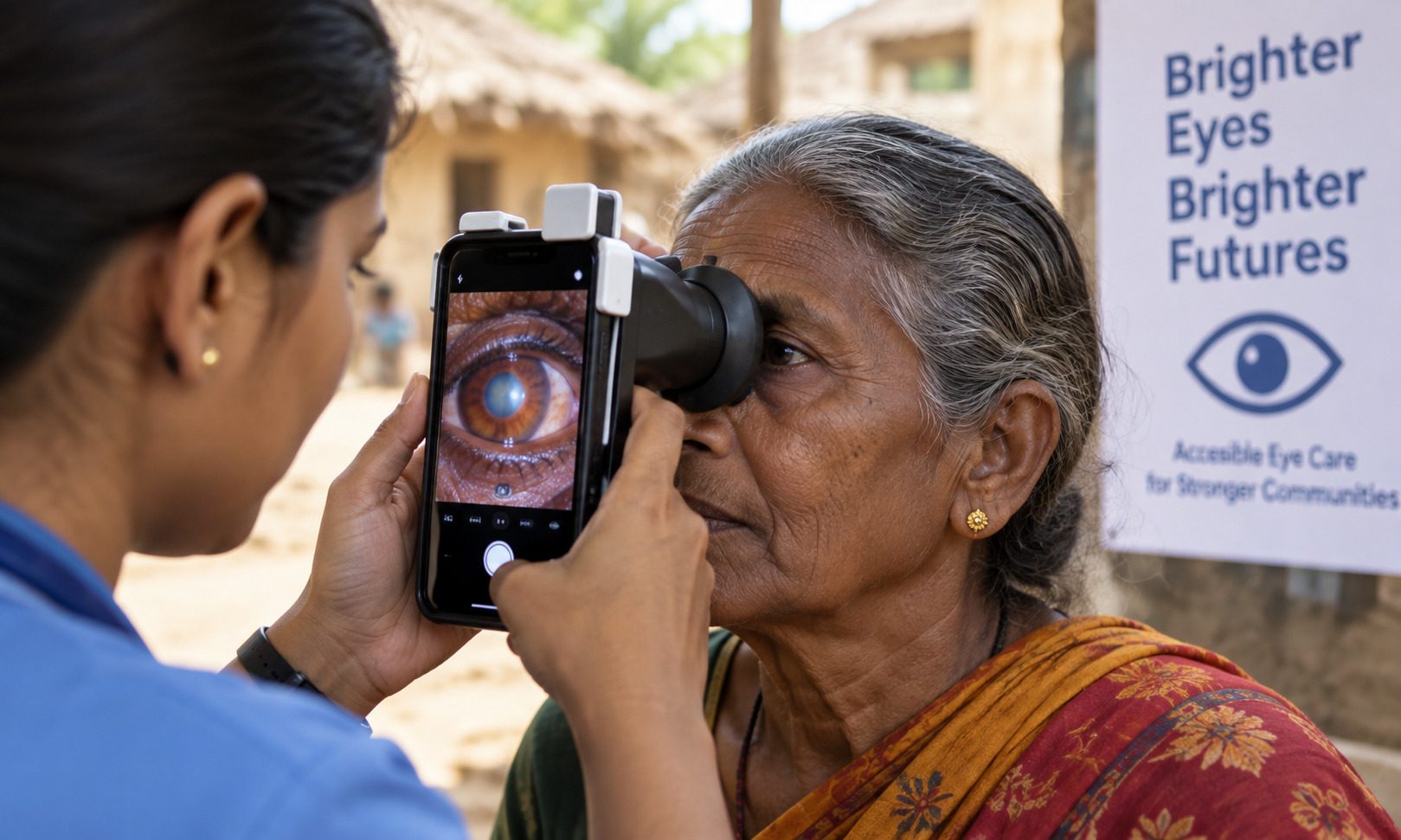
The setup is surprisingly simple. Researchers developed a portable attachment that clips onto an Android phone and uses a magnifying lens and two small LEDs to capture consistent images of the front of a patient’s eye. A silicone eyepiece blocks outside light and keeps the camera at the correct distance. Better still, the entire setup, including the phone, costs less than £150 (around $200). It also works with a telemedicine app designed for places with limited internet connectivity.
Health workers could bring the eye exam to you
The study involved 1,093 patients across 19 rural eye camps near Pondicherry in southern India. Community health workers received just three hours of training before using the smartphone system, and eventually managed to screen each eye in under two and a half minutes. They then sent the images to ophthalmologists, who decided remotely whether to refer each patient to a hospital. They compared those decisions with assessments made by ophthalmologists who examined the patients in person.
The result was a 96% agreement on whether someone needed further treatment. Doctors also showed strong agreement when identifying several lens-related conditions, including mature cataracts and eyes that already contained artificial lens implants. That’s particularly important because cataracts remain a leading cause of blindness globally, while access to specialists can be limited in poorer and more remote communities. Instead of requiring an ophthalmologist to travel to every screening camp, community workers could potentially collect the images locally while specialists review them elsewhere.
This still isn’t replacing your eye doctor
As promising as those numbers sound, this isn’t a pocket-sized replacement for a proper eye examination. The researchers found that the system wasn’t as reliable for some conditions outside the lens, including pterygium, refractive errors, and corneal opacity. The study also noted differences in how patients were examined: some in-person assessments happened after pupil dilation, while smartphone images were captured beforehand.
The study also wasn’t designed to compare the smartphone system directly against every part of a comprehensive slit-lamp examination, so more testing is needed before the approach could be rolled out widely. Researchers now want to improve the hardware, test it in other regions, and explore AI-assisted cataract grading. Eventually, AI could handle some initial screening before difficult cases reach an ophthalmologist. For now, the most interesting part isn’t that a smartphone can replace an eye specialist; it’s that a relatively inexpensive phone attachment could help bring that specialist’s expertise to people who might otherwise never reach them.


