
President Donald Trump’s executive order rolling back liability protections for online companies threatens to radically change what content is allowed on social media platforms. And while the executive order may not pass legal muster, the damage has already been done: Trump has long been itching for a fight with Silicon Valley’s tech giants — and now he’s getting one.
The executive order seeks to revise the protections of Section 230, a pivotal part of the Communications Decency Act that classifies social media and internet services as “platforms,” not “publishers,” according to a leaked draft. The distinction protects companies like Facebook, YouTube and Twitter from being sued over content others post on their sites.
Trump’s executive order reinterprets that protection to exclude any company that removes or restricts content “outside the scope of being lewd, violent, or otherwise objectionable.” That vague “objectionable” language gives the administration a lot of leeway to choose which social media companies are no longer protected.
Rolling back those protections could open up internet services to costly lawsuits, potentially forcing them to defend themselves in court from users who object to any manner of content on their site. It would also make moderation a nightmare, as services would need to police every one of their millions of users for anything that could be potentially damaging in court.
And that may be Trump’s goal.
Is Trump’s social media executive order legal?
It’s unclear that this executive order’s interpretation will stand up in court, legal experts say. The American Civil Liberties Union called the order “blatant and unconstitutional.”
“The president also has no authority to rewrite a congressional statute with an executive order imposing a flawed interpretation of Section 230,” the ACLU said in a statement.
Others, like Katie Fallow, senior staff attorney at the Knight First Amendment Institute, said Trump “cannot, by executive order, change legislation.” The administration’s interpretation of Section 230 also flies in the face of earlier court rulings, she said.
“That is the exact opposite of how many many federal courts have interpreted it for decades,” Fallow told Digital Trends.
Curt Levey — president of the Committee for Justice, a nonprofit group promoting limited government and judicial nominations — said that the executive order itself has “limited teeth” regarding Section 230, since it requests the independent Federal Trade Commission (FTC) and Federal Communications Commission (FCC) adjust their interpretations of Section 230.
Still, if the FTC were to take some action at Trump’s request, that would “surely be challenged” in the courts, he said.
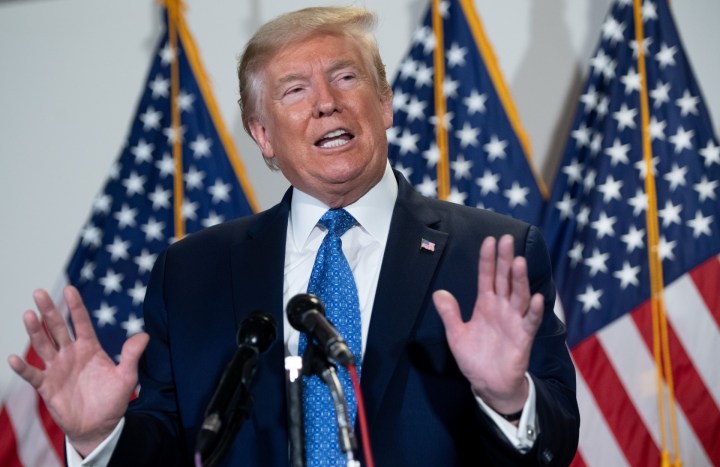
That threat of court cases, Fallow argues, will have a chilling effect on internet companies, adding a “burden” onto those who have drawn Trump’s ire.
“If you’re liable for everything that’s posted on your site, you would be so worried about liability that you’d never host anything,” she said. “One of the impacts of this executive order will be to potentially make them think twice about moderating comments that could be interpreted as biased against conservative voices.”
Levey said Twitter and other companies have faced questions about their fact-checking efforts, and that this order may push them to back off fact-checking more to protect themselves from legal liability.
“The problem here is not going to be the substance of the fact-checking — it’s the decision of who to fact-check,” he said. “We don’t know what the Section 230 landscape is going to look like years from now. The safest thing to do would be to stop fact-checking. No one is going to sue you for not fact-checking.”
That would be a win for Trump, especially since Twitter’s fact-check of his mail-in voting tweet was the catalyst for the executive order.
Trump’s directive to Attorney General William Barr in the executive order to look into “unfair and deceptive” practices at the tech giants is also a shot across the bow, a warning that the companies could soon be in the crosshairs of federal regulatory action.
Trump and other Republicans have long raged against the likes of Facebook and Twitter, claiming that they were targeting him and other conservative voices for moderation while letting liberal viewpoints remain. In the past, he’s vowed action against companies like Facebook, Twitter and Google.
For most of his term, those threats were hollow. But with this executive order, even if its interpretation is ultimately thrown out in the courts, Trump is sending a strong message: He’s ready to fight.


