  1. Home
  2. Social Media
  3. Mobile
  4. News

Wow! Facebook now allows users to react to chats inside Messenger

Add as a preferred source on Google

Facebook group messages are beginning to look a bit more like the news feed. On Thursday, Facebook introduced Messenger Reactions and Mentions, bringing likes and tags to the dedicated messaging app. The two new features are designed to make group messages more fun, Facebook says, but they work in one-on-one conversations as well.

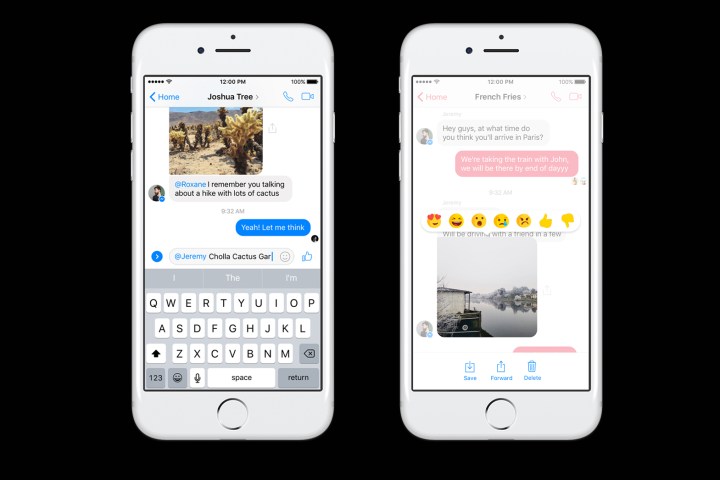
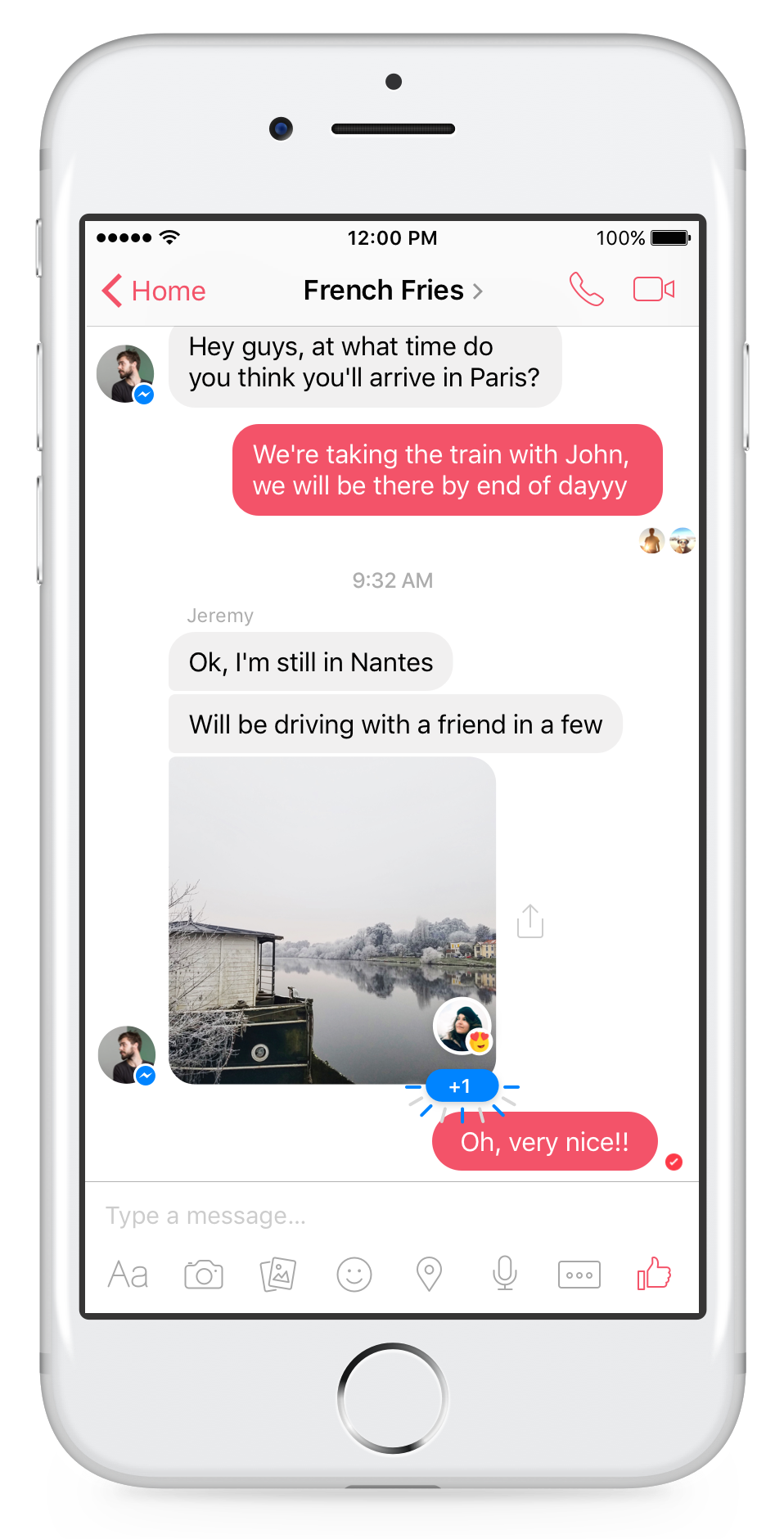
Message Reactions allow users to react to a photo or text much in the same way they can react in the news feed. Tapping and holding on the message or photo brings up the emoji reactions, including love, smile, wow, sad, and angry, as well as the like and dislike options.

Recommended Videos

While those reactions are the same ones found in the news feed, Messenger includes two more — yes or no. The new options allow users to tap and hold for the yes-or-no reaction, instead of typing out a response to the question.

The reactions will pop up in a bottom corner of the message, with a tap on the emoji icon bringing up who responded in what way. If Messenger isn’t open, reactions will pop up as notifications.
The second new feature makes it simpler to talk to a specific person within a larger group text. Using the “@” symbol and the user’s name (or nickname), tags will create a different notification instead of the typical message notification. Others in the same group will still receive the same notifications as before, but the tagged user will see a notification saying they have been called out specifically.

Facebook says the new mention capabilities makes it easier to ask or respond to a specific person inside group chats.

Both the mentions and reactions features will also be migrating over to Facebook’s professionally oriented messaging, Work Chat and Workplace.

The new features are already rolling out to users with app updates on Thursday but international users may not see the update for a few days.

Hillary K. Grigonis
Hillary never planned on becoming a photographer—and then she was handed a camera at her first writing job and she's been…
X’s creator payouts are changing, and original content is the new currency
The platform is replacing Revenue Sharing with a program designed to reward creators who actually make something.
X Twitter on iPhone

X is changing the rules for creators yet again. This time, the platform wants to put less emphasis on simply generating engagement and more on actually making something original. X is replacing its controversial Creator Revenue Sharing program with a new initiative called Original Content Rewards, which will officially launch on September 8, 2026. The existing Revenue Sharing program will continue paying participating creators through September 7, after which the new system takes over.

X wants to reward creators, not engagement farmers

Read more
Snapchat’s Spotlight algorithm now favors human-made videos over AI-generated ones
Snapchat is taking a firm stance against AI slop.
Snapchat-App-Store-open-on-iPhone

If you've been uploading fully AI-generated videos on Snapchat in hopes of earning rewards, it might be time to rethink your strategy. Snapchat has announced changes to Spotlight that prioritize authentic, original creativity over content created entirely by artificial intelligence. The company says its recommendation system will now favor videos made by real creators, while fully AI-generated submissions will no longer qualify for monetization.

So what's changing on Spotlight?

Read more
LinkedIn is crowdsourcing its fight against AI slop
The company is rolling out a new button that lets you flag posts that seem AI generated.
LinkedIn seems like AI slop button

LinkedIn has a serious AI slop problem, and it's now turning to its own users to help fix it. The platform is rolling out a new button that lets users flag posts they suspect were generated by AI. It plans to use that feedback to fine-tune the system that decides how much reach a post gets outside a user's own network, based on how AI-generated it appears.

The announcement comes shortly after an analysis by Pangram found that more than forty percent of long-form LinkedIn posts are fully AI-generated, and it suggests that the reach-trimming measures the company rolled out earlier this year haven't been enough on their own.

Read more