 Spotify shelled out a huge sum to promote its services on YouTube in a one-day advertising blitz. But why would Spotify fork over so much dough to another place you can listen to music online?
Just to recap: Spotify is a streaming music service, meaning YouTube is a major competitor – even though its focus is videos, people can access almost any song they want by typing it into the YouTube search bar and pressing play. So it’s a little odd to think of Spotify handing over an estimated $400,000 (according to a survey by Digiday) to the larger and more established enemy. But if you take a look at their motivations, it makes perfect sense – because this is a case of David using Goliath’s megaphone to spread a message.
Bigger platform, more eyes
It’s unfortunate for Spotify that the only way to leech users from its competitor requires giving them money, but the YouTube homepage buyout provided immense exposure – even though there are 1 million Spotify users in the U.S., YouTube just recently passed a staggering 1 billion unique users a month. So it’s a big platform, and Spotify was all over it on April 9 with its homepage takeover.
This is prime time for Spotify to earn the loyalty of more followers. The service is rounding itself out nicely with new features – now you can follow people instead of just subscribe, and you can also pay for premium service in cash at your local 7-11. It’s getting all dressed up and it has someplace to go, and that’s on par with services like Pandora (which recently hit its own impressive numbers) and of course, YouTube.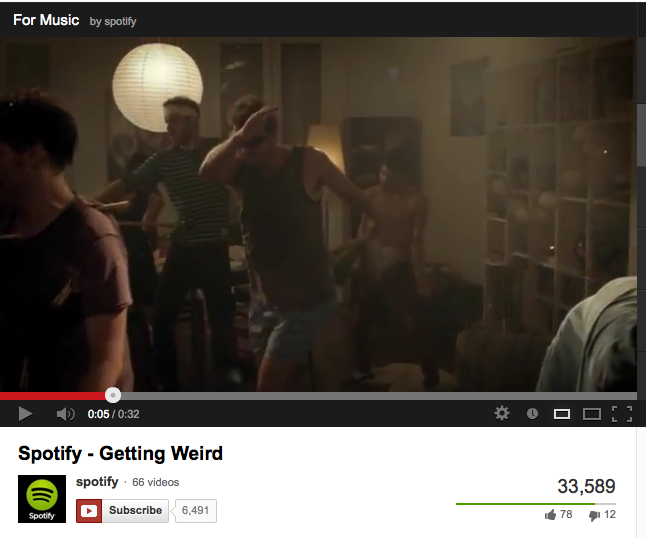
Creativity matters
Spotify’s Head of U.S. Communications Graham James told us why the YouTube buyout made sense. “The YouTube takeover was part of our larger U.S. marketing campaign. We got a chance to work with Phoenix, who we love – they’re headlining Coachella and other music festivals this summer, so we were lucky enough to work with them and present something that was really creative that spoke to our new ‘follow’ concept.”
In addition to shorter ads, Spotify created a little documentary following Phoenix around for a day. And the result is a very engrossing portrait of the French rockers:
So, according to Graham, Spotify chose YouTube partly because of how many people would see the ads and partly because the platform allowed them to work with an exciting band and create interesting ads.
“The goal of this marketing campaign is to reach a broad mainstream audience,” Graham said, noting that the YouTube takeover is one of many parts of an aggressive campaign. “We have a lot of TV spots.”
So even though the YouTube gambit was pricy, it enabled Spotify to make ads that are more in-depth than your average TV spot. The YouTube spots are tailor-made for music fans who love music artists enough to watch little snippets of their off-stage lives, but who might not have heard of Spotify. Considering Spotify only made its U.S. debut in 2011, rivals like Grooveshark, Pandora, and Rhapsody had big headstarts here.
Following in YouTube’s footsteps?
A report a few weeks ago said that Spotify intends to branch into video content, putting itself up against competitors like Netflix and Hulu. If that were true, it would make sense to try and show what it could do with the Phoenix video on YouTube, to get a foot in the door for video.
But James told Digital Trends that the move to video was just a rumor. As for the idea that Spotify chose to advertise on YouTube as part of a plan to involve itself in video streaming, he replied with a resolute “absolutely not.”
So although Spotify is on the hunt for a wider audience, it seems the rumors that it will expand into a video content streaming services aren’t true – at least, for the immediate future.
But Spotify is still working to bring supplementary content to users, and clearly focused on pulling out any and all stops to show it all off.
Editors' Recommendations
- Here’s how to delete your YouTube account on any device
- YouTuber gets more than just clicks for deliberately crashing plane
- These are the 10 most-viewed YouTube videos of all time
- YouTube relaxes rules around swearing and demonetization
- How to post a Short on YouTube