1. Home
  2. Space
  3. Emerging Tech
  4. News

Get buzzed in space with this whiskey, newly sent over to the International Space Station

Add as a preferred source on Google

For whisky that is truly out of this world, look no further than Japan’s Suntory label, which has decided to send its liquor off the planet and onto the International Space Station. In a display of true devotion to their craft, the beverage company has packed and shipped their product to outer space in their quest to better understand the “mechanism that makes alcohol mellow.” Unfortunately, even though the whisky is being sent high above Earth’s surface to age and experience the effects of micro-gravity, astronauts will not be able to sample the precious cargo. So much for an out of this world party.

While some whisky experts are skeptical that sending Suntory whisky to the ISS will actually make it mellower, it is almost certain that being in space will have some sort of an effect on the alcohol. As Steve Ury, an L.A-based whiskey expert, told the L.A. Times, “Each batch gains most of its color and flavor from the aging process,” and of course, a key component of that process is contingent on location.

Recommended Videos

Surprisingly enough, this is by no means the first time that whisky has been seen floating around miles above the Earth’s surface. In 2011, a Scottish distillery Ardbeg embarked upon a similar journey with its whisky, and for three years allowed samples of its beverage to orbit the Earth 15 times a day. While the effects of this aging process so far from home have yet to be revealed, Ardbeg promises a research paper detailing the results “at a later date.”

And whisky isn’t the only drink to be tested away from the planet. Coffee cups that are zero-gravity friendly are already present on the ISS, and there is a martini glass that will allow astronauts to get their (safe) buzz on while floating above us. After all, you can’t just have your liquids floating away from you as you’re trying to quench your thirst.

But when it comes to space’s effects on whisky, Ury, for one, remains unimpressed. Said the expert, “To me, space barrel aging is sort of an absurdity. I don’t know what the effect will be at zero gravity on aging, but I’m not sure it matters. There’s no practical way to keep aging your barrels in space.”

So prepare yourselves, whisky aficionados. Soon, there may be a new kind of whisky in town, and it’ll come from very far, far away indeed.

Lulu Chang
Fascinated by the effects of technology on human interaction, Lulu believes that if her parents can use your new app…
SpaceX Starship reaches orbit for the first time but its historic flight ends early
Starship reaches orbit for the first time and deploys 26 Starlink satellites before an early splashdown.
spacex-starship

After 13 suborbital test flights and more than $15 billion in development costs, SpaceX's Starship has finally reached orbit. The 407-foot megarocket, the most powerful ever built, lifted off from Starbase, Texas, on Monday and delivered its first real payload on it's 14th attempt. The celebration came with an asterisk, though, since SpaceX had to cut the planned 10-hour mission to roughly three hours.

https://twitter.com/SpaceX/status/2104601695711904180

Read more
Starship is finally going orbital, and SpaceX has picked September 22
Flight 14 is aiming for orbit, Starlink V3 deployment and a very long day in space.
Starship rocket.

SpaceX is finally ready to give Starship its biggest test yet. The company says the massive rocket's 14th test flight is scheduled for September 22, when it will attempt to put the upper stage into Earth orbit for the first time. The launch is currently pending regulatory approval, with a 75-minute window opening at 7:15 a.m. CT.

Starship has 26 Starlink satellites to deliver

Read more
Want a city on the Moon? Scientists say there’s not enough water
A billion tons still comes up short
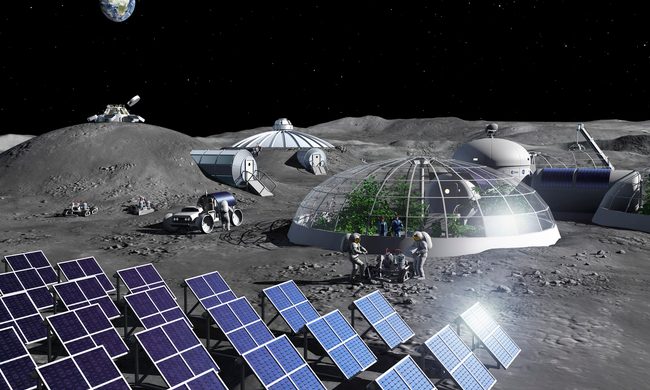
Artist impression of activities in a Moon Base.

For decades, humanity has looked up at the Moon and wondered what it would be like to live on it. Think sprawling cities, factories, research centers, and permanent human settlements. Unfortunately, there is one fairly fundamental problem with that vision.

A new study published in Frontiers in Space Technologies argues that even the Moon's potentially enormous reserves of frozen water may be nowhere near enough to support city-sized populations sustainably. Researchers Martin Elvis and Jonathan McDowell estimate that the permanently shadowed regions near the lunar poles could contain roughly one billion tons of water. It sounds like an extraordinary amount until you put a million thirsty humans next to it.

Read more