1. Home
  2. Space
  3. News

NASA astronauts enjoy Thanksgiving holiday at 17,000 mph

Add as a preferred source on Google

As Americans around the world celebrated Thanksgiving on Thursday, there were four citizens enjoying the day in a slightly different way to everyone else. Because they’re in space.

Living and working aboard the International Space Station (ISS) means NASA astronauts Mark Vande Hei, Kayla Barron, Raja Chari, and Thomas Marshburn spent the holiday in microgravity conditions, eating rehydrated food from containers and drinking recycled water while orbiting Earth at 17,000 mph.

Recommended Videos

NASA on Thursday posted a video (below) of the four American astronauts sharing their thoughts about what Thanksgiving means to them, and how they were spending the day aboard the orbiting outpost.

Barron said they were all going to enjoy an “awesome” meal together with French astronaut Matthias Maurer and Russian cosmonauts Anton Shkaplerov and Pyotr Dubrov.

“Luckily it doesn’t take us long to cook food in space because most of it is just reheating,” Barron said.

Items on the astronauts’ menu included “roasted turkey,” which Chari insisted would “taste delicious when we add some water.”

#HappyThanksgiving! Five Exp 66 astronauts talk about spending the holiday in space and the food they will share on the station. pic.twitter.com/mDOvEk8Tk8

— International Space Station (@Space_Station) November 25, 2021

NASA also posted a video looking at the history of Thanksgiving in space. It reveals that the first off-Earth Thanksgiving took place aboard Skylab 3 in 1973 with NASA astronauts Gerald Carr, William Pogue, and Edward Gibson able to enjoy a stunning view of Earth during the special day.

The next space-based Thanksgiving took place aboard Space Shuttle Atlantis in 1985. Since then, with the construction of the ISS at the turn of the century, the holiday has been celebrated in space every year since 2000.

Happy Thanksgiving from NASA!

And in case you’re wondering when exactly Thanksgiving happens on the space station, here’s the answer: The satellite uses the Universal Time Clock (UTC), equivalent to Greenwich Mean Time (GMT) in London, for keeping time, so Thanksgiving officially started at 4 p.m. PT (7 p.m. ET) on Wednesday, November 24 (or midnight UTC/GMT), ending 24 hours later when most Americans back on terra firma were dropping onto the couch with a belly full of food.

Trevor Mogg
Contributing Editor
Not so many moons ago, Trevor moved from one tea-loving island nation that drives on the left (Britain) to another (Japan)…
SpaceX Starship reaches orbit for the first time but its historic flight ends early
Starship reaches orbit for the first time and deploys 26 Starlink satellites before an early splashdown.
spacex-starship

After 13 suborbital test flights and more than $15 billion in development costs, SpaceX's Starship has finally reached orbit. The 407-foot megarocket, the most powerful ever built, lifted off from Starbase, Texas, on Monday and delivered its first real payload on it's 14th attempt. The celebration came with an asterisk, though, since SpaceX had to cut the planned 10-hour mission to roughly three hours.

https://twitter.com/SpaceX/status/2104601695711904180

Read more
Starship is finally going orbital, and SpaceX has picked September 22
Flight 14 is aiming for orbit, Starlink V3 deployment and a very long day in space.
Starship rocket.

SpaceX is finally ready to give Starship its biggest test yet. The company says the massive rocket's 14th test flight is scheduled for September 22, when it will attempt to put the upper stage into Earth orbit for the first time. The launch is currently pending regulatory approval, with a 75-minute window opening at 7:15 a.m. CT.

Starship has 26 Starlink satellites to deliver

Read more
Want a city on the Moon? Scientists say there’s not enough water
A billion tons still comes up short
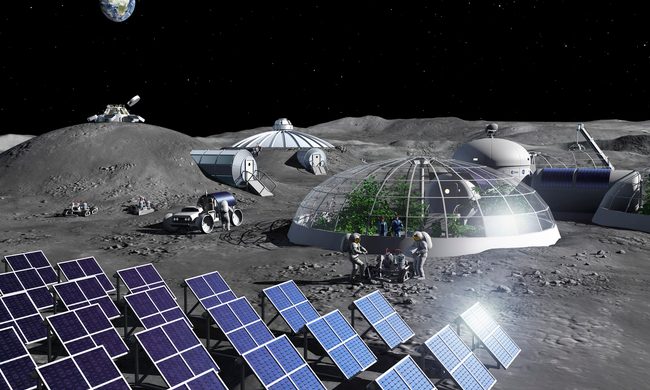
Artist impression of activities in a Moon Base.

For decades, humanity has looked up at the Moon and wondered what it would be like to live on it. Think sprawling cities, factories, research centers, and permanent human settlements. Unfortunately, there is one fairly fundamental problem with that vision.

A new study published in Frontiers in Space Technologies argues that even the Moon's potentially enormous reserves of frozen water may be nowhere near enough to support city-sized populations sustainably. Researchers Martin Elvis and Jonathan McDowell estimate that the permanently shadowed regions near the lunar poles could contain roughly one billion tons of water. It sounds like an extraordinary amount until you put a million thirsty humans next to it.

Read more