1. Home
  2. Space
  3. News

NASA heads to Death Valley to test new Mars drone tech

A team is testing new flight software following the success of its Ingenuity aircraft.

Add as a preferred source on Google
A NASA drone flies over Death Valley's Mars Hill.
A NASA drone flies over Death Valley's Mars Hill. NASA/JPL-Caltech

After reaching Mars with the Perseverance rover in early 2021, NASA’s Ingenuity helicopter proved a huge success as it exceeded expectations with an astonishing 72 flights across the Martian surface.

But three years after entering the history books by becoming the first aircraft to achieve powered, controlled flight on another planet, Ingenuity sustained damage to one of its rotor blades in early 2024, preventing it from flying again.

Recommended Videos

Still, the aircraft’s successful mission, which saw it map parts of the Martian surface and assist Perseverance, inspired NASA’s Jet Propulsion Laboratory (JPL) engineers to work on next-generation models for future missions to Mars and possibly beyond.

Testing the new helicopter’s software and hardware involves heading to locations that offer something close to Mars-like conditions — minus the red planet’s extremely thin atmosphere, of course.

Such work has seen a JPL team recently head to California’s Death Valley National Park, a barren, dusty landscape that bears some resemblance to the fourth planet from the sun. The engineers flew tested new software by flying a drone over Death Valley’s Mars Hill and Mesquite Flats Sand Dunes.

“Ingenuity was designed to fly over well-textured terrain, estimating its motion by looking at visual features on the ground, but eventually it had to cross over blander areas where this became hard,” said Roland Brockers, a JPL researcher and drone pilot. “We want future vehicles to be more versatile and not have to worry about flying over challenging areas like these sand dunes.”

The test campaign has already accelerated the drone’s development, with the team discovering how different camera filters helped its drone to more effectively track the ground below, and how new algorithms can guide the flying machine to safely land in cluttered terrain like that of Mars Hill.

“Field tests give you a much more comprehensive perspective than solely looking at computer models and limited satellite images,” said JPL’s Nathan Williams, a geologist on the team who previously helped operate Ingenuity. “Scientifically interesting features aren’t always located in the most benign places, so we want to be prepared to explore even more challenging terrains than Ingenuity did.”

It’s not the first time a NASA team has headed to Death Valley to test out gear destined for other worlds. Engineers from the space agency have used the area since the 1970s, when it was preparing for the first Mars landings with the twin Viking spacecraft. More recently, it headed there to test the Perseverance rover’s precision landing system by flying a component of it in a piloted helicopter. The rover’s arrival on Mars was captured in an extraordinary video that showed in great detail its final moments before touchdown.

Trevor Mogg
Contributing Editor
Not so many moons ago, Trevor moved from one tea-loving island nation that drives on the left (Britain) to another (Japan)…
Space is becoming Bezos and Musk’s next data center site, and we have every reason to worry
The AI boom is coming for the night sky
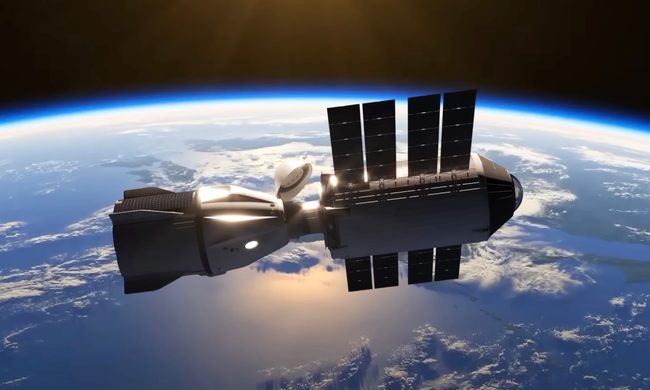
How Vast's space station will look in orbit.

AI data centers already consume vast amounts of electricity and water on Earth, so Silicon Valley has begun looking somewhere considerably more spacious... literally.

Elon Musk's SpaceX and Jeff Bezos' Blue Origin, along with several other companies, have proposed enormous constellations of satellites designed to operate as orbital data centers. However, environmental groups and former space officials are now warning that putting them into orbit at the proposed scale could have severe consequences for Earth's atmosphere and the night sky.

Read more
The first possible exomoon is here, and it makes our Moon look hilariously tiny
Scientists may have found the first exomoon, except this one is the size of Jupiter
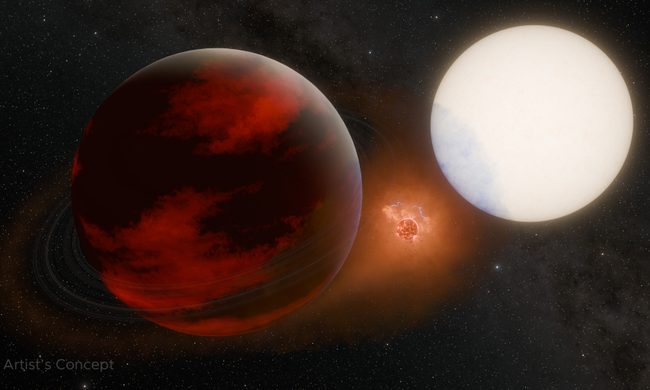
This artist’s concept depicts a potential volcanic moon between the exoplanet WASP-49 b, left, and its parent star. New evidence indicating that a massive sodium cloud observed near WASP-49 b is produced by neither the planet nor the star has prompted researchers to ask if its origin could be an exomoon.

We have already discovered more than 6,000 planets outside of our immediate neighborhood. Yet, finding a moon orbiting one of those distant worlds has proved considerably harder. Astronomers may finally have something close to the real deal, but this particular object stretches the word “moon” almost beyond recognition.

Using the European Southern Observatory’s Very Large Telescope in Chile, researchers detected strong evidence for a moon-like object in the CD-35 2722 system. Further observations are still necessary to confirm the discovery, but it could become the first confidently detected natural satellite outside our solar system. There is still one tiny complication though. This moon is apparently massive.

Read more
China’s answer to SpaceX’s reusable rockets literally catches boosters in a net
SpaceX catches boosters on legs. China just used a net.
Ammunition, Missile, Weapon

SpaceX's playbook for recovering a rocket booster generally involves legs, a precisely controlled vertical landing, and either a concrete pad or a drone ship. 

China just managed to pull off something similar, but in a slightly different way, and on July 10, it tested the method as well.

Read more