1. Home
  2. Space
  3. Cars
  4. News

These new NASA EVs will drive astronauts part way to the moon (sort of)

Add as a preferred source on Google
Promotional image for Tech For Change. Person standing on solar panel looking at sunset.
This story is part of Tech for Change: an ongoing series in which we shine a spotlight on positive uses of technology, and showcase how they're helping to make the world a better place.

NASA's new crew transportation electric vehicles.
Three specially designed, fully electric, environmentally friendly crew transportation vehicles for Artemis missions arrived at NASA’s Kennedy Space Center in Florida this week. The zero-emission vehicles, which will carry astronauts to Launch Complex 39B for Artemis missions, were delivered by Canoo Technologies of Torrance, California. NASA/Isaac Watson

NASA has shown off a trio of new all-electric vehicles that will shuttle the next generation of lunar astronauts to the launchpad at the Kennedy Space Center.

Recommended Videos

Designed by California-based EV startup Canoo Technologies, the environmentally friendly minivan is able to carry four astronauts in their launch spacesuits.

They’ll also transport personnel such as a spacesuit technician, and specialized equipment needed at Launch Pad 39B for NASA’s crewed Artemis missions to the moon. The first of these will be Artemis II, which will carry four astronauts on a fly-by of our nearest neighbor in November 2024.

“The collaboration between Canoo and our NASA representatives focused on the crews’ safety and comfort on the way to the pad ahead of their journey to the moon,” Charlie Blackwell-Thompson, NASA’s Artemis launch director, said in a release. “I have no doubt everyone who sees these new vehicles will feel the same sense of pride I have for this next endeavor of crewed Artemis missions.”

Earlier launch operations at the Kennedy Space Center for NASA’s Apollo and Space Shuttle programs used the so-called “Astrovans” to transport astronauts from the crew quarters in the Neil A. Armstrong Operations and Checkout Building to the launchpad.

“While the path to the pad may look similar, the ride to get there has changed with the times,” NASA said.

Over the next year or so, the fleet of new EVs will be used for astronaut training exercises at the spaceport. And then, in 16 months’ time, the vehicles will play a major role as they transport the four Artemis II astronauts to the recently tested SLS rocket, after which the spacefarers will climb aboard the Orion spacecraft for the first crewed lunar flight in five decades.

A successful Artemis II mission will pave the way for the first crewed lunar landing since 1973 and set NASA on course to building a permanent astronaut base there with a view to using the site as a launchpad for the first human mission to Mars. A journey that starts inside an Earth-based EV and ends inside a Mars lander will certainly be something to savor.

Trevor Mogg
Contributing Editor
Not so many moons ago, Trevor moved from one tea-loving island nation that drives on the left (Britain) to another (Japan)…
SpaceX Starship reaches orbit for the first time but its historic flight ends early
Starship reaches orbit for the first time and deploys 26 Starlink satellites before an early splashdown.
spacex-starship

After 13 suborbital test flights and more than $15 billion in development costs, SpaceX's Starship has finally reached orbit. The 407-foot megarocket, the most powerful ever built, lifted off from Starbase, Texas, on Monday and delivered its first real payload on it's 14th attempt. The celebration came with an asterisk, though, since SpaceX had to cut the planned 10-hour mission to roughly three hours.

https://twitter.com/SpaceX/status/2104601695711904180

Read more
Starship is finally going orbital, and SpaceX has picked September 22
Flight 14 is aiming for orbit, Starlink V3 deployment and a very long day in space.
Starship rocket.

SpaceX is finally ready to give Starship its biggest test yet. The company says the massive rocket's 14th test flight is scheduled for September 22, when it will attempt to put the upper stage into Earth orbit for the first time. The launch is currently pending regulatory approval, with a 75-minute window opening at 7:15 a.m. CT.

Starship has 26 Starlink satellites to deliver

Read more
Want a city on the Moon? Scientists say there’s not enough water
A billion tons still comes up short
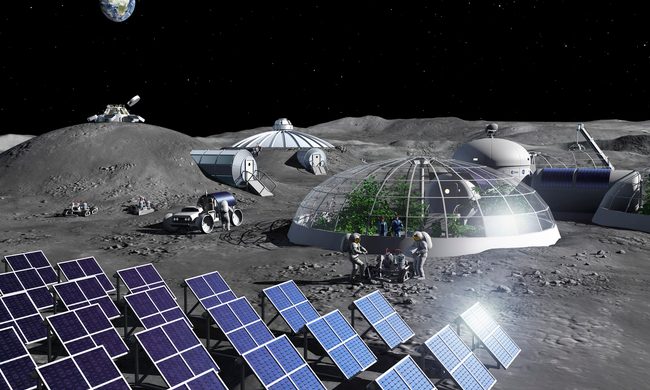
Artist impression of activities in a Moon Base.

For decades, humanity has looked up at the Moon and wondered what it would be like to live on it. Think sprawling cities, factories, research centers, and permanent human settlements. Unfortunately, there is one fairly fundamental problem with that vision.

A new study published in Frontiers in Space Technologies argues that even the Moon's potentially enormous reserves of frozen water may be nowhere near enough to support city-sized populations sustainably. Researchers Martin Elvis and Jonathan McDowell estimate that the permanently shadowed regions near the lunar poles could contain roughly one billion tons of water. It sounds like an extraordinary amount until you put a million thirsty humans next to it.

Read more