1. Home
  2. Space
  3. News

The scenery steals the show in this epic SpaceX rocket landing

Enjoy the ride!

Add as a preferred source on Google
SpaceX Falcon 9 booster on its way home.
Screenshot SpaceX

Well, those Falcon 9 landings never get old. Imagine, just over a decade ago the idea of being able to land a rocket upright after it’d been to space seemed crazy. And then SpaceX went and did it.

Following its first successful touchdown in December 2015, SpaceX suffered the occasional mishap with its booster landings, but in recent years it’s well and truly nailed the process.

Recommended Videos

The Elon Musk-led spaceflight company shared a video (below) this week of its most recent landing, with dramatic footage captured by a camera attached to the rocket showing the spectacular early-morning ride home.

That was a super pretty return for Falcon 9 B1093-11 (now 12). pic.twitter.com/HlGkTijw2o

— NSF – NASASpaceflight.com (@NASASpaceflight) February 25, 2026

The Falcon 9’s mission started from Vandenberg Space Force Base in California, and involved the launch of 25 Starlink satellites to low-Earth orbit.

This was the 11th flight for the first-stage booster (B1093) supporting this mission, which previously launched SDA T1TL-B, SDA T1TL-C, and now nine Starlink missions.

As the video shows, after deploying the upper stage, the 41.2 meter-tall (about 135 feet) booster returned to Earth minutes later, landing on the Of Course I Still Love You droneship waiting in the Pacific Ocean.

To achieve an autonomous landing like this, a Falcon 9 booster begins by performing a flip using cold gas thrusters after stage separation, sometimes followed by a boostback burn. As it descends, the booster deploys its grid fins to steer through the atmosphere before performing an entry burn to slow down. Finally, it executes a landing burn while deploying its legs for a stable touchdown.

The landings allow SpaceX to reuse its boosters multiple times, reducing the cost of spaceflight and opening access to more companies and organizations.

Just last weekend, another Falcon 9 booster set a new reuse record of 33 flights after launching for the first time in June 2021.

SpaceX has applied what it’s learned from the landings to its much bigger and more powerful Starship rocket, which is expected to take its 12th test flight in March.

Trevor Mogg
Contributing Editor
Not so many moons ago, Trevor moved from one tea-loving island nation that drives on the left (Britain) to another (Japan)…
SpaceX Starship reaches orbit for the first time but its historic flight ends early
Starship reaches orbit for the first time and deploys 26 Starlink satellites before an early splashdown.
spacex-starship

After 13 suborbital test flights and more than $15 billion in development costs, SpaceX's Starship has finally reached orbit. The 407-foot megarocket, the most powerful ever built, lifted off from Starbase, Texas, on Monday and delivered its first real payload on it's 14th attempt. The celebration came with an asterisk, though, since SpaceX had to cut the planned 10-hour mission to roughly three hours.

https://twitter.com/SpaceX/status/2104601695711904180

Read more
Starship is finally going orbital, and SpaceX has picked September 22
Flight 14 is aiming for orbit, Starlink V3 deployment and a very long day in space.
Starship rocket.

SpaceX is finally ready to give Starship its biggest test yet. The company says the massive rocket's 14th test flight is scheduled for September 22, when it will attempt to put the upper stage into Earth orbit for the first time. The launch is currently pending regulatory approval, with a 75-minute window opening at 7:15 a.m. CT.

Starship has 26 Starlink satellites to deliver

Read more
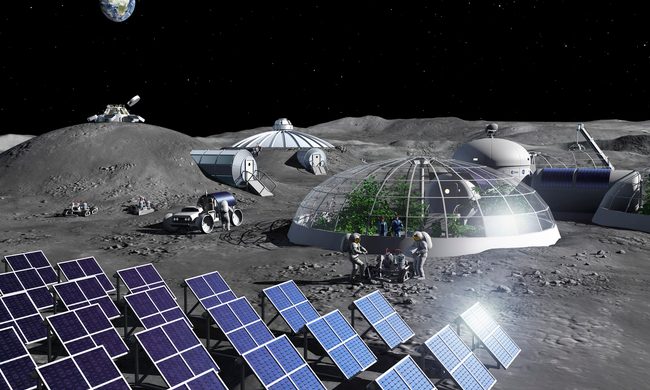
Want a city on the Moon? Scientists say there’s not enough water
A billion tons still comes up short
Artist impression of activities in a Moon Base.

For decades, humanity has looked up at the Moon and wondered what it would be like to live on it. Think sprawling cities, factories, research centers, and permanent human settlements. Unfortunately, there is one fairly fundamental problem with that vision.

A new study published in Frontiers in Space Technologies argues that even the Moon's potentially enormous reserves of frozen water may be nowhere near enough to support city-sized populations sustainably. Researchers Martin Elvis and Jonathan McDowell estimate that the permanently shadowed regions near the lunar poles could contain roughly one billion tons of water. It sounds like an extraordinary amount until you put a million thirsty humans next to it.

Read more