1. Home
  2. Space
  3. Emerging Tech
  4. News

Mark your calendars: SpaceX plans to launch another Falcon 9 rocket in December

Add as a preferred source on Google

After experiencing a massive setback last June, Elon Musk’s aerospace manufacturing company SpaceX says its plans on relaunching a reconstructed Falcon 9 this December. Though barely six months will have passed since the prior launch’s failures, a SpaceX spokesperson says the company has already completed construction of a new-and-improved rocket — this time outfitted with redesigned support struts capable of withstanding the immense pressure of a launch. If you don’t recall, it was a faulty support strut which led to the untimely demise of the company’s last rocket.

Since the Falcon 9’s fiery failure a few months ago, SpaceX has been hard at work developing and experimenting with new tech that will make potential manned missions safer. In addition to outfitting the new and improved rocket with stronger brackets and struts, the company’s Vice President of Mission and Launch Operations, Lee Rosen, says the upcoming rocket will be the most powerful Falcon 9 ever launched.

Recommended Videos

“Things are coming along nicely with the upgraded version of the vehicle and we’re prepared to get back at this,” says Rosen. “We believe in the next six to eight weeks we’ll be able to return to flight.”

For December’s launch, SpaceX plans to outfit the Falcon 9 with a communications satellite for Luxembourg’s SES S.A. and also intends to prep the first stage of its rocket for yet another ocean landing attempt. Earlier this year, SpaceX attempted this same feat twice, but failed on both attempts. However, the idea is that if these landings prove successful, the company then has the ability to refurbish and relaunch landed rockets, drastically reducing future launch costs. On this next attempt, the Falcon 9’s upgraded power and fuel capacity will give it an even better shot.

Falcon 9 attempting to land on a drone ship
Falcon 9 attempting to land on a drone ship SpaceX

Though whether or not December’s launch will be a success is anybody’s guess at this point, achieving a successful launch is paramount for SpaceX to continue its reign as the world’s premiere private space company. But despite these uncertainties, company executives remain optimistic that the new-and-improved Falcon 9 could be the one that makes history.

Rick Stella
Former Associate Editor, Outdoor
Rick became enamored with technology the moment his parents got him an original NES for Christmas in 1991. And as they say…
SpaceX Starship reaches orbit for the first time but its historic flight ends early
Starship reaches orbit for the first time and deploys 26 Starlink satellites before an early splashdown.
spacex-starship

After 13 suborbital test flights and more than $15 billion in development costs, SpaceX's Starship has finally reached orbit. The 407-foot megarocket, the most powerful ever built, lifted off from Starbase, Texas, on Monday and delivered its first real payload on it's 14th attempt. The celebration came with an asterisk, though, since SpaceX had to cut the planned 10-hour mission to roughly three hours.

https://twitter.com/SpaceX/status/2104601695711904180

Read more
Starship is finally going orbital, and SpaceX has picked September 22
Flight 14 is aiming for orbit, Starlink V3 deployment and a very long day in space.
Starship rocket.

SpaceX is finally ready to give Starship its biggest test yet. The company says the massive rocket's 14th test flight is scheduled for September 22, when it will attempt to put the upper stage into Earth orbit for the first time. The launch is currently pending regulatory approval, with a 75-minute window opening at 7:15 a.m. CT.

Starship has 26 Starlink satellites to deliver

Read more
Want a city on the Moon? Scientists say there’s not enough water
A billion tons still comes up short
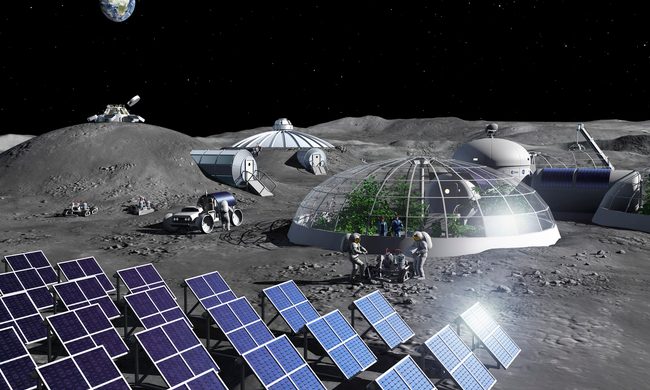
Artist impression of activities in a Moon Base.

For decades, humanity has looked up at the Moon and wondered what it would be like to live on it. Think sprawling cities, factories, research centers, and permanent human settlements. Unfortunately, there is one fairly fundamental problem with that vision.

A new study published in Frontiers in Space Technologies argues that even the Moon's potentially enormous reserves of frozen water may be nowhere near enough to support city-sized populations sustainably. Researchers Martin Elvis and Jonathan McDowell estimate that the permanently shadowed regions near the lunar poles could contain roughly one billion tons of water. It sounds like an extraordinary amount until you put a million thirsty humans next to it.

Read more