1. Home
  2. Space
  3. News

This luxury capsule is competing for space tourism customers

Add as a preferred source on Google

Following the successful completion of a couple of crucial test flights by Blue Origin and Virgin Galactic, space tourism services from both companies look set to launch sometime next year.

Both rides rely on rockets to get passengers up to somewhere near the Kármán line, the boundary 62 miles above Earth that’s widely regarded as the start of space.

Recommended Videos

But there’s another company intent on offering the trip of a lifetime high above the clouds, one that takes things at an altogether more leisurely pace.

Space Perspective has built and tested Spaceship Neptune, a luxury eight-seat piloted capsule that’s lifted skyward by a giant hydrogen-filled balloon. The interior includes reclining chairs, a refreshments bar, Wi-Fi, and all-around windows

The Florida-based company this week shared a video (below) offering a glimpse of what the experience will look like.

Book Your Spaceflight Today | Space Perspective

It’s worth pointing out that despite the use of the “space” for both the company name and vehicle, Spaceship Neptune only rises 20 miles above Earth, well short of the Kármán line though around three times higher than a long-haul passenger jet. And unlike the experiences offered by both Blue Origin and Virgin Galactic, there will be no zero-gravity experience where you can float around the capsule for several minutes.

Space Perspective’s ride will, however, last six hours, which is way longer than, say, Blue Origin’s trip, which takes just 10 minutes from launch to landing.

Passengers aboard the balloon will enjoy a relaxing two-hour ascent, a further two hours to enjoy the gorgeous views, and then a two-hour descent back home.

At $125,000, a ticket for a ride on Spaceship Neptune is a little more affordable than a Virgin Galactic seat that means coughing up $450,000. Blue Origin is yet to announce prices.

Space Perspective started selling tickets for its experience a few months ago. The first flights are set to take place in 2024, though the company says it’s already sold out for then, with rides for 2025 now available.

Besides offering pleasure trips, the capsule will also serve as a high-altitude laboratory, allowing scientists engaged in subjects such as climate and solar physics to conduct experiments in a part of Earth’s atmosphere little researched up to now.

Space Perspective’s balloon will launch from Florida’s Space Coast Spaceport close to the Kennedy Space Center, with the company planning to add additional launch sites around the world over time.

Trevor Mogg
Contributing Editor
Not so many moons ago, Trevor moved from one tea-loving island nation that drives on the left (Britain) to another (Japan)…
SpaceX Starship reaches orbit for the first time but its historic flight ends early
Starship reaches orbit for the first time and deploys 26 Starlink satellites before an early splashdown.
spacex-starship

After 13 suborbital test flights and more than $15 billion in development costs, SpaceX's Starship has finally reached orbit. The 407-foot megarocket, the most powerful ever built, lifted off from Starbase, Texas, on Monday and delivered its first real payload on it's 14th attempt. The celebration came with an asterisk, though, since SpaceX had to cut the planned 10-hour mission to roughly three hours.

https://twitter.com/SpaceX/status/2104601695711904180

Read more
Starship is finally going orbital, and SpaceX has picked September 22
Flight 14 is aiming for orbit, Starlink V3 deployment and a very long day in space.
Starship rocket.

SpaceX is finally ready to give Starship its biggest test yet. The company says the massive rocket's 14th test flight is scheduled for September 22, when it will attempt to put the upper stage into Earth orbit for the first time. The launch is currently pending regulatory approval, with a 75-minute window opening at 7:15 a.m. CT.

Starship has 26 Starlink satellites to deliver

Read more
Want a city on the Moon? Scientists say there’s not enough water
A billion tons still comes up short
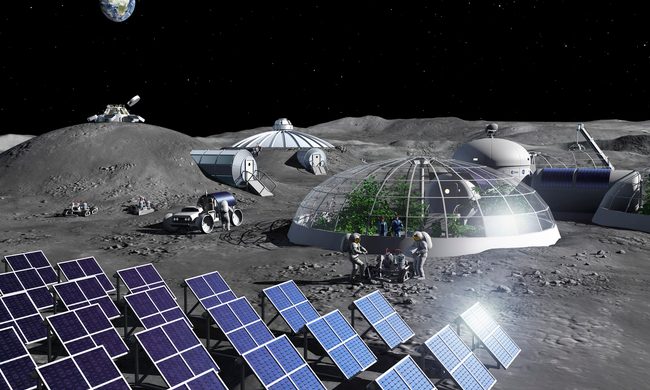
Artist impression of activities in a Moon Base.

For decades, humanity has looked up at the Moon and wondered what it would be like to live on it. Think sprawling cities, factories, research centers, and permanent human settlements. Unfortunately, there is one fairly fundamental problem with that vision.

A new study published in Frontiers in Space Technologies argues that even the Moon's potentially enormous reserves of frozen water may be nowhere near enough to support city-sized populations sustainably. Researchers Martin Elvis and Jonathan McDowell estimate that the permanently shadowed regions near the lunar poles could contain roughly one billion tons of water. It sounds like an extraordinary amount until you put a million thirsty humans next to it.

Read more