1. Home
  2. Space
  3. News

Three taikonauts are dealing with an unexpected challenge in Earth orbit

The trio were supposed to return to Earth this week, but space had other plans.

Add as a preferred source on Google
China's Tiangong space station shown from above.
China's Tiangong space station shown from above. CMSA

China has been hosting taikonauts at its space station in low-Earth orbit for about four years, and since then there have been few things to worry about. Until now, that is.

According to a statement shared by the China Manned Space Agency (CMSA), the return flight of three taikonauts, who were expecting to return to Earth this week after six months in orbit, has been delayed while they assess damage to the Shenzhou-20 spacecraft.

Recommended Videos

“The Shenzhou-20 manned spacecraft is suspected of being hit by a tiny piece of space debris, and an impact analysis and risk assessment are under way,” the CMSA said in a widely reported (translated) statement. 

 The three taikonauts — Chen Dong, Chen Zhongrui, and Wang Jie — remain aboard the Tiangdong space station with three other taikonauts who arrived at the end of last month as a replacement crew.

If the damage to the spacecraft is deemed to pose a threat to the safety of the crew, then the Chinese space agency will have to find another way to bring the taikonauts home. 

One option is to send up another spacecraft, though it’s not clear how long that might take to organize.

It’s not the first time that crew members have had to stay in space for longer than planned. Earlier this year, NASA astronauts Butch Wilmore and Suni Williams finally returned to Earth from the International Space Station after technical issues with their Boeing Starliner spacecraft left them stuck in orbit for nine months longer than expected. The pair ended up returning on a SpaceX Crew Dragon capsule. 

The dilemma currently facing Chinese space officials highlights the ongoing challenge of space debris in low-Earth orbit, with spent rocket parts and decommissioned satellites — as well as tiny fragments caused by collisions involving these objects — causing an increasing hazard for human crews and operational satellites.

Trevor Mogg
Contributing Editor
Not so many moons ago, Trevor moved from one tea-loving island nation that drives on the left (Britain) to another (Japan)…
SpaceX Starship reaches orbit for the first time but its historic flight ends early
Starship reaches orbit for the first time and deploys 26 Starlink satellites before an early splashdown.
spacex-starship

After 13 suborbital test flights and more than $15 billion in development costs, SpaceX's Starship has finally reached orbit. The 407-foot megarocket, the most powerful ever built, lifted off from Starbase, Texas, on Monday and delivered its first real payload on it's 14th attempt. The celebration came with an asterisk, though, since SpaceX had to cut the planned 10-hour mission to roughly three hours.

https://twitter.com/SpaceX/status/2104601695711904180

Read more
Starship is finally going orbital, and SpaceX has picked September 22
Flight 14 is aiming for orbit, Starlink V3 deployment and a very long day in space.
Starship rocket.

SpaceX is finally ready to give Starship its biggest test yet. The company says the massive rocket's 14th test flight is scheduled for September 22, when it will attempt to put the upper stage into Earth orbit for the first time. The launch is currently pending regulatory approval, with a 75-minute window opening at 7:15 a.m. CT.

Starship has 26 Starlink satellites to deliver

Read more
Want a city on the Moon? Scientists say there’s not enough water
A billion tons still comes up short
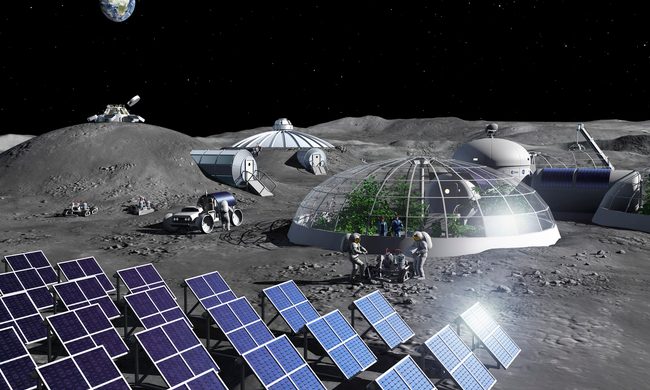
Artist impression of activities in a Moon Base.

For decades, humanity has looked up at the Moon and wondered what it would be like to live on it. Think sprawling cities, factories, research centers, and permanent human settlements. Unfortunately, there is one fairly fundamental problem with that vision.

A new study published in Frontiers in Space Technologies argues that even the Moon's potentially enormous reserves of frozen water may be nowhere near enough to support city-sized populations sustainably. Researchers Martin Elvis and Jonathan McDowell estimate that the permanently shadowed regions near the lunar poles could contain roughly one billion tons of water. It sounds like an extraordinary amount until you put a million thirsty humans next to it.

Read more