1. Home
  2. Space
  3. Emerging Tech
  4. News

Virgin Galactic completes its first powered flight — what’s next?

Add as a preferred source on Google
VSS Unity First Powered Flight

It wasn’t so long ago that we were celebrating Virgin Galactic’s return to the skies after a two-year hiatus. Now, just a few months after the VSS Unity completed its 11th glide test, the spaceplane has completed its first powered test. This marks the first time that Virgin Galactic has executed a powered test flight since the tragic crash in 2014 that claimed the life of one of its pilots.

Recommended Videos

The supersonic, rocket-powered flight was heralded as a “major step forward” by the Virgin Galactic team, as it is the “final portion of Unity’s flight test program.” This spaceplane makes use of the many lessons that Virgin learned from the VSS Enterprise, and has achieved new heights in terms of rocket burn duration, speed, and altitude.

The VSS Unity took flight in the Mojave desert while attached to the WhiteKnightTwo carrier aircraft. Together, the two climbed to an altitude of 46,500 feet, at which point Unity was released. A few seconds later, the vehicle’s rocket motor was ignited, and pilots moved into “an 80-degree climb, accelerating to Mach 1.87 during the 30 seconds of rocket burn.” This marks the first time that the hybrid rocket motor transported Unity into supersonic flight.

“The flight has generated valuable data on flight, motor and vehicle performance which our engineers will be reviewing,” Virgin noted in a blog post. “It also marks a key moment for the test flight program, entering now the exciting phase of powered flight and the expansion to full duration rocket burns. While we celebrate that achievement, the team remains focused on the challenging tasks which still lie ahead.”

Virgin Galactic celebrated its first couple test runs in December 2016, and in August 2017, the company achieved a dry run for real rocket-powered flights carrying both propulsion components and 1,000 pounds of water to mimic the weight of fuel casing. Space enthusiasts have already begun vying for a ticket to beyond Earth’s atmosphere once SpaceShipTwo is ready to go. In fact, Virgin Galactic says, it has about 700 customers who have already signed up to be passengers.

Updated on April 6: Virgin Galactic says it conducted its first powered flight. 

Lulu Chang
Fascinated by the effects of technology on human interaction, Lulu believes that if her parents can use your new app…
SpaceX Starship reaches orbit for the first time but its historic flight ends early
Starship reaches orbit for the first time and deploys 26 Starlink satellites before an early splashdown.
spacex-starship

After 13 suborbital test flights and more than $15 billion in development costs, SpaceX's Starship has finally reached orbit. The 407-foot megarocket, the most powerful ever built, lifted off from Starbase, Texas, on Monday and delivered its first real payload on it's 14th attempt. The celebration came with an asterisk, though, since SpaceX had to cut the planned 10-hour mission to roughly three hours.

https://twitter.com/SpaceX/status/2104601695711904180

Read more
Starship is finally going orbital, and SpaceX has picked September 22
Flight 14 is aiming for orbit, Starlink V3 deployment and a very long day in space.
Starship rocket.

SpaceX is finally ready to give Starship its biggest test yet. The company says the massive rocket's 14th test flight is scheduled for September 22, when it will attempt to put the upper stage into Earth orbit for the first time. The launch is currently pending regulatory approval, with a 75-minute window opening at 7:15 a.m. CT.

Starship has 26 Starlink satellites to deliver

Read more
Want a city on the Moon? Scientists say there’s not enough water
A billion tons still comes up short
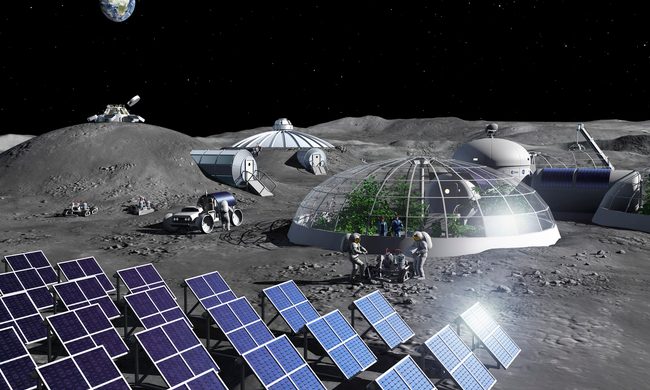
Artist impression of activities in a Moon Base.

For decades, humanity has looked up at the Moon and wondered what it would be like to live on it. Think sprawling cities, factories, research centers, and permanent human settlements. Unfortunately, there is one fairly fundamental problem with that vision.

A new study published in Frontiers in Space Technologies argues that even the Moon's potentially enormous reserves of frozen water may be nowhere near enough to support city-sized populations sustainably. Researchers Martin Elvis and Jonathan McDowell estimate that the permanently shadowed regions near the lunar poles could contain roughly one billion tons of water. It sounds like an extraordinary amount until you put a million thirsty humans next to it.

Read more