For decades, airplane manufacturers have routinely attempted to develop a passenger plane capable of traveling multiple times the speed of sound. For equally as long, these same manufacturers have consistently failed. Now, a new startup aptly called Boom hopes to jump into the supersonic airplane game and buck the conventional trend of aiming higher than it can shoot. Specifically, the company hopes to take to the skies late next year with a prototype plane that travels at speeds of up to 2.2 times the speed of sound. You’ve heard this before, sure, but Boom has one incredibly advantageous ace in its hole: funding from Richard Branson’s Virgin Group.
According to a series of tweets sent out by the Colorado-based startup on March 23, a partnership between Boom and Virgin Group subsidiary Virgin Galactic will help the company “build and fly supersonic aircraft.” The deal, valued at roughly $2 billion, is reportedly a 10-plane option from the Richard Branson-owned company, which complements a 15-plane option an unnamed European company previously inked. All told, Boom’s optioned plane investments total roughly $5 billion; not bad for a new startup.
As mentioned above, getting into the supersonic jet space hasn’t yet proven to be a successful venture. Airbus’ Mach 2 Concorde is undoubtedly the most successful of those who’ve tried, having operated for around 27 years before folding. Though a crash in 2000 and rising maintenance costs may have ultimately forced Airbus to shutter service of the Concorde, the rumored $20,000 price tag per seat couldn’t have boded well for the craft’s continued operation. According to Boom founder Blake Scholl, affordability was among the company’s highest priorities.
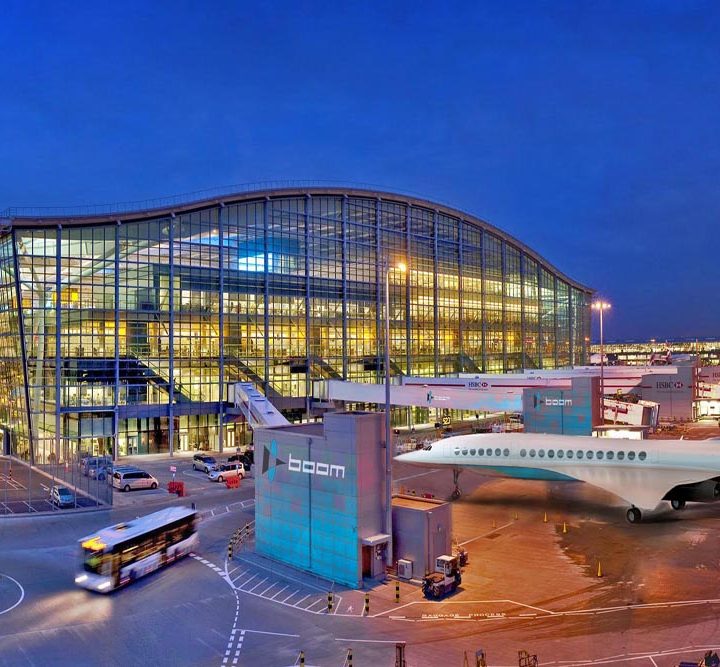
“We’re building a supersonic airplane that you can actually afford to fly. No [BS],” Scholl tells Business Insider. “If you look back to Concorde, it wasn’t really a technical failure, it was an economic failure.”
To Scholl’s credit, his early estimations of what someone might “actually afford to fly” are undoubtedly cheaper than what Concorde offered, but still rather spendy. For instance, to fly from JFK in New York City to Heathrow Airport in London, the trip would cost around $5,000 per ticket and take roughly half the time it typically would on a normal passenger plane. Additionally, San Francisco to Tokyo, an 11-hour flight normally, would take a little over four and a half hours and cost passengers $6,500.
At 2.2 times the speed of sound, the Boom would feasibly travel around 2.6 times faster than typical passenger planes in operation today. Moreover, Scholl says the plane will only seat 40 passengers at a time, a decision he feels will help keep the price low but demand high. Currently, Federal Aviation Administration laws prohibit supersonic travel over land meaning once Boom starts actually operating, it will have to stick with international routes that cross mostly water. If Boom proves successful, it’s likely Scholl challenges this law to allow a range of domestic flights.
As of now, Boom says it’s finishing the manufacturing of the first prototype and intends to get it into the air for trials in late 2017. In addition to Virgin Group, its investor list includes Sam Altman and Y Combinator, Eight Partners, and various unnamed angel investors. Additionally, astronaut Scott Kelly’s brother Mark Kelly is among the company’s Board of Advisors, while its leadership team includes ex-NASA, Lockheed Martin, and Boeing employees.